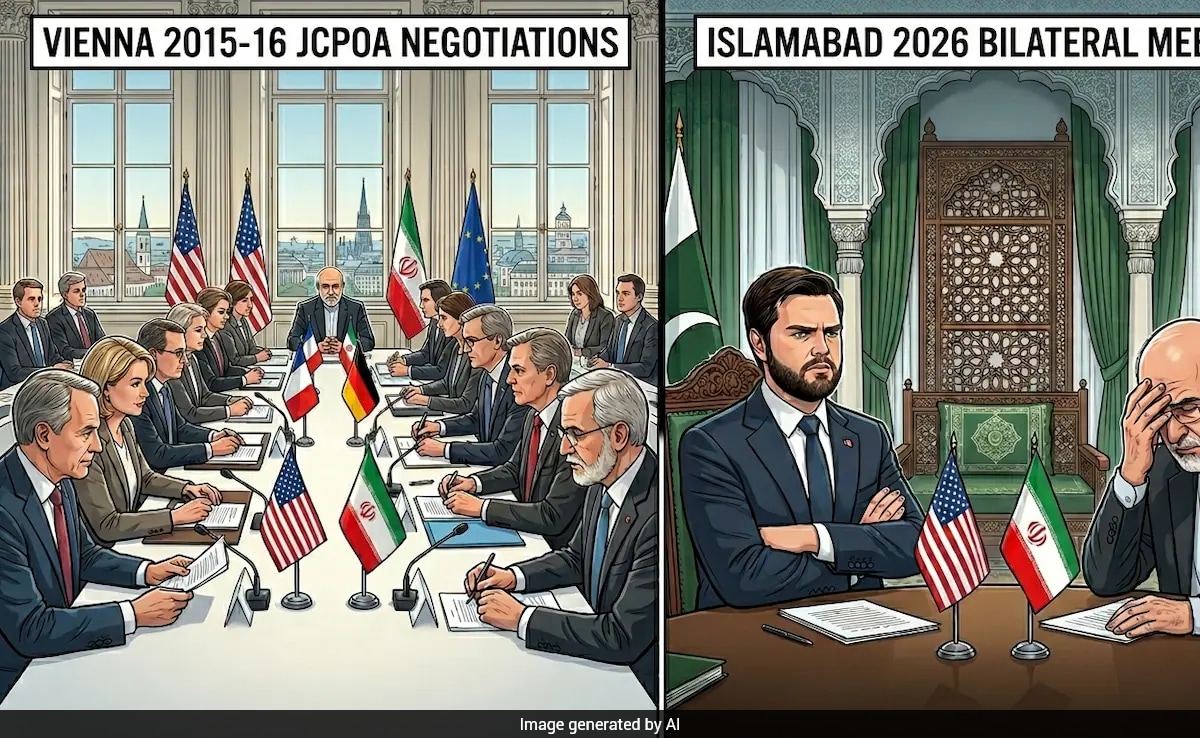
US-Iran talks in Pakistan collapsed after 21 hours, with Washington demanding dismantlement of Iran’s nuclear and missile programmes while Tehran rejected third-party inspections and sought up to $2 million per ship for transit through the Strait of Hormuz. The breakdown leaves the war and nuclear standoff unresolved, raising the risk of further disruption to a route that carries about one-fifth of global seaborne crude and gas. The failed diplomacy, coupled with renewed JCPOA-era tensions and ongoing conflict, is a broad geopolitical and energy-market negative.
The market’s first-order read is higher geopolitical risk, but the more important second-order effect is a forced repricing of the entire Gulf logistics stack. Any credible move toward vessel tolling, escort dependence, or intermittent disruption in Hormuz should widen marine insurance, lift charter rates, and create temporary scarcity rents for non-Gulf routing capacity; that is a cleaner trade than trying to predict the next headline in the talks. The biggest beneficiaries are not necessarily upstream energy producers but shippers, insurers, and alternative-route infrastructure assets with immediate pricing power and limited substitute capacity. The failure of diplomacy also raises the probability of an air/sea escalation cycle over the next 2-8 weeks, which is usually the window when markets underprice tail risk because the base case still assumes “containment.” That creates asymmetric upside in prompt oil and refined product prices, but the larger convexity sits in volatility itself: freight, energy, and defense vol are all likely to stay bid while directional equity beta remains unstable. If disruptions persist, higher freight and insurance costs can bleed into European and Asian import margins before they fully show up in headline crude. Contrarian view: the market may be overstating the permanence of the shock. If this is mainly a negotiating tactic rather than a sustained blockade, the squeeze could fade quickly, leaving late longs in energy vulnerable while the more durable winners are those monetizing the uncertainty via fees and spreads. The key tell is whether the rhetoric is matched by actual customs/escort enforcement; if not, implied volatility is likely richer than realized over the next 30-45 days.
AI-powered research, real-time alerts, and portfolio analytics for institutional investors.
Overall Sentiment
strongly negative
Sentiment Score
-0.72
