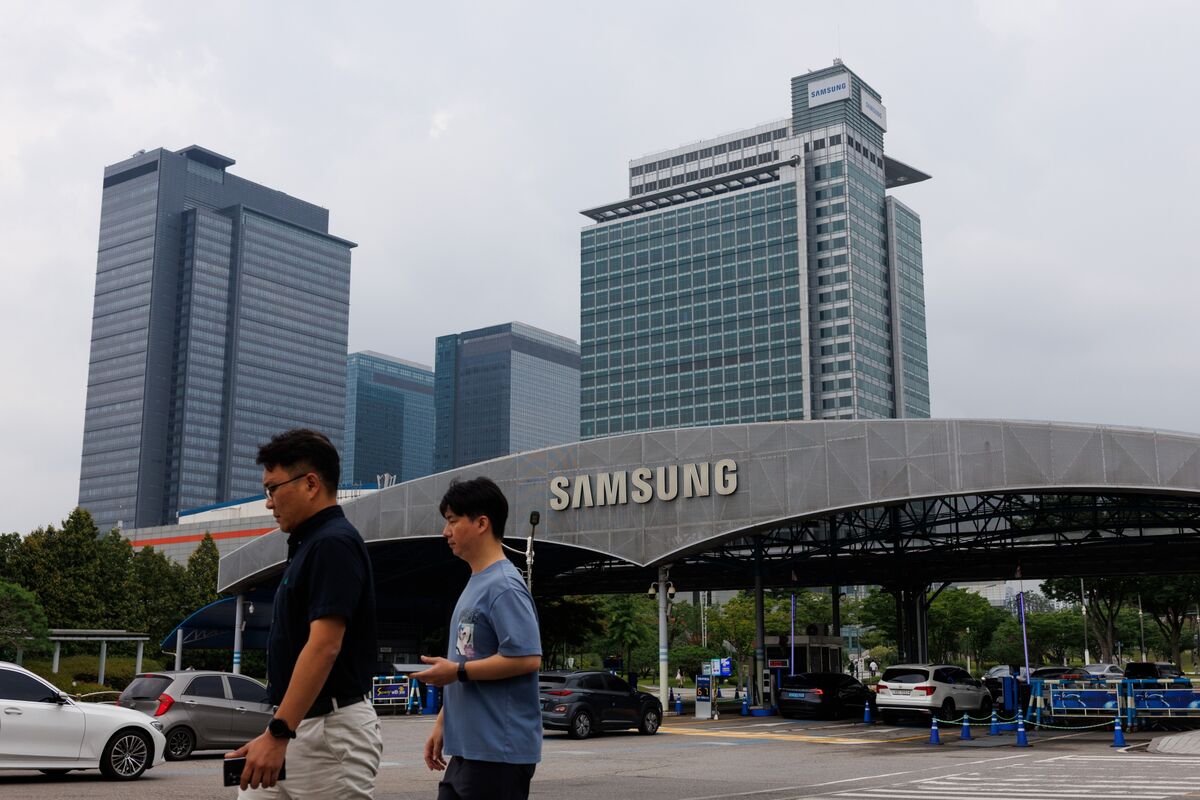
Samsung Group is reportedly preparing to unveil a 1,000 trillion won ($646 billion) spending package over the next decade, one of the largest investment plans in South Korea’s history. The planned outlay from Samsung and SK Hynix underscores continued capital intensity in memory chips and signals confidence in long-term demand, likely supported by AI-related infrastructure needs. Top executives are expected to attend a presidential briefing next week, highlighting the strategic and policy importance of the investment.
This is less about a one-day capex headline and more about a multi-year signal that the memory oligopoly is choosing supply discipline with strategic intent rather than a reflexive boom-bust response. For semicap vendors and equipment makers, the near-term read-through is positive, but the more important second-order effect is that a concentrated spend wave can raise the industry’s barrier to entry: incumbents can fund the most advanced nodes, starve smaller players of scale, and force weaker rivals into permanent margin compression. The likely market mistake is to assume all chip capex is equivalent; in memory, where utilization and mix matter more than unit growth, the winners are the toolmakers and the firms with the strongest balance sheets, not necessarily every upstream supplier.
The bigger risk is that this spending package arrives into an environment where AI demand is still skewed toward HBM and advanced packaging, while legacy DRAM/NAND remains vulnerable to overbuild. If this money tilts toward capacity expansion rather than node transitions, it can flatten the eventual pricing recovery and cap the upside in memory ASPs 6-12 months out. In that scenario, the equity market may initially reward the announcement, then fade it as investors price in later-cycle oversupply and lower through-cycle returns on capital.
The most interesting contrarian angle is that the market may be underestimating how much of this capex is defensive geopolitically and domestically rather than purely economically rational. If policy support is implicit, management may be incentivized to spend ahead of demand, which is bearish for future pricing but bullish for local industrials and infrastructure providers tied to fabs, power, water, and construction. That makes the trade not a blanket long-semiconductor view, but a rotation into picks-and-shovels beneficiaries with lower earnings volatility and better visibility.
Near term, the announcement can support sentiment for 1-3 months, but the key catalyst is whether management commentary separates AI-linked capacity from legacy expansion. If they do not, expect the initial rally to reverse as sell-side models cut long-run gross margin assumptions; if they do, the rally could broaden into the entire semiconductor equipment complex.
AI-powered research, real-time alerts, and portfolio analytics for institutional investors.
Request DemoOverall Sentiment
mildly positive
Sentiment Score
0.25
