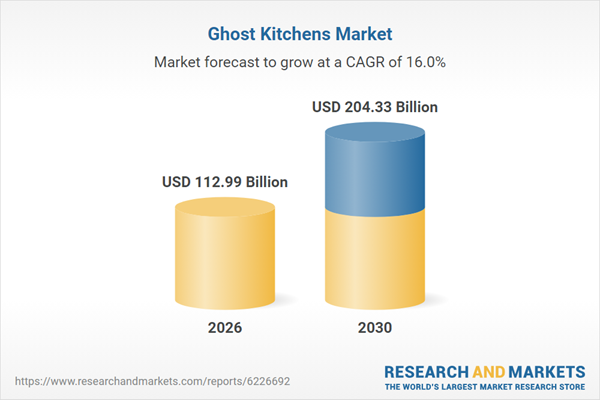
ResearchAndMarkets added a report projecting the ghost kitchens market will grow from $97.2B in 2025 to $113.0B in 2026, implying a 16% CAGR. The update is broadly positive for the sector outlook but is not tied to any specific public company results or policy changes.
This is not a clean single-name catalyst; it is more of a confirmation that off-premise dining remains a durable channel shift. The public-market capture is likely in routing, merchant acquisition, and demand aggregation rather than in the kitchen model itself, which makes DASH and UBER the cleanest listed proxies if order density keeps improving. The catch is that broader adoption also lowers switching costs for restaurants, which tends to increase promo intensity and cap margin expansion across the sector.
Second-order winners are foodservice distributors and packaging/logistics suppliers that benefit from more fragmented, SKU-heavy, takeout-oriented demand, while casual dining and urban fast-casual concepts face incremental traffic cannibalization. The structural loser is anyone relying on ambient footfall and large dining rooms; the structural risk is that ghost kitchens are a tactic, not a moat, so utilization and unit economics can deteriorate quickly when delivery fees or food inflation rise.
Over the next 1-3 months, the key catalyst is not the market-size headline but whether upcoming earnings show higher delivery mix without contribution-margin giveback. Over 6-18 months, the theme only matters if it changes store-opening strategy or accelerates consolidation among smaller brands. If DASH/UBER and major restaurant chains do not show better order economics by the next earnings cycle, the TAM narrative should be faded.
AI-powered research, real-time alerts, and portfolio analytics for institutional investors.
Request DemoOverall Sentiment
mildly positive
Sentiment Score
0.35
