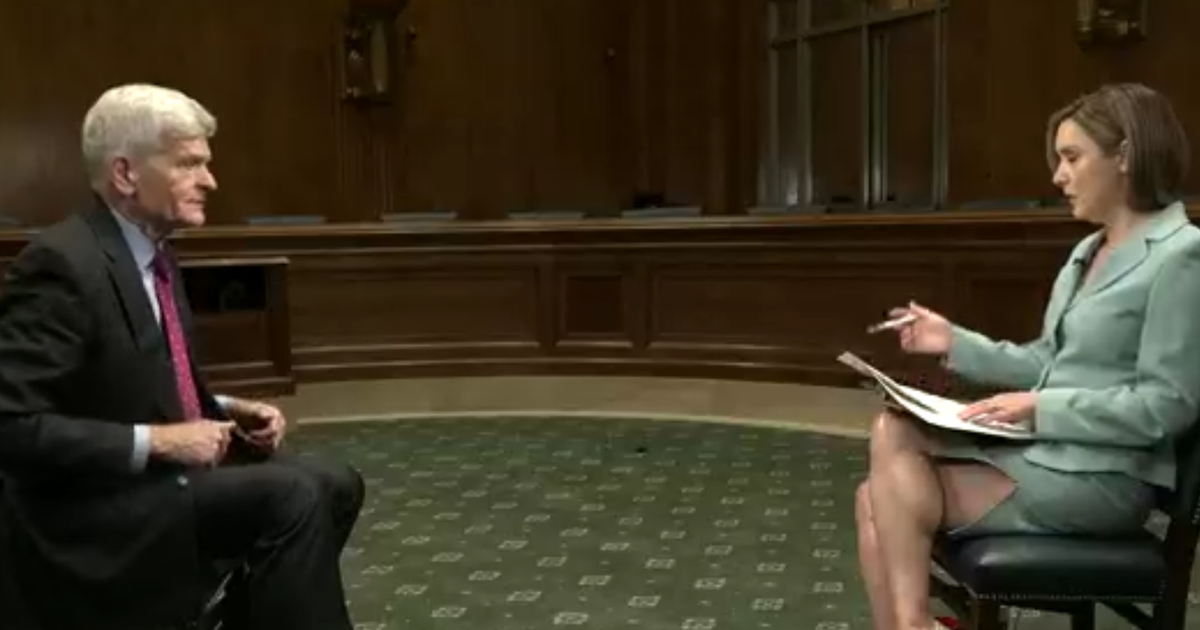
The article centers on escalating U.S.-Iran conflict, with four months of war, renewed airstrikes, and 13 American deaths cited alongside $29 billion in spending. It also highlights ongoing political and policy battles over defense budgets, FISA, and health care/public health oversight, including Senator Cassidy's criticism of Secretary Kennedy and concern over vaccine misinformation. The piece is largely political and regulatory in nature, with limited direct market linkage beyond geopolitical and policy risk.
The market read-through is less about the personalities than about institutional drift: HHS looks increasingly like a policy battlefield where confirmation, staffing, and messaging are unstable. That tends to hurt the entire health-policy complex at the margin because it raises execution risk for reimbursement, public-health guidance, and agency rulemaking, while benefiting firms with diversified end-market exposure and minimal dependence on federal narrative support. The immediate loser is the credibility layer around HHS decision-making; the second-order winner is anyone selling compliance, data, or outsourced policy-adjacent infrastructure rather than pure exposure to Washington discretion.
The more actionable angle is that this is a lagged regulatory story, not an overnight earnings story. Vaccine skepticism and acting leadership do not impair utilization instantly, but they increase the odds of localized outbreaks, procurement pauses, and school/municipal disruption over the next 3-9 months. That creates a barbell: defensive benefit for testing, surveillance, and high-acuity health services; higher risk for vaccine-dependent names if public trust erodes further or if state-level mandates weaken. The bigger tail risk is not a single rule change but a credibility spiral where agencies become less able to mobilize during an event, which would hit hospital staffing, public-sector budgets, and supply chains for diagnostics and immunization logistics.
The contrarian view is that the selloff in public-health credibility may already be partially priced, while the second-order beneficiary trade is underappreciated. If the administration soft-pedals the anti-vaccine posture to contain political damage, headline risk fades fast, but operational instability at HHS still persists because personnel churn is harder to reverse than messaging. In that scenario, the best risk/reward is not a broad short on healthcare, but a targeted long/short between execution-resilient service providers and policy-sensitive names that need stable federal guidance.
A separate, underweighted risk is defense/Europe: Pentagon turnover and budget uncertainty raise procurement slippage and NATO friction, but Europe’s own rearmament arc remains intact. That means the near-term trade is less about calling the geopolitical direction and more about avoiding names reliant on clean U.S. appropriations timing, while leaning into companies with backlogs and allied demand. If the funding process gets messier over the next 1-2 quarters, valuation dispersion inside defense should widen sharply.
AI-powered research, real-time alerts, and portfolio analytics for institutional investors.
Request DemoOverall Sentiment
mildly negative
Sentiment Score
-0.15
Ticker Sentiment
