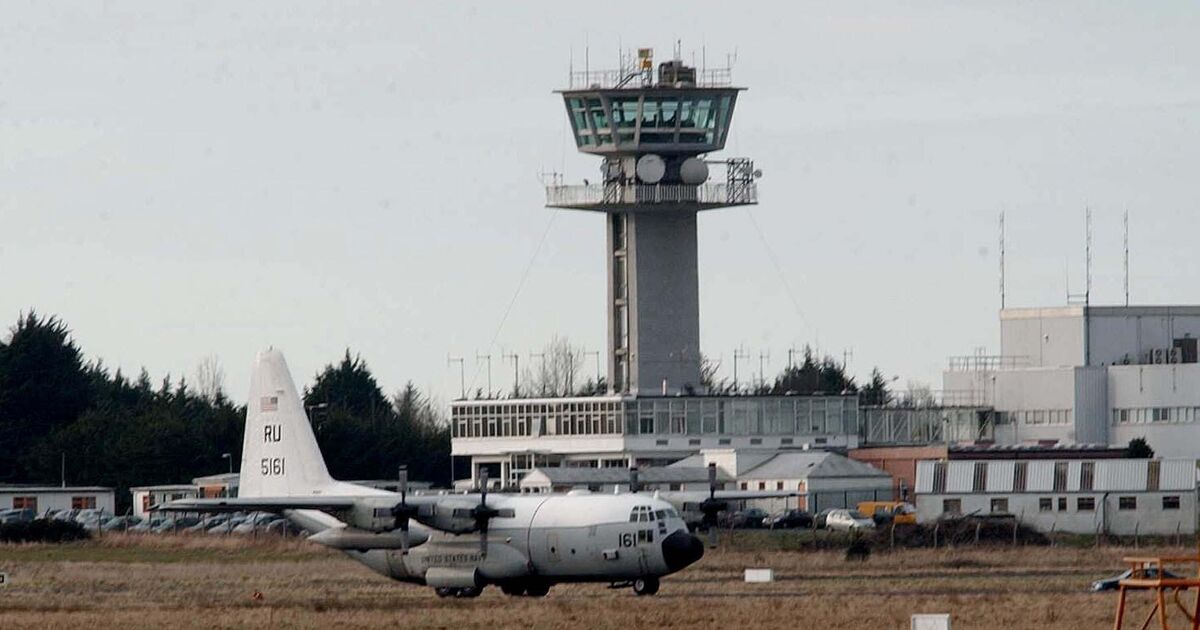
A man was arrested after allegedly damaging a US military C-130 Hercules aircraft at Shannon Airport, triggering a temporary suspension of airport operations at approximately 9.50am. Two departing flights were slightly delayed and one inbound aircraft was held in a pattern before landing at 10.22am after a reported security breach. The incident raises security concerns at the airport, but the market impact is likely limited and localized.
This is less a single-asset event than a pattern-recognition alert: repeated perimeter breaches at a strategically sensitive airport create a persistent risk premium around Irish aviation operations, even if this incident proves isolated. The immediate economic damage is likely small, but the second-order effect is that security interruptions become a recurring operational tax on a hub that depends on reliability, tight turnaround windows, and foreign military traffic. That matters most for carriers and logistics users with low schedule slack, because even brief suspensions can cascade into missed slots, crew-duty issues, and irregular operations costs that are harder to recover than the incident itself.
The larger issue is reputational and regulatory. If authorities respond with materially tighter screening, perimeter hardening, and longer airside access procedures, Shannon’s throughput efficiency could deteriorate for months, not days. That would disproportionately hurt the airport operator and any regional activity that benefits from fast turnarounds, while modestly benefiting larger Irish and UK airports that can absorb re-routing without meaningful congestion. A more aggressive security posture could also raise operating costs for general aviation and special missions, where friction is often more damaging than headline risk.
The contrarian takeaway is that the market may underprice the cumulative effect of repeated incidents rather than the current event itself. Individual breach headlines fade quickly, but a pattern can trigger higher insurance costs, enhanced oversight, and a slower recovery in traffic growth if counterparties start treating the airport as a non-zero-disruption node. The key catalyst to watch over the next 1-3 months is whether the state imposes visible infrastructure upgrades or procedural changes; if not, the move should mean-revert, but if yes, the cost base and operational cadence can reset higher for the rest of the year.
AI-powered research, real-time alerts, and portfolio analytics for institutional investors.
Request DemoOverall Sentiment
moderately negative
Sentiment Score
-0.35
