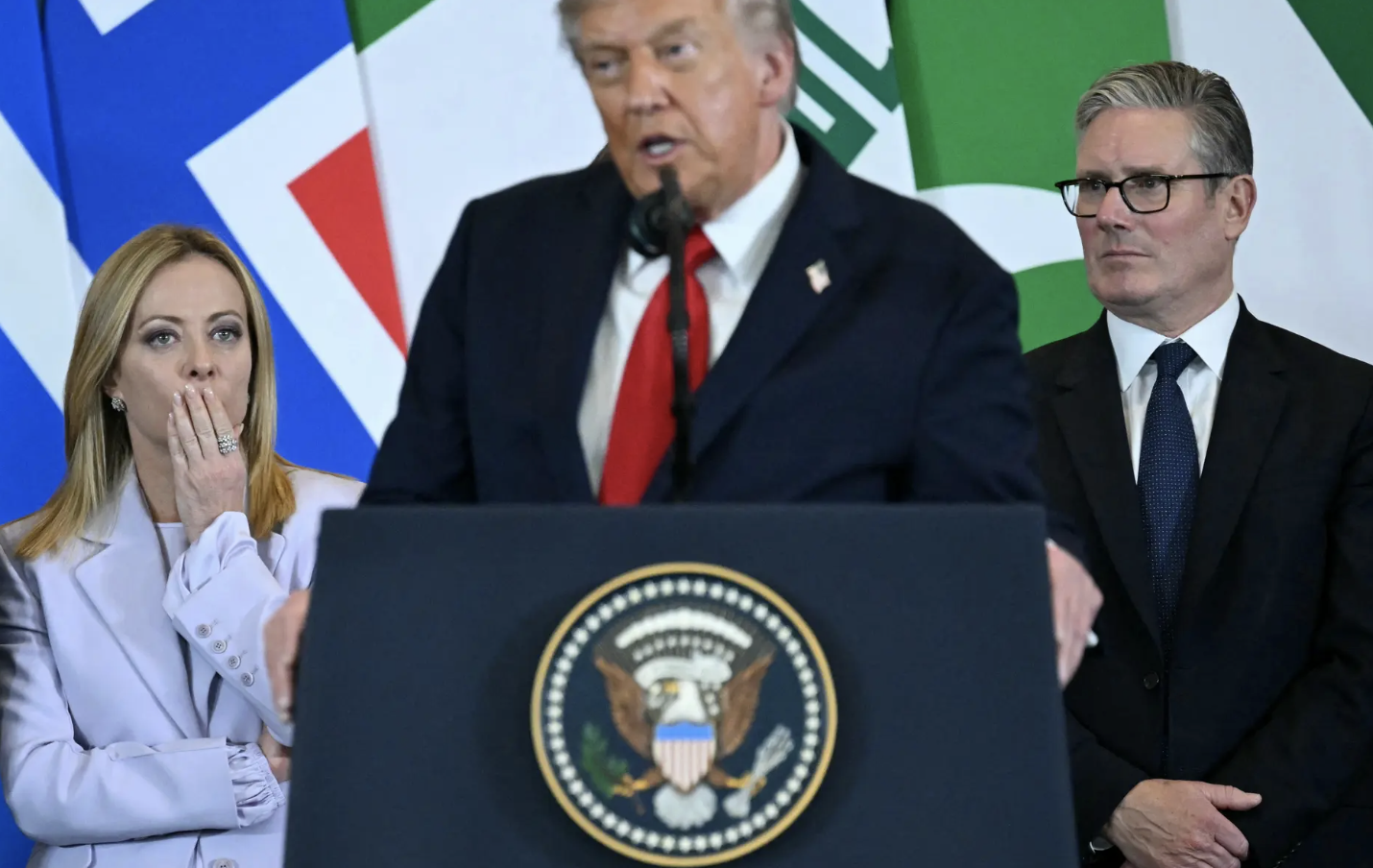
Trump said he would "probably" consider pulling U.S. troops from Italy and Spain, where 12,662 and 3,814 active-duty personnel are stationed, respectively. The comments escalate tensions with key European NATO allies amid the Iran war and the Strait of Hormuz disruption, which Guterres said is straining energy, transport, manufacturing and food markets. Italy and Spain have both criticized U.S. actions, and Trump has also warned of possible troop reductions in Germany.
This is less about troop counts than about the market pricing a renewed U.S. willingness to weaponize alliance commitments as a bargaining chip. The second-order effect is a higher probability of “policy noise” hitting Europe risk premia: defense budgets may rise, but so does the risk of fiscal leakage into industrial, infrastructure, and transport spending that gets deferred as governments scramble to plug security gaps. That tends to support European defense contractors on a relative basis, but it is bearish for EU cyclicals with heavy exposure to intra-European logistics and U.S.-linked trade corridors.
The more immediate macro transmission is through energy and shipping. Anything that prolongs disruption or uncertainty around Hormuz keeps a floor under freight, insurance, and energy volatility; that is a tax on global manufacturing margins, especially in Europe and Asia, and it is more damaging to import-dependent countries than to U.S. producers. Watch for second-order beneficiaries in LNG, tanker exposure, commodity traders, and defense logistics, while airlines, chemicals, and European consumer discretionary remain vulnerable to margin compression if fuel costs stay elevated for even 6-8 weeks.
The troop-threat rhetoric also raises tail risk around U.S.-Europe coordination in a way that can reverberate for months, not days. If allies start planning around reduced U.S. basing access, the near-term consequence is procurement acceleration in missile defense, drone countermeasures, command-and-control, and sovereign stockpiling; the longer-term consequence is a structurally higher European defense spend floor and weaker transatlantic trade confidence. The consensus may be underestimating how fast procurement cycles can move once this becomes a credible policy risk rather than just election-season bluster.
Contrarian view: the most crowded trade is to buy broad defense outright. That can work, but the better risk/reward is to own enablers and logistics-sensitive names that benefit from higher readiness spending without being as exposed to valuation compression if the rhetoric fades. The key reversal catalyst is a quick diplomatic off-ramp or a de-escalation in the Middle East, which would unwind the shipping and energy premium faster than the defense budget repricing.
AI-powered research, real-time alerts, and portfolio analytics for institutional investors.
Request DemoOverall Sentiment
moderately negative
Sentiment Score
-0.45
