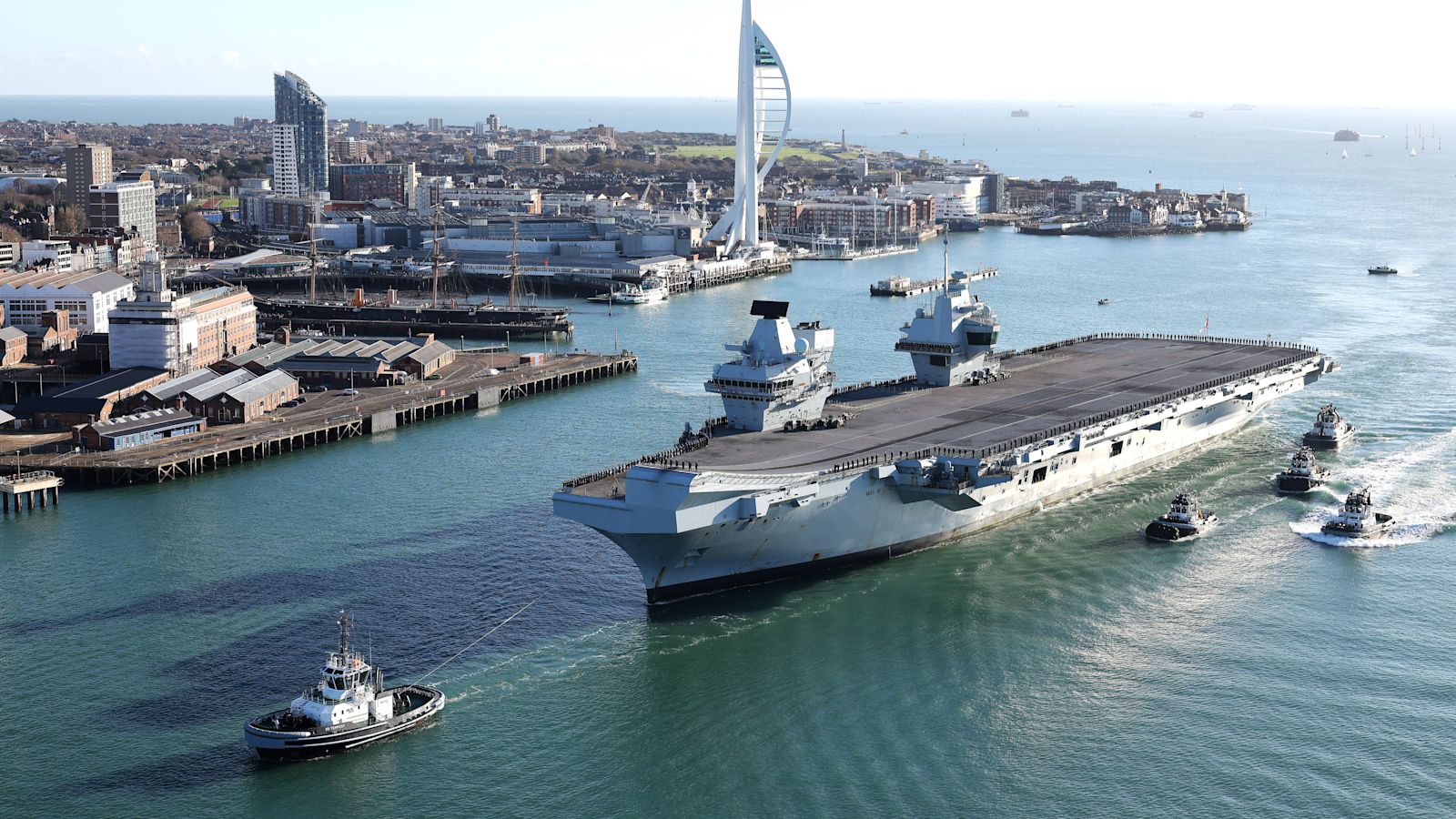
HMS Prince of Wales readiness has been increased, with notice-to-sail reduced from ten days to five days (a five-day, 50% reduction), though no deployment decision has been made. The UK has also repositioned assets (B-1 Lancers using RAF Fairford, Merlin helicopter, Typhoon and F-35 patrols, and HMS Dragon) which raises regional defence posture and idiosyncratic upside for defence contractors and tail risk to Middle East energy/security exposures.
A stepped-up carrier readiness is a catalyst that feeds near-term demand into the naval sustainment ecosystem (spares, munitions, flight-hours and afloat-support contracts) and into the logistics tail that supports forward deployments. Operational tempo increases typically front-loads consumable spend and contractor activity — we should expect a measurable pickup in servicing and ordnance-related revenue over the next 1–6 months rather than a material new-build wave that would show up in orderbooks over years.
Second-order winners are shipyards and sustainment specialists that can mobilise crews and parts quickly; companies with modular supply chains and depot maintenance capacity capture most upside versus firms reliant on long lead-time manufacturing. Conversely, firms exposed to commercial shipping and leisure logistics face higher short-term insurance and rerouting costs if the region’s war-risk premiums widen, compressing margins regionally within weeks.
Key near-term risks: escalation that drags in additional state actors (days–weeks) would spike premiums and could create abrupt counterparty and claims shocks for insurers; de-escalation—diplomatic or political—would remove the premium and repricing could be swift, leaving contractor stocks vulnerable to a 10–25% pullback. Watch three triggers: formal carrier deployment order (immediate market move), UK/US diplomatic de-escalation statements (fast reversal), and any direct strike on a major naval asset (tail event).
AI-powered research, real-time alerts, and portfolio analytics for institutional investors.
Request DemoOverall Sentiment
neutral
Sentiment Score
0.00
