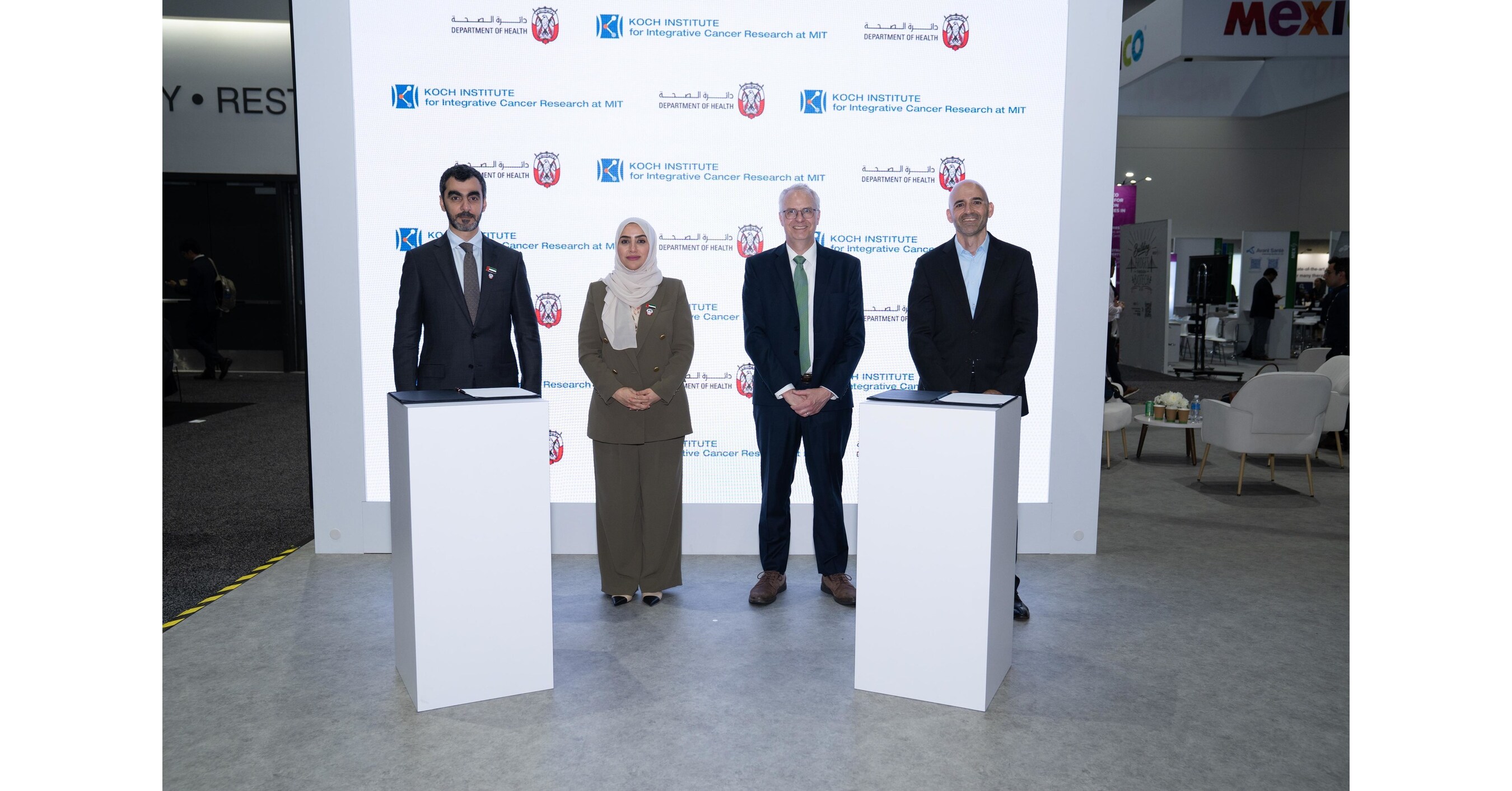
Le Department of Health – Abu Dhabi (DoH) et le MIT Koch Institute lancent un partenariat stratégique pour accélérer la recherche sur le cancer assistée par l’IA, la science translationnelle et la bioconvergence. La collaboration prévoit le développement d’essais cliniques et d’études translationnelles à grande échelle, ainsi que la création de bases de données de recherche et de biobanques partagées ciblant des populations spécifiques. Le programme vise aussi la formation de talents (IA, oncologie, médecine de précision) et la création d’un incubateur bioconvergence pour soutenir des startups et l’innovation vers des solutions déployables à grande échelle.
This is more important as an ecosystem-building signal than as an immediate earnings event. Sovereign-backed translational partnerships can shorten the path from academic IP to funded startups, which tends to benefit the picks-and-shovels layer first: sequencing, lab automation, cloud/AI infrastructure, and clinical data tooling rather than headline biotech names. In public markets, that favors large-cap enablers with recurring demand, not pre-revenue oncology platforms.
The second-order effect is competitive gravity. If Abu Dhabi succeeds in building shared biobanks and trial infrastructure, it can pull a portion of early-stage discovery, patient recruitment, and multicenter trial activity away from US/EU institutions over a 3- to 7-year window. That is negative for smaller academic centers competing for grants and talent, but positive for CROs and infrastructure vendors that can monetize cross-border trial networks and data standardization.
Near term, the market will likely overestimate the revenue impact and underprice the execution risk. These partnerships usually take years to convert into deployable products, and the key falsifier is whether the initiative produces funded trials, database scale, or startup formation within 12-24 months. Without that proof, this stays an optionality story rather than a tradable catalyst.
Contrarian view: the consensus will frame this as bullish for AI healthcare broadly, but the more durable beneficiary may be the sovereign ecosystem itself, not the listed tools companies. If capital formation in Abu Dhabi accelerates, it could become a competitive source of non-dilutive funding for private biotech, which is a headwind for venture pricing in the US rather than a direct tailwind for public biotech multiples.
AI-powered research, real-time alerts, and portfolio analytics for institutional investors.
Request DemoOverall Sentiment
mildly positive
Sentiment Score
0.25
