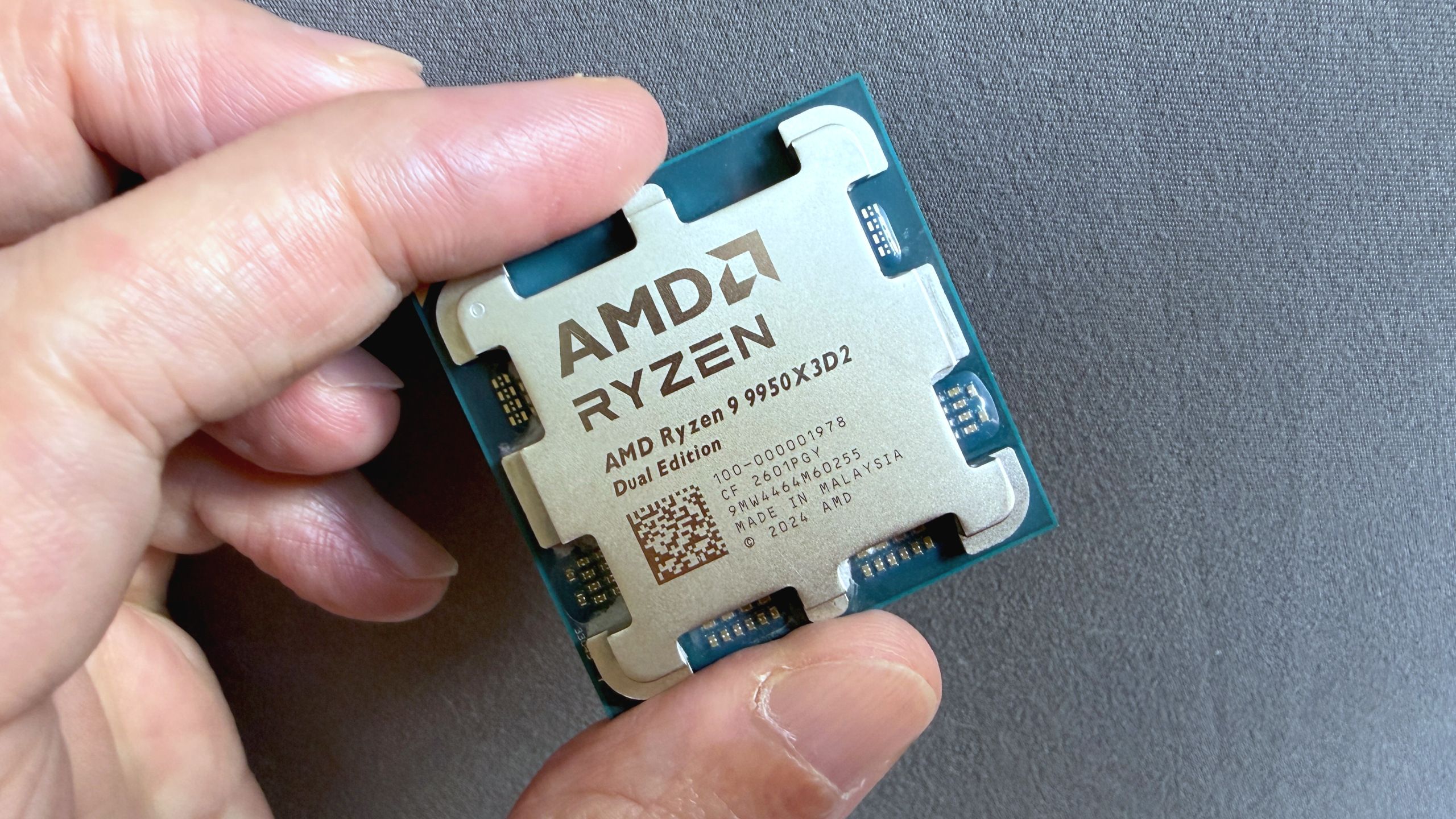
AMD’s Ryzen 9 9950X3D2 Dual Edition launches at $899, or about $200-$260 above the 9950X3D, for 192 MB of L3 cache, a 5.6 GHz boost clock, and a 200 W TDP. The chip posts modest gaming gains in some titles and stronger multi-core/content-creation results, but it also runs hot and draws roughly 245 W in testing. Overall, the review says the performance uplift is real but too small to justify the large price premium for most buyers.
AMD is showing that there is a real performance ceiling-removal effect when both chiplets are made symmetrical, but the monetization problem is obvious: the market is being asked to pay enterprise-grade margins for a mostly enthusiast use case. The bigger second-order issue is not unit volume, it is product-line cannibalization—this SKU effectively puts a hard ceiling on how much AMD can keep extracting from the halo desktop segment without forcing buyers back down to the 9800X3D or sideways to standard Ryzen 9 parts.
The near-term winner is AMD’s premium brand positioning, not incremental desktop revenue. A top-bin gaming halo can support ASPs across the stack for a quarter or two, but if review consensus hardens around “small gains, big premium,” channel elasticity should shift toward lower-priced X3D parts and away from the $800+ niche. That matters because gaming demand is already highly informed and review-sensitive; the SKU can lift mindshare while still contributing little to broad-based sell-through.
The hidden risk is thermal/power perception. Once a desktop CPU is seen as requiring serious cooling to preserve its advantage, the buyer base narrows to enthusiasts with high willingness to spend on the whole platform, not just the chip. Over the next 1-3 months, the key catalyst is whether benchmark discourse frames this as a prestige product or as a “proof-of-concept tax” on AMD fans; the latter would blunt the halo effect and pressure mixed average selling prices on the AM5 platform.
My contrarian read is that this may be more useful strategically than financially. AMD is stress-testing the market for premium dual-CCD X3D and teaching buyers that the company owns the performance crown, even if the cash register impact is limited. If that narrative sticks, Intel’s premium desktop recovery gets harder because it must now compete not just on speed, but on perceived architectural cleanliness and gaming consistency.
AI-powered research, real-time alerts, and portfolio analytics for institutional investors.
Request DemoOverall Sentiment
mildly positive
Sentiment Score
0.15
Ticker Sentiment
