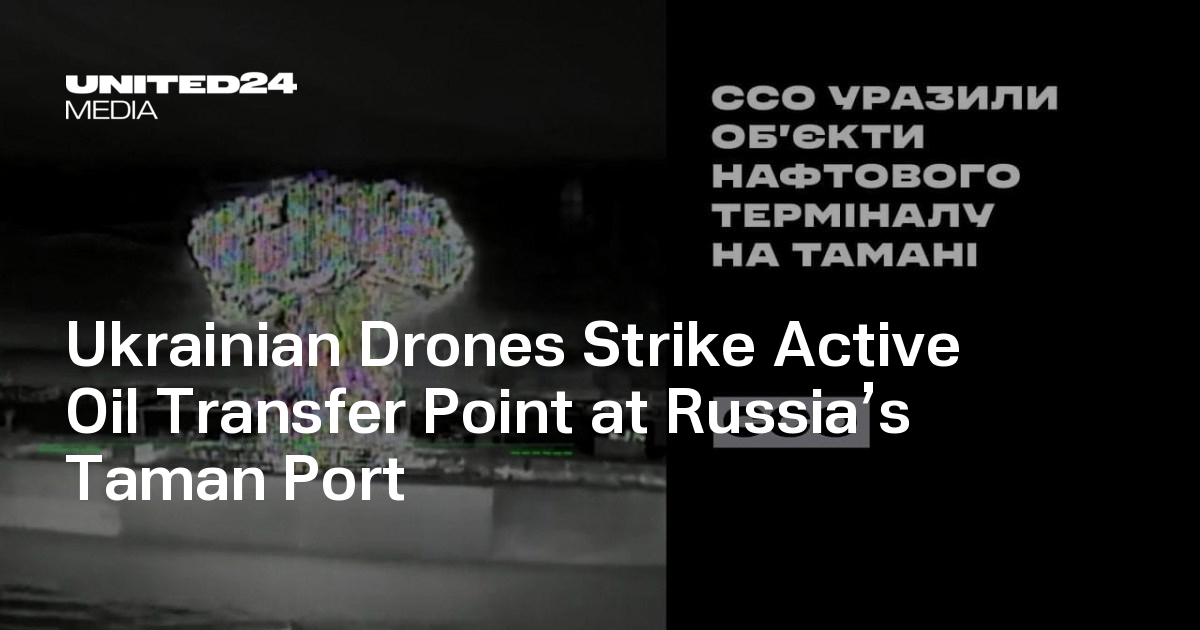
Ukrainian strike drones hit the Tamanneftegaz oil terminal in Russia’s Krasnodar region, damaging infrastructure at a major Black Sea export hub that handles crude oil, fuel oil, diesel, and liquefied hydrocarbon gases. The attack reportedly targeted a connecting overpass between berths 3 and 4, with a tanker possibly docked during loading, though vessel damage is unconfirmed. The incident underscores escalating pressure on Russia’s energy and logistics network and may raise short-term disruption risk to Black Sea export flows.
The market should treat this less as a one-off nuisance and more as a steady degradation of Russia’s export optionality. Repeated strikes on loading and transfer infrastructure raise the probability of intermittent outages, but the bigger second-order effect is higher friction costs: more idling vessels, more precautionary scheduling gaps, and a wider discount required to move barrels through exposed Black Sea nodes. That tends to show up first in freight, insurance, and blending economics before it becomes visible in headline export volumes.
The near-term beneficiary is not necessarily crude prices outright, but volatility along the entire seaborne chain. Product markets are more vulnerable than crude because diesel/fuel-oil flows are operationally tighter and less easily rerouted than flat-price barrels; any sustained disruption at a major hub can tighten regional middle distillate balances and support crack spreads even if Brent barely moves. Watch for a spillover into tanker utilization patterns as cargoes get re-timed or shifted to longer-haul alternatives, which can lift tonne-miles and widen charter rates.
The key risk is escalation asymmetry: if Russia responds with additional strikes on Ukrainian energy or logistics assets, the market could quickly reprice a broader Black Sea risk premium. However, the more durable catalyst is cumulative degradation over months, not a single overnight event. If these attacks continue, the likely response is not a clean supply shock but a slow bleed in reliability, which is harder for consensus to price and more favorable for relative-value trades than outright commodity calls.
Contrarian view: the market may be overestimating the chance of an immediate crude shortage and underestimating the probability of a sharper product-market squeeze. Russia has some rerouting capacity, but each added layer of operational security lowers throughput and raises unit costs, which is structurally bearish for export margins even if volumes hold. That argues for expressing the view through downstream, freight, and insurance exposure rather than betting on a large directional move in Brent.
AI-powered research, real-time alerts, and portfolio analytics for institutional investors.
Request DemoOverall Sentiment
moderately negative
Sentiment Score
-0.35
