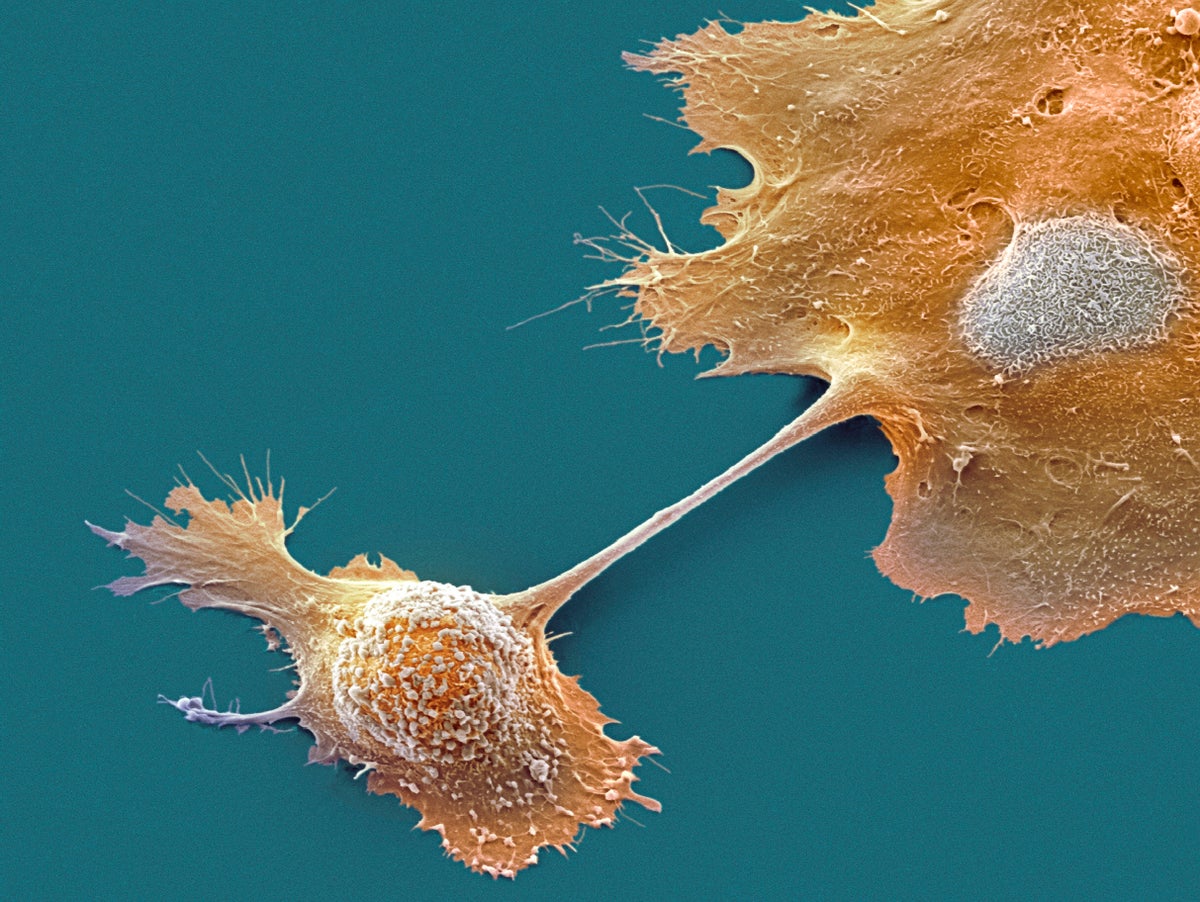
Daraxonrasib nearly doubled overall survival in advanced pancreatic cancer, with patients living 13.2 months versus 6.7 months on chemotherapy in a 500-person trial. The results, presented at ASCO and published in NEJM, materially strengthen the case for RAS-targeted therapies and could support follow-on combinations and next-generation drugs. The article also highlights progress in other hard-to-drug oncology targets including MYC, p53, and ß-catenin, reinforcing a positive biotech innovation backdrop.
RVMD’s data point is less about one pancreatic readout and more about validation of the “multi-RAS” thesis: if the class works, the addressable market expands from narrow mutation niches to a platform across RAS-driven tumors. That changes the valuation math from single-asset binary to optionality on combo regimens, label expansion, and follow-on chemistry improvements. The market should re-rate not only Revolution Medicines but also the broader discovery ecosystem that can now argue hard targets are no longer dead ends.
The second-order winner is combination strategy, not monotherapy. If a pan-RAS backbone becomes the new default, the real economic capture shifts to whoever owns the next layer of response-duration improvement: EGFR/KRAS pairs, immuno-oncology add-ons, and resistance-management pipelines. That creates a probable near-term squeeze in companies exposed to late-line pancreatic chemo standards, while improving financing odds for adjacent platform biotechs working on p53, MYC, and WNT/β-catenin because capital allocators will suddenly believe “impossible” programs can de-risk with one clinical proof point.
The main risk is that efficacy durability and tolerability remain the gating variables. A strong top-line survival signal can still fade if dose intensity falls, discontinuations rise, or resistance emerges quickly once the drug moves into earlier lines and combination settings; those failure modes would show up over the next 6-18 months, not immediately. The contrarian view is that the market may overprice platform optionality before seeing broad tumor-type reproducibility — one pancreatic win does not mean pan-RAS is a universal answer, especially if toxicity limits chronic use.
Near term, the setup is more positive for sentiment than for clean fundamental revision across the sector, so the best trades are spread-based. The signal should also tighten financing windows for private biotech, which could accelerate M&A discussions in “undruggable” targets as strategics seek validation-led deal flow.
AI-powered research, real-time alerts, and portfolio analytics for institutional investors.
Request TrialOverall Sentiment
strongly positive
Sentiment Score
0.78
Ticker Sentiment
