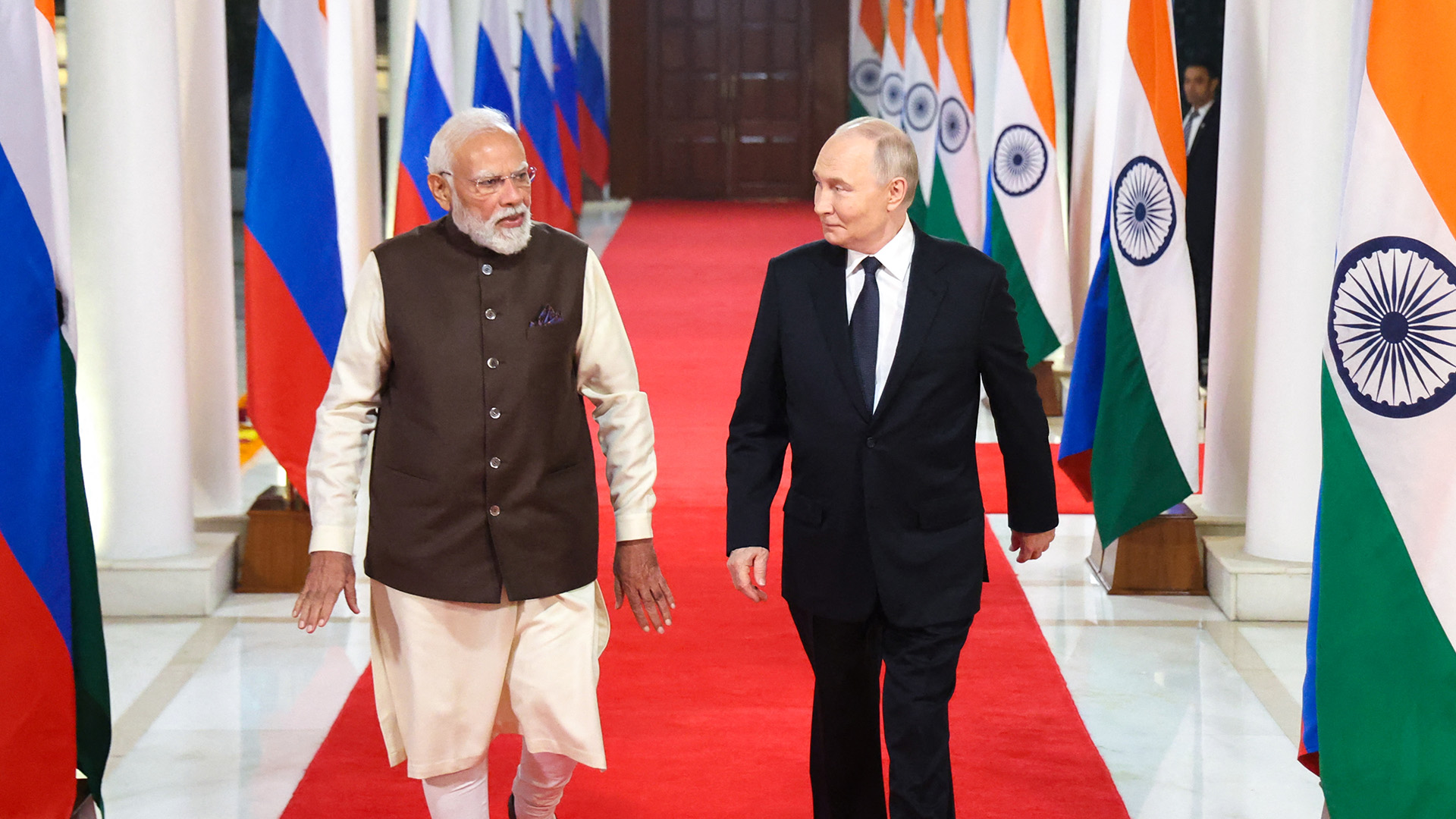
President Putin's visit to India is being used to signal non-Western alliances while India stresses strategic autonomy; key discussion points include energy (Russian oil) and defence cooperation. U.S. tariffs and sanctions have already dented Russian exports and complicate potential Indian purchases, while defence ties may shift toward localized manufacturing and know‑how sharing as India diversifies suppliers — a development that raises geopolitical uncertainty and has modest but tangible implications for oil flows and defence-sector arrangements.
Market structure: Short-term winners are Russian exporters (if India resumes purchases at deep discounts) and Indian refiners (higher margin on cheap feedstock); losers are Western refiners and countries relying on stable seaborne flows. Expect a 200–500 kbpd swing in seaborne Russian-to-Asia flows to meaningfully move Brent by $3–8/bbl within weeks and raise tanker freight spreads (VLCC/TCE) by 10–30% due to re‑routing and ship-to-ship transfers.
Risk assessment: Tail risks include U.S. secondary sanctions on Indian entities (low probability, high impact) or an explicit India–U.S. trade penalty that could knock INR 5–8% and widen sovereign CDS within 30–90 days. Hidden dependencies: insurance/flagging and oil settlement rails (banking exclusions) are the choke points — if insurers refuse Russian cargoes, physical rerouting and freight spikes amplify; catalysts are formal tariff announcements, bilateral defense pacts, or published Russian export volumes.
Trade implications: Tactical plays should be volatility-aware: short-dated crude upside via 2–3 month Brent call spreads to capture supply risk, paired with long positions in Indian refiners (Reliance RIL.NS, ONGC ONGC.NS) to capture margin expansion if discounted Russian crude resumes. Play freight by buying tanker names (STNG, NAT) or VLCC freight derivatives; hedge INR exposure with 3‑month USD/INR calls if material FX risk exists.
Contrarian angles: Consensus assumes India will fully balance U.S. pressure and Russia will find buyers — both understate frictions in insurance/payment rails and India’s political cost. If India balks, Russian exports could remain ~300–500 kbpd below pre-sanction levels for quarters, keeping crude structurally firmer; conversely a discreet bypass solution (barter/rupee) would reflate Russian cashflows but leave Western sanctions architecture intact.
AI-powered research, real-time alerts, and portfolio analytics for institutional investors.
Request DemoOverall Sentiment
neutral
Sentiment Score
-0.15
