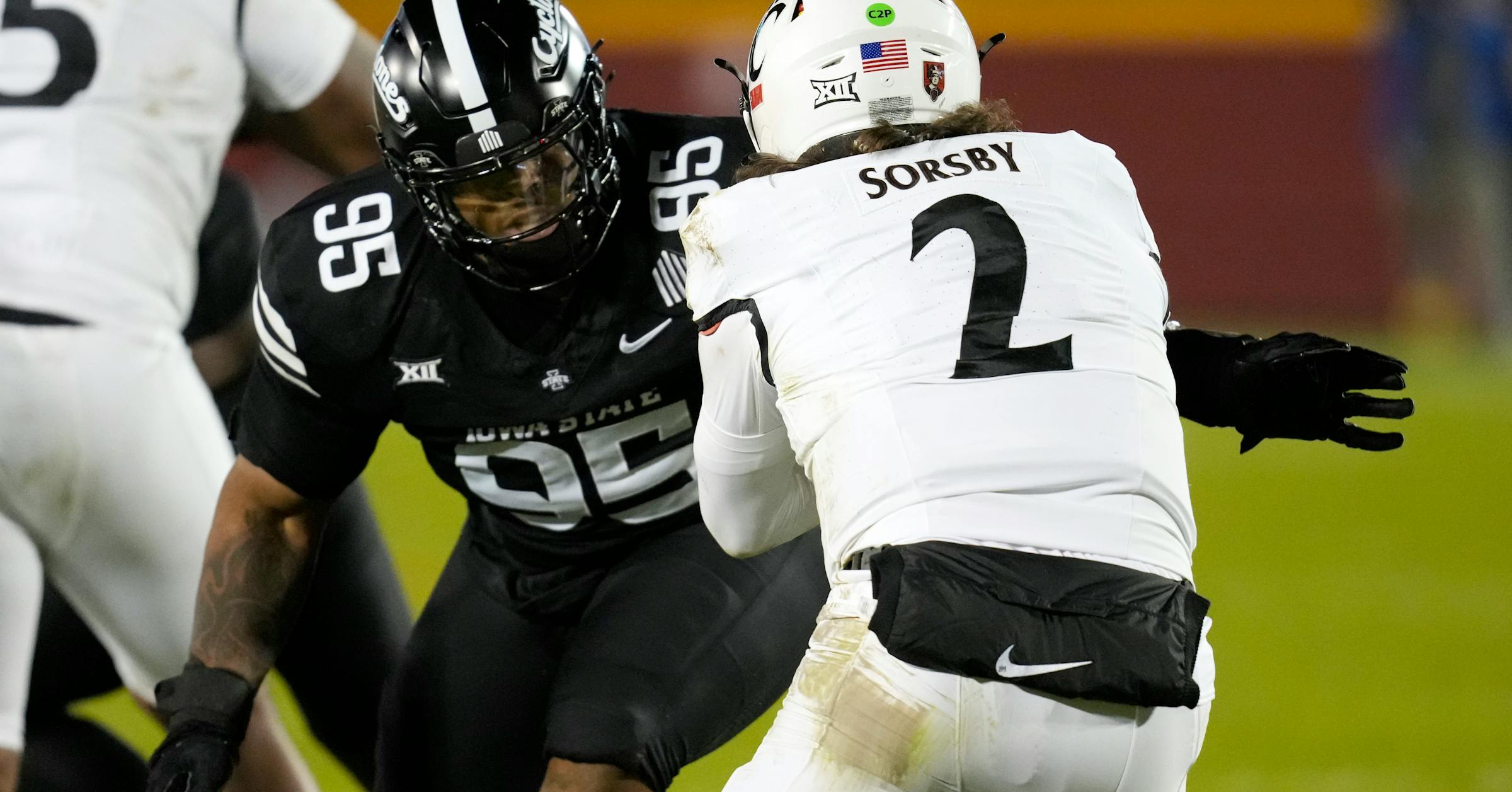
The article is a factual recap of the Vikings' Day 2 NFL draft activity, including a trade of edge rusher Jonathan Greenard to the Eagles for 2026 and 2027 third-round picks. Minnesota used multiple picks on defensive players, including Caleb Banks, Jake Golday, Domonique Orange, Caleb Tiernan, and Jakobe Thomas, and now has five top-100 selections plus four Day 3 picks. The content is sports-news driven and does not imply meaningful financial market impact.
This is a classic allocation signal disguised as roster news: the market should read it as an unusually early, concentrated pivot toward defense and future cap flexibility. By turning a veteran edge into draft capital, Minnesota is effectively swapping current win-now production for a longer-duration cost-controlled asset base, which raises short-term volatility in team performance but improves optionality over the next 18–30 months. The second-order effect is on any edge-rush-dependent game script: less pressure talent can widen variance on the field, which tends to hurt live betting angles and amplify in-game scoring volatility.
The more interesting angle is competitive dynamics inside the NFC North. A defense-heavy draft can stabilize a team’s floor, but it usually takes 1–2 seasons for rookie defenders to generate positive expected value versus established vets, especially in the trenches. That creates a window where market perception may overprice “immediate improvement” while the actual near-term outcome is more likely a mixed profile: better against the run, less efficient on pass rush, and therefore more exposed to high-ceiling passing attacks.
Contrarian take: the consensus will likely treat this as prudent roster building, but the risk is that the club is trading away certainty for optionality at the same time the rest of the division is trying to compress win-now variance. If the rookie class underperforms, the salary savings will not show up in results until much later, and the team could enter the 2026 offseason with cap flexibility but still needing premium edge production. The catalyst to watch is training camp usage and whether the new front seven can produce pass-rush pressure without blitzing—if not, the defense may look better on paper than on Sundays.
AI-powered research, real-time alerts, and portfolio analytics for institutional investors.
Request DemoOverall Sentiment
neutral
Sentiment Score
0.05
