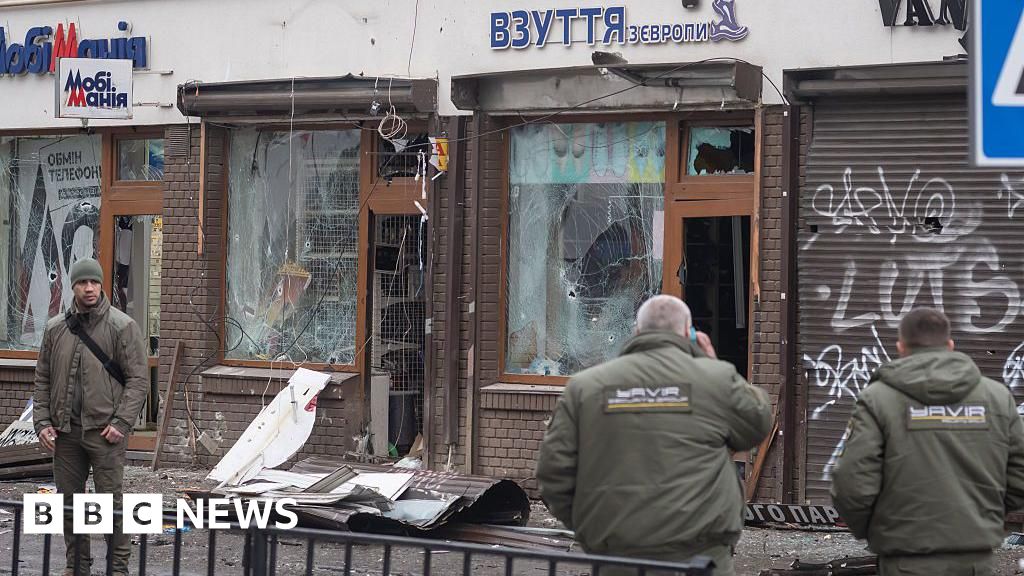
A terror attack in Lviv killed a 23-year-old police officer and injured 25 after two homemade devices detonated in waste bins following a reported break-in; authorities say a 33-year-old suspect has been detained and allegedly acted on instructions from a Russian intelligence agent. Ukrainian officials also reported heavy overnight Russian strikes ahead of the fourth anniversary of the invasion, with air defences intercepting about 50 missiles and nearly 300 drones and attacks hitting the energy sector, residential buildings and railways; at least one civilian fatality was reported in the Kyiv region. The incidents sustain elevated geopolitical risk and downside pressure on regional risk assets, energy infrastructure exposure and logistics corridors, keeping risk premia and defence/energy sector volatility elevated.
Market structure: Immediate winners are defense primes and air-defence/missile suppliers (US names LMT/RTX/GD) and commodity suppliers tied to energy security; losers are regional travel/transport, Ukrainian credit, and Europe-exposed cyclicals. Expect a 5–20% re-rating tailwind for large-cap defense names over 3–12 months if Western aid continues; European airlines and travel could see 10–30% downside in a sustained risk-off scenario.
Risk assessment: Near term (days) we expect risk-off flows: EUR weakness, US/DE bond safe-haven bids, and oil/gas +3–10% on outages or fear spikes. Mid-term (weeks–months) the main tail risks are escalation into wider strikes or major gas export curbs (would push TTF > +50% within weeks) and political risk (US aid votes); long-term (quarters) persistent higher defense budgets and supply-chain constraints for munitions/electronics are likely.
Trade implications: Tilt portfolios to defense and energy producers, hedge European equity exposure and travel via puts/shorts, and buy gold/natural gas as asymmetric hedges. Use options to express directional bets with defined downside (6–12 month 25-delta calls on primes; 1–3 month puts on EuroStoxx/airline ETFs). Entry triggers: buy into a 3–8% pullback or on confirmation of additional Western aid; trim after 15–25% rally or if de-escalation occurs.
Contrarian view: Consensus may overweight large US primes; smaller/European defense suppliers (e.g., Saab SAAB-B) are under-owned and could outperform on follow-on procurement. Also, a protracted defence spend cycle could be inflationary—long-duration cyclicals and rate-sensitive names are the hidden losers if inflation re-accelerates.
AI-powered research, real-time alerts, and portfolio analytics for institutional investors.
Request DemoOverall Sentiment
moderately negative
Sentiment Score
-0.55
