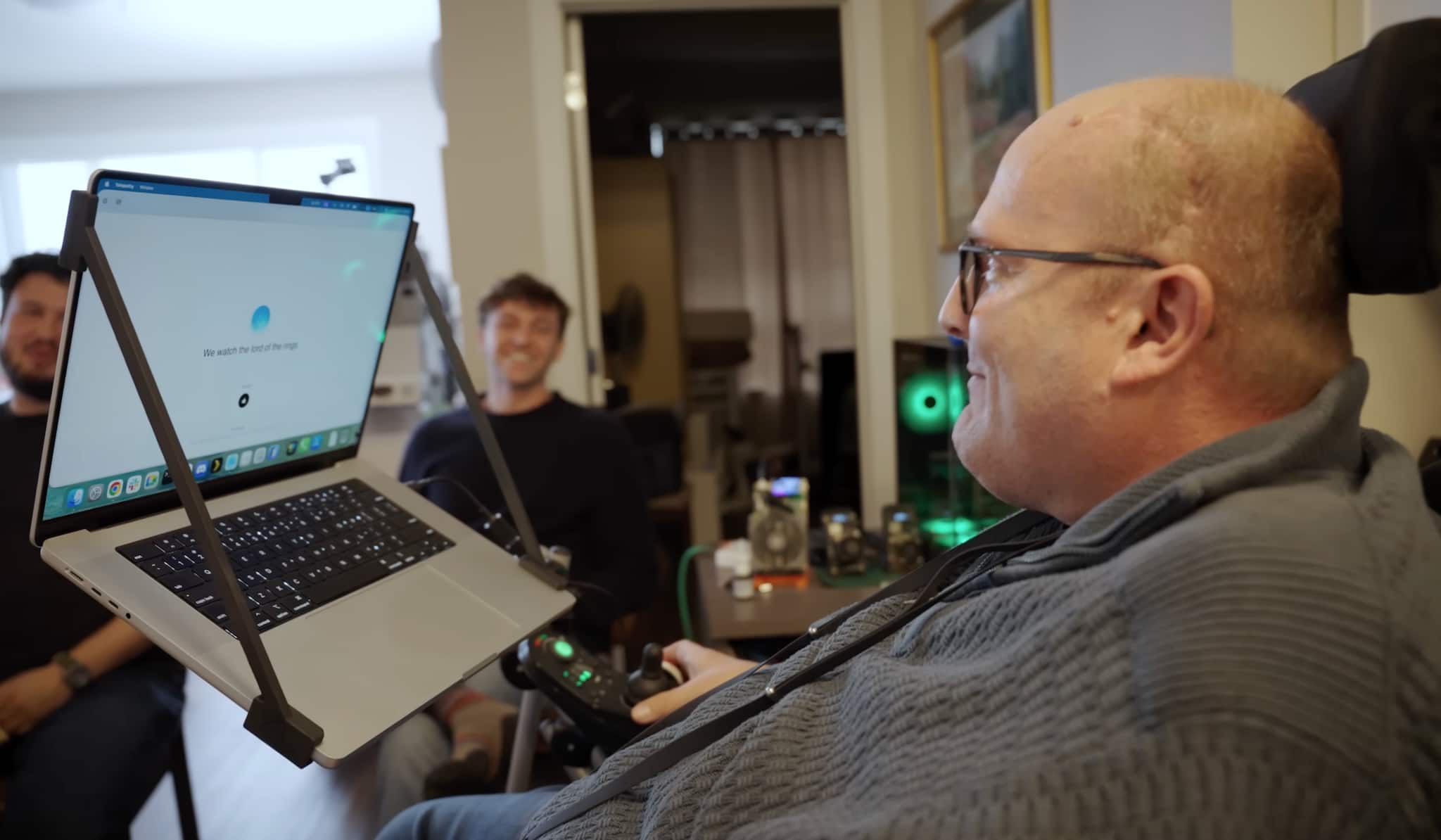
Neuralink demonstrated its brain-computer interface helping a man with ALS, Kenneth, communicate again by converting thoughts into speech and recreating his pre-ALS voice. The device, called Telepathy, is still investigational and being tested in controlled clinical trials, so the near-term market impact is limited. The update highlights continued progress in brain-computer interfaces for patients with severe motor impairment.
The immediate winner is not the device maker’s revenue line — it is the credibility of the entire brain-computer-interface category. That matters because clinical proof-of-concept lowers the probability that capital, talent, and hospital partnerships concentrate around one platform, which can accelerate funding and M&A for adjacent neurotech names while pressuring smaller players with less elegant software stacks. The second-order commercial impact is likely to show up first in trial enrollment velocity and reimbursement discussions, not device sales, because insurers will eventually have to evaluate whether speech restoration reduces long-term caregiving costs.
The biggest near-term beneficiary is probably the broader assistive-tech ecosystem: eye-tracking, AAC software, and hospital rehab providers may see a temporary narrative bid, but over a multi-year horizon they face substitution risk if invasive interfaces become safer and easier to deploy. The more important competitive angle is manufacturing scale and clinical execution — if the technology can be reproducibly implanted and tuned, the moat shifts from hardware novelty to data flywheel, software personalization, and surgical throughput. That tends to favor companies with deep neuro data pipelines and regulatory patience, not necessarily the first mover.
Consensus is likely underestimating the option value of voice restoration as a premium healthcare service category rather than a niche disability tool. If these systems can restore identity and not just function, adoption economics improve materially in high-income markets and among payers with strong caregiver-cost sensitivity. The main tail risk is a long regulatory bottleneck: any adverse event, durability issue, or cyber/privacy scare could push commercialization out by years and compress enthusiasm across the entire sector.
For investors, the setup is more about expressing relative winners than outright beta. In the near term, the trade is to own the picks-and-shovels of neuroprotection and surgical enablement while fading overextended small-cap neurotech names that trade purely on narrative. If the category keeps compounding clinical wins, the rerating can be substantial, but the path will be volatile and highly headline-driven.
AI-powered research, real-time alerts, and portfolio analytics for institutional investors.
Request DemoOverall Sentiment
moderately positive
Sentiment Score
0.45
