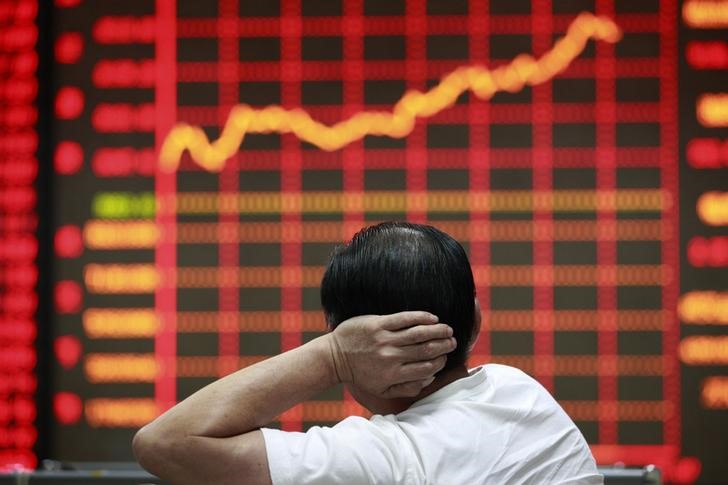
Japan’s Nikkei 225 and South Korea’s KOSPI hit fresh record highs, with the Nikkei up as much as 2.2% to 66,428.81 and the KOSPI surging 5% to 8,457.9, driven by a chipmaker/AI rally. SK Hynix jumped nearly 14% and briefly joined the $1 trillion market-cap club, while Samsung Electronics also reached a record high. Broader Asian gains were capped by Iran-related geopolitical risk, with Brent crude near $99/barrel, and by caution ahead of U.S. inflation data and central-bank decisions in Australia and New Zealand.
The cleanest signal here is not just AI enthusiasm, but a renewed capex re-acceleration trade in semis. When a memory leader re-rates on the back of AI demand, the second-order beneficiary is the whole equipment and substrate stack: foundry bottlenecks, advanced packaging, and testing capacity become the real constraint, which tends to widen margins for the less visible picks-and-shovels names before it fully shows up in end-demand numbers. That also explains why regional equity strength is being concentrated in a narrow cluster rather than broadening out — leadership is becoming more capital-intensive and more self-reinforcing.
For MU specifically, the market is likely still underpricing how long AI memory pricing can stay tight if hyperscaler spending remains front-loaded into the next 2-3 quarters. The risk is that the current move tempts investors to extrapolate a straight-line upgrade cycle, when memory usually peaks before margins peak; once inventories normalize, the beta is brutal. The better trade is not to chase the absolute winner after a gap, but to own the suppliers with more durable pricing power and shorter feedback loops to orders.
The geopolitical overlay matters because it can quietly tax the same rally through input costs and rates. Higher oil lifts transport, packaging, and data-center power costs, which is a margin headwind for semiconductor demand at the edge and for consumer electronics more broadly over the next 1-2 quarters. Meanwhile, higher inflation prints keep central banks less accommodative, which is usually a valuation headwind for long-duration tech even if near-term earnings keep improving.
The market is probably underestimating how fragile this breadth is: a single headline on Iran can move energy, rates, and risk appetite simultaneously, which is exactly the kind of macro regime that punishes crowded tech longs. If the U.S. inflation data comes in hot, the sector can still rally on fundamentals, but the multiple expansion trade likely loses air. That makes this a tactically positive but strategically vulnerable setup, with the best risk/reward in relative-value expressions rather than outright beta.
AI-powered research, real-time alerts, and portfolio analytics for institutional investors.
Request DemoOverall Sentiment
mildly positive
Sentiment Score
0.15
Ticker Sentiment
