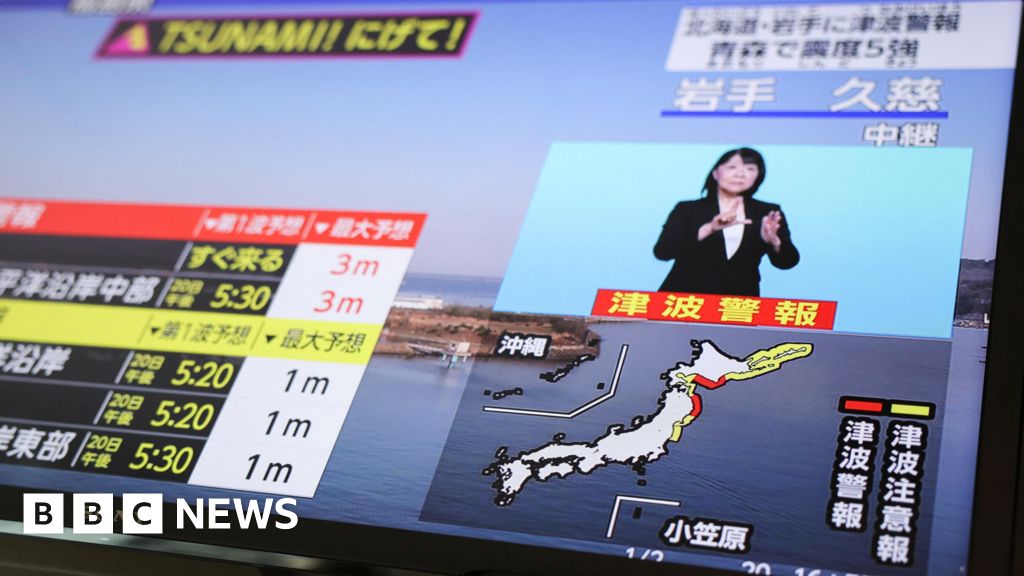
Japan issued tsunami warnings and evacuation orders after a 7.7-magnitude quake off Iwate prefecture, with authorities warning of a relatively higher-than-normal risk of an 8.0+ aftershock over the next week. The biggest waves measured 80cm, but officials warned of possible 3m waves, with bullet train service disrupted and 100 homes without power. No major damage or injuries were reported immediately, but the event raises broader risk of supply-chain, transport, and infrastructure disruption in a key Asian economy.
The near-term market impact is less about headline damage and more about latency: even a modest quake in a critical maritime corridor can cascade into shipping delays, port inspections, rail interruptions, and inventory pull-forwards. Japan’s logistics network is tightly synchronized, so a short disruption can create outsized knock-on effects for regional auto, machinery, and electronics supply chains over the next 3-10 trading days, even if physical damage remains limited. The market is likely underpricing the probability of rolling aftershocks that keep insurers, transport operators, and local utilities in a defensive posture for a week or more.
Second-order beneficiaries are the firms that monetize disruption avoidance: domestic construction, emergency equipment, generators, portable power, satellite communications, and select defense-adjacent infrastructure names. The more interesting trade is not a straight disaster long, but a spread between “business continuity” winners and exposure-heavy cyclicals with just-in-time Japan inventory. Any company with high Japan assembly dependence or east-coast logistics concentration faces margin pressure from expedited freight, rerouting, and labor stoppages, which can show up before earnings as negative revision risk.
The tail risk is a larger event in the next 7 days, which would shift this from temporary disruption to energy, utility, and sovereign-risk pricing. If the situation stabilizes quickly, the trade fades hard because Japan’s institutions are exceptionally good at rapid normalization, and disaster-related equities usually mean-revert once immediate evacuation risk passes. The contrarian view is that the move may be overextended in risk assets tied to Japan exposure, because the most likely outcome is operational friction rather than meaningful macro damage; that argues for selective hedges rather than wholesale de-risking.
AI-powered research, real-time alerts, and portfolio analytics for institutional investors.
Request DemoOverall Sentiment
strongly negative
Sentiment Score
-0.55
