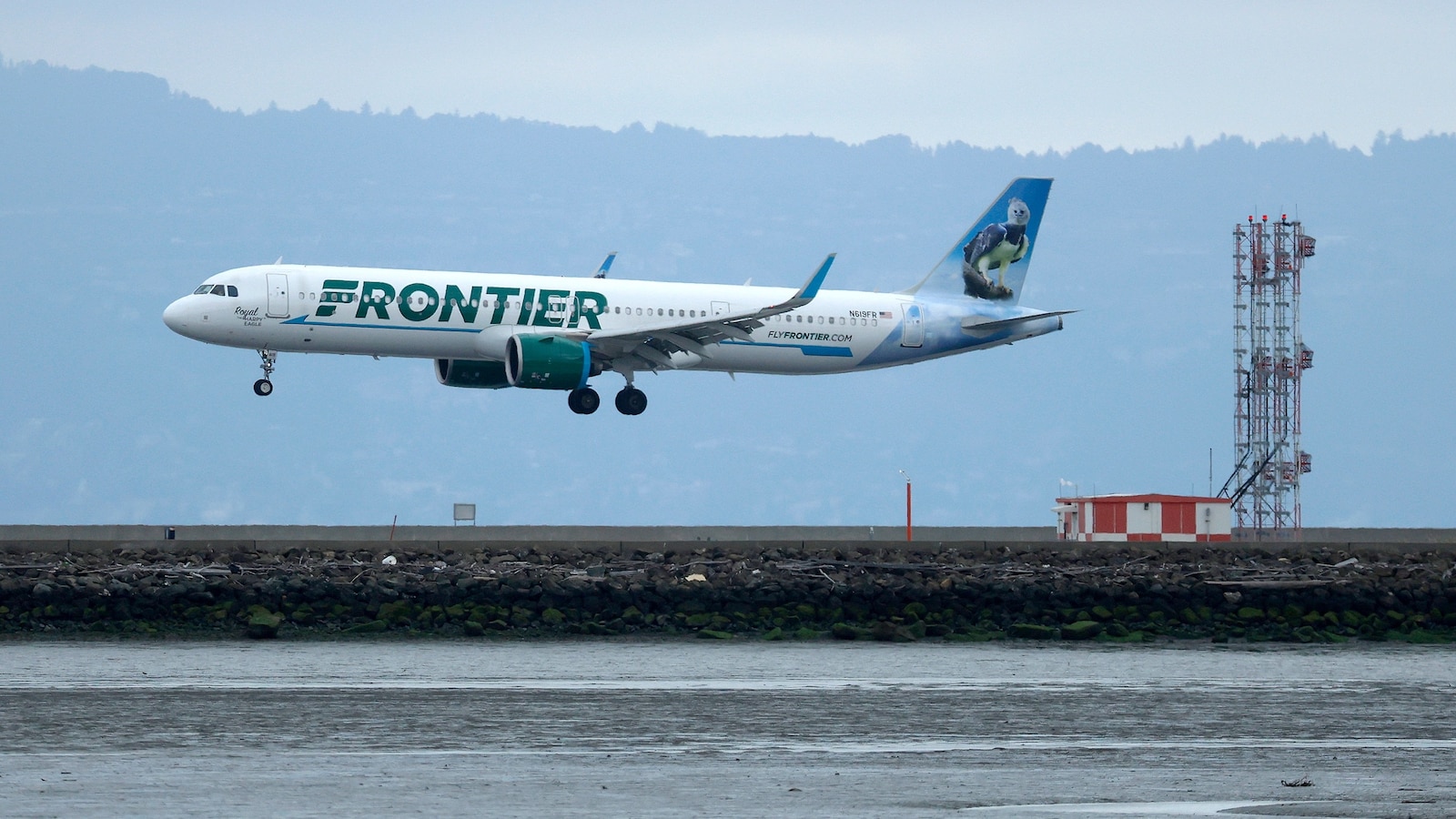
A Frontier Airlines flight from Denver to Phoenix was delayed after an ammunition magazine was found on board, forcing passengers to deplane, rescreen, and rebook on a flight that departed Monday morning. No injuries were reported, and a security sweep found nothing additional on the aircraft. The TSA is aware of the incident, and the FBI is leading the investigation.
This is an operationally tiny event for the industry, but it is a useful signal on how quickly low-probability security incidents can propagate into network inefficiency. The immediate economic damage is not the incident itself; it is the knock-on effect of crew duty-time expirations, missed turns, and same-day reaccommodation that can turn a single gate delay into a multi-leg schedule disruption. Ultra-low-cost carriers with tighter aircraft utilization and thinner spare-aircraft buffers are structurally more exposed than legacy peers when the disruption is caused by something that cannot be “faster-turned” with money.
The second-order read-through is on airport and TSA throughput, not airline demand. Security rescreening and ad hoc inspections create localized friction at hub airports, which modestly raises the probability of missed departures during peak banks; that can increase irregular-ops costs across the system even if the root cause is isolated. The market should care less about reputational damage to one carrier and more about whether this becomes part of a broader narrative around screening reliability and post-incident procedural tightening, which can incrementally raise turnaround times for everyone over the next few weeks.
There is also a subtle asymmetry in who benefits from this type of event: carriers with larger schedule buffers, more spare aircraft, and better disruption recovery tend to steal incremental share when a low-cost competitor suffers a hiccup. If management teams perceive a rising probability of similar events, we could see a small but real willingness to build slack into schedules, which is margin-negative for the sector and especially punishing for the most tightly managed operators. The contrarian view is that the headline overstates the operational significance; absent a pattern of repeat incidents, the direct earnings impact is effectively immaterial and the right trade is on volatility, not direction.
AI-powered research, real-time alerts, and portfolio analytics for institutional investors.
Request DemoOverall Sentiment
neutral
Sentiment Score
-0.08
