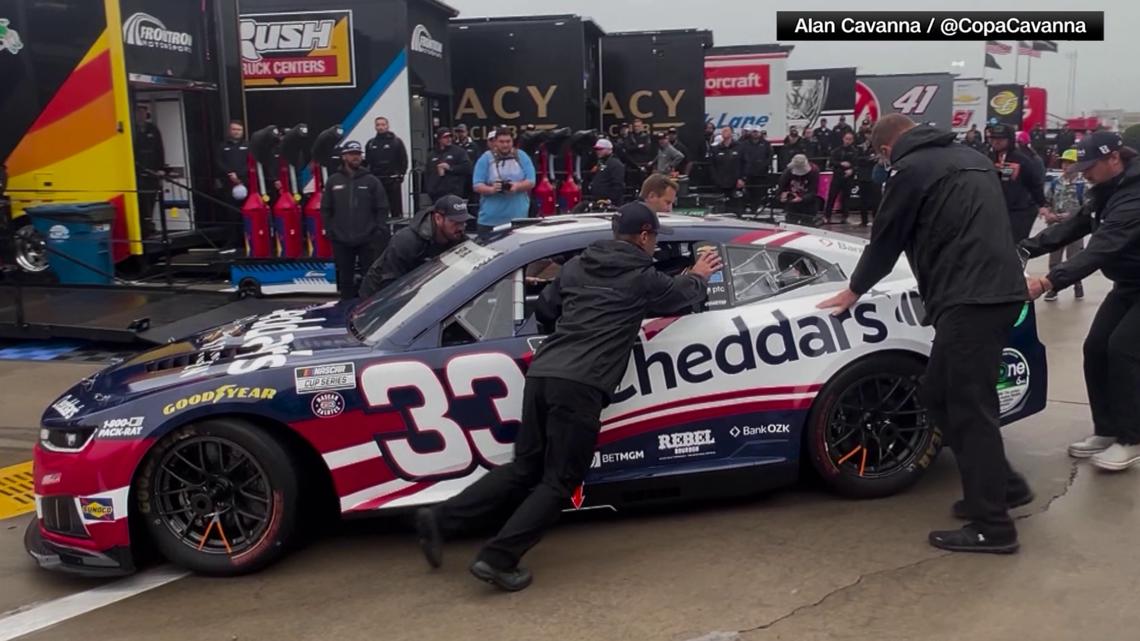
Richard Childress Racing will replace Kyle Busch’s No. 8 with No. 33 for Sunday’s Coca-Cola 600, with Austin Hill driving and all 39 cars carrying a black No. 8 decal in Busch’s honor. The article also reports Busch died at 41 from complications after severe pneumonia progressed to sepsis, a significant personal and sports loss but with limited direct market relevance. RCR has reserved the No. 8 for Brexton Busch should he pursue a NASCAR career.
This is not a tradable company-specific shock, but it is a useful signal about how fragile the NASCAR sponsorship/branding ecosystem is around star drivers. A death of this profile pulls forward the timeline for advertisers and team partners to re-rate the asset: inventory tied to Busch’s name, number, and legacy becomes immediately more valuable as a nostalgia-and-tribute vehicle, while any brands that were relying on his active-participant reach lose a short-duration promotional platform. The likely second-order winner is media rather than teams: emotional, high-attention moments tend to lift engagement on race broadcasts and social clips for one to two race cycles, which benefits rights-holders and ad-supported distribution more than it benefits track economics.
The operational implication is that RCR’s decision to preserve the number for the family effectively converts an earned media issue into a long-dated franchise asset. That means the economic value of the number shifts from current merchandising and sponsorship monetization to optionality on Brexton Busch, which is a years-out call option rather than a near-term P&L driver. In the interim, the replacement driver and tribute decals will likely create a temporary spike in engagement, but not enough to change the fundamental financial profile of any public auto-racing exposure; the bigger impact is reputational, not earnings.
The health angle matters more broadly because it reinforces how quickly a seemingly isolated respiratory illness can turn into a systemic event in older or high-stress populations. For healthcare, this is supportive of the broader sepsis-awareness narrative, which can modestly benefit diagnostics, infection management, and critical-care workflows over the next 6-12 months. The contrarian view is that the market will overestimate the durability of the emotional attention while underappreciating how quickly it fades; after the next race or two, this is likely a sentiment spike, not a structural re-rating.
From a risk perspective, the main catalyst window is days, not months: tribute coverage and race-day audience lift are front-loaded. The only durable swing factor would be if the family, team, or sport uses this moment to formalize a larger memorial/franchise initiative that expands merchandise or media engagement, but that would still be too small to matter for most public-market portfolios.
AI-powered research, real-time alerts, and portfolio analytics for institutional investors.
Request DemoOverall Sentiment
mildly negative
Sentiment Score
-0.20
