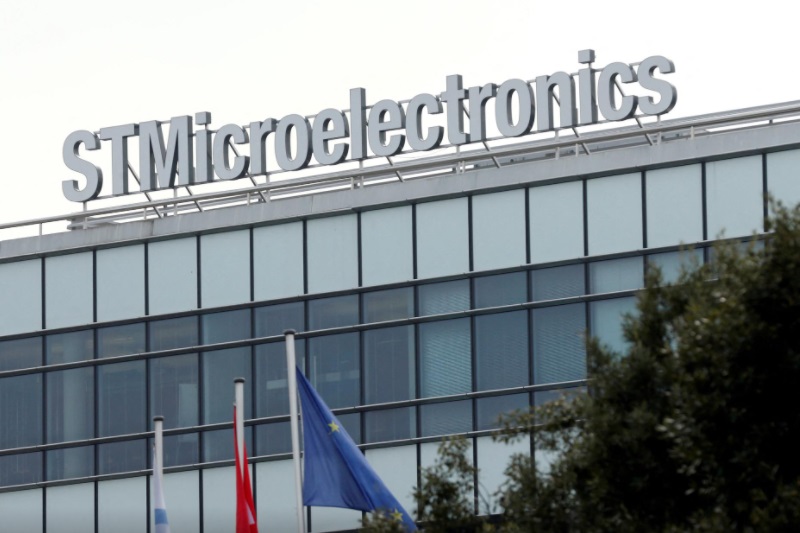
Jefferies flags a focused group of European analog/semiconductor names (STM, Infineon, Nokia, Aixtron, SUSS) as likely to outperform, citing estimate upgrades and scope for valuation re-rating; Infineon's AI power segment is forecast to grow >25% annually through 2030. The bank expects semicap names to cyclically de-rate after an early-2026 peak while analog firms benefit from capacity tightness, rising prices and a restocking cycle with Infineon planning price hikes beginning April 2026. STM is expected to see a positive H2-26 outlook driven by strong optical transceiver orders for AI data centers, and SUSS is highlighted as a deeply discounted AI-infrastructure play with new bonding/cleaning product launches in 2026 supporting margin recovery into 2027.
Analog-heavy European semiconductor names (STM, Infineon, Aixtron) are set to harvest a multi-quarter re-rating driven by tightness in deposition and analog capacity that is not visible in end-market book-to-bill numbers today. The immediate second-order winners are not just the fabs but the upstream capital-equipment and materials vendors (deposition, substrate, test/optical packaging) whose lead times compress margins for fast-followers and create pricing power for incumbents.
Key catalysts cluster by timeframe: near-term (0–3 months) is order flow clarity from hyperscalers on optical transceivers and inventory digestion; medium-term (3–12 months) is visible price increases in analog and power components and commensurate margin expansion; long-term (12+ months) is secular AI power growth in data centers and automotive electrification sustaining >20% CAGR for power ICs. Tail risks include a macro-led capex pause, sudden easing of optical supply tightness via excess capacity additions, or regulatory frictions that reroute hyperscaler procurement.
Competitive dynamics create attractive pair trades: market leaders with integrated analog/packaging (STM) can re-rate faster than server OEMs and pure-play semicap beneficiaries once price hikes translate to realized ASPs. Conversely, high-multiple, demand-sensitive software/ads names and some server OEMs (SMCI) are more exposed if AI hardware spending rebalances away from horizontal server procurement into specialized optical/power stacks.
The consensus underestimates how non-linear pricing in analog/power chips amplifies earnings per wafer; a 10–15% realized price uplift can translate to 20–40% EPS upside for incumbents with fixed fabs. However, that upside is binary—if hyperscaler orders slip or new capacity comes online earlier, the re-rating can reverse quickly, making defined-risk option structures preferable.
AI-powered research, real-time alerts, and portfolio analytics for institutional investors.
Request DemoOverall Sentiment
moderately positive
Sentiment Score
0.40
Ticker Sentiment
