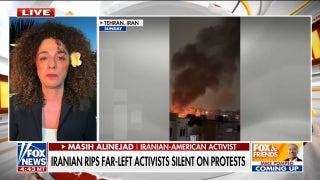
Iranian authorities are targeting Starlink users to stem leaks of protest footage after cutting public internet access amid nationwide unrest; rights groups say thousands of Starlink terminals have been smuggled into the country and connectivity has been degraded. The protests—driven by economic grievances and opposition to Ayatollah Khamenei’s regime—have produced highly divergent death toll reports (at least 646 confirmed by some sources, Reuters citing an unnamed official put it near 2,000), while the U.S. political response includes President Trump saying he will speak with Elon Musk about boosting Starlink access and the White House weighing diplomatic and potential military options. The developments raise geopolitical risk for the region and indirect implications for technology/defense policy and sanctions enforcement.
Market structure: The near-term winners are satellite-communications hardware and niche LEO-service suppliers (Iridium IRDM, Viasat VSAT, Globalstar GSAT) and defense primes (RTX, LMT) that supply resilient comms — demand shock for terminals could be +10-30% in weeks if smuggling/NGO buys continue. Losers: Iranian sovereign assets and EM risk assets (EEM) and regional airlines/trade flows facing sanction/airspace disruption; regional oil transit risks lift crude volatility. Competitive dynamics: Tech incumbents (SpaceX private) reduce pricing power for legacy GEO players but push component suppliers’ pricing power higher; capacity constraints in terminal supply will bid component OEM margins up for 3–9 months.
Risk assessment: Tail risks include U.S. kinetic action or Iran closing the Strait of Hormuz leading to crude >$110/barrel (+20%+ from current levels) within days, or U.S. sanctions on providers facilitating Iranian comms that hit small-cap LEO suppliers. Immediate (days): oil and defense knee-jerk moves; short-term (weeks–months): rerating of defense and satellite names; long-term (quarters): structural capex into resilient comms and cyber. Hidden dependencies: component supply chains (RF components, LNA, modems) concentrated in a few suppliers; export-control tightening could cause 4–8 week fulfillment delays.
Trade implications: Tactical: establish small overweight in energy (XOM or XLE) and defense (RTX, LMT) now — scale to target sizes if oil >5% in 48 hrs or Reuters confirms Strait disruptions. Buy selective satellite exposure IRDM/VSAT (0.5–1% each) to capture terminal demand; hedge with long-dated put protection. Use options: 3-month call spreads on XLE/XOM to limit upfront premium and 1–2% long GLD as inflation hedge if oil >$90/bbl.
Contrarian angles: Consensus assumes sustained Starlink demand in Iran; this may be transitory and politically sensitive — risk of reputational/regulatory hits to public suppliers could be underpriced. Historical parallels: 2019–2020 Middle East flares produced short-lived energy spikes but mean-reverted in 2–3 months; defense re-ratings can fade if conflict doesn’t broaden. Unintended consequence: US support for Starlink access could force accelerated export-control frameworks that temporarily lift suppliers’ margins but compress international sales longer term.
AI-powered research, real-time alerts, and portfolio analytics for institutional investors.
Request DemoOverall Sentiment
moderately negative
Sentiment Score
-0.45
