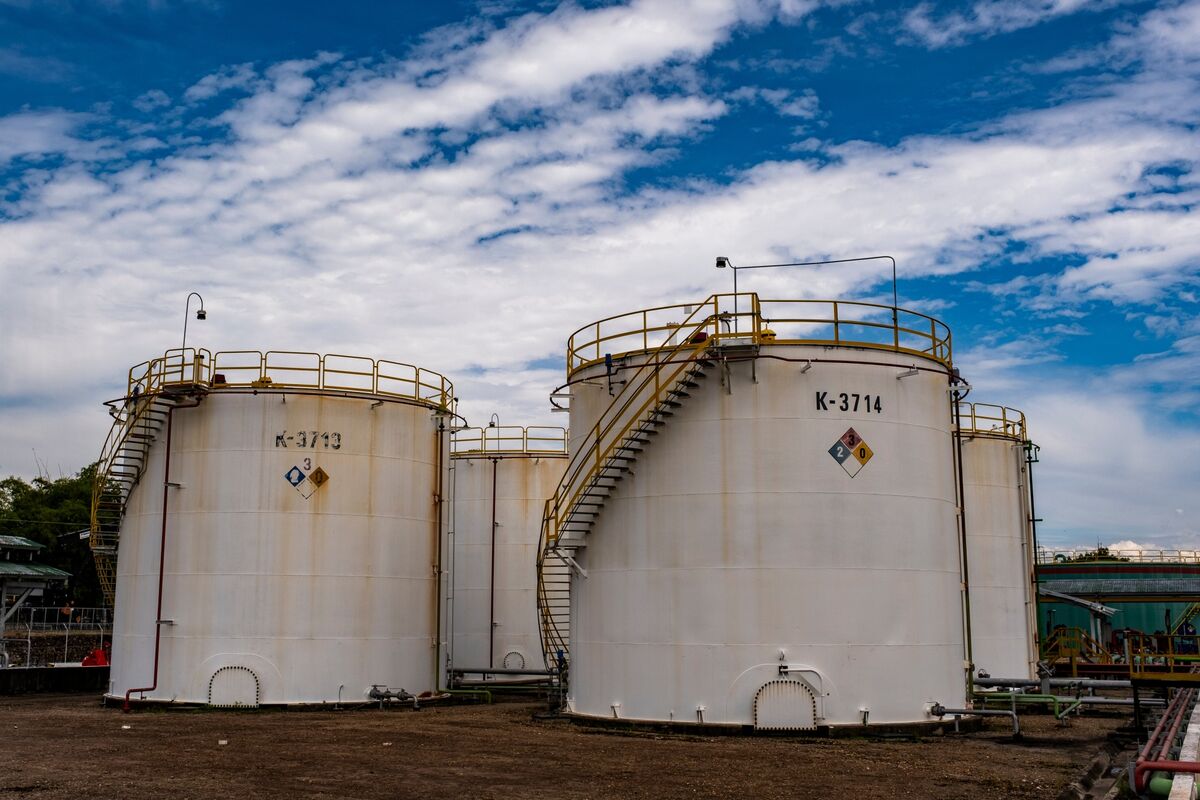
OPEC+ will meet Sunday for a final review of global oil markets ahead of a year the group expects to be turbulent, as officials flag the risk of a record inventory glut next year. That prospect would make it harder for the coalition to justify raising output, increasing downside pressure on oil prices and heightening policy risk for producers and energy-focused portfolios.
Market structure: A likely next-year glut shifts pricing power toward consumers, refiners and low-cost producers; short-cycle US shale and high‑cost offshore producers lose margin if WTI/Brent fall 15–25% over 6–12 months. OPEC+ ability to raise output will be constrained by compliance, storage capacity and member politics, so prices will be driven more by cyclical demand and US shale breakevens (~$50–65). Cross-asset: weaker oil implies downward pressure on inflation → lower real yields and stronger equity multiple expansion for non-energy sectors; CAD/NOK and RUB are vulnerable to downside FX moves if crude drops sharply.
Risk assessment: Tail risks include a sudden geopolitical supply shock (Libya/Nigeria outage or escalation in the Gulf) that can spike Brent >30% in weeks, or an OPEC+ coordinated deep cut that rebalances within 1–3 months; opposite tail is prolonged demand weakness that forces storage-driven price collapses. Hidden dependencies: storage capacity ceilings, US shale capex response lags (3–9 months), and Russia/Iran compliance variability. Key catalysts: upcoming OPEC+ statement, EIA weekly stocks, IEA demand revisions; react windows: immediate (days around meeting), short (1–3 months inventory cycle), medium (6–12 months market rebalancing).
Trade implications: Favor short-duration, directional short exposure to high‑beta E&P/servicers and pair trades that long refiners/transport while short producers. Use options to express asymmetric views: cheap long OTM calls as geopolitical tail hedges and put spreads to short energy beta with defined risk. Rotate away from Canadian/Norwegian energy equities and increase modest duration exposure to hedge disinflation.
Contrarian angles: Consensus sees only downside; missing is OPEC+’s capacity to execute calibrated cuts — a well‑timed cut could produce rapid price recovery and force short squeezes in highly levered names. The market may be underpricing the option value of outages; small, inexpensive long-dated Brent/FTF calls (6–12 months) offer attractive asymmetry. Historical parallel: 2014–16 oversupply damaged high cost producers then rebounded on cuts and outages, suggesting measured shorts with funded tail hedges rather than outright large naked shorts.
AI-powered research, real-time alerts, and portfolio analytics for institutional investors.
Request DemoOverall Sentiment
moderately negative
Sentiment Score
-0.35
