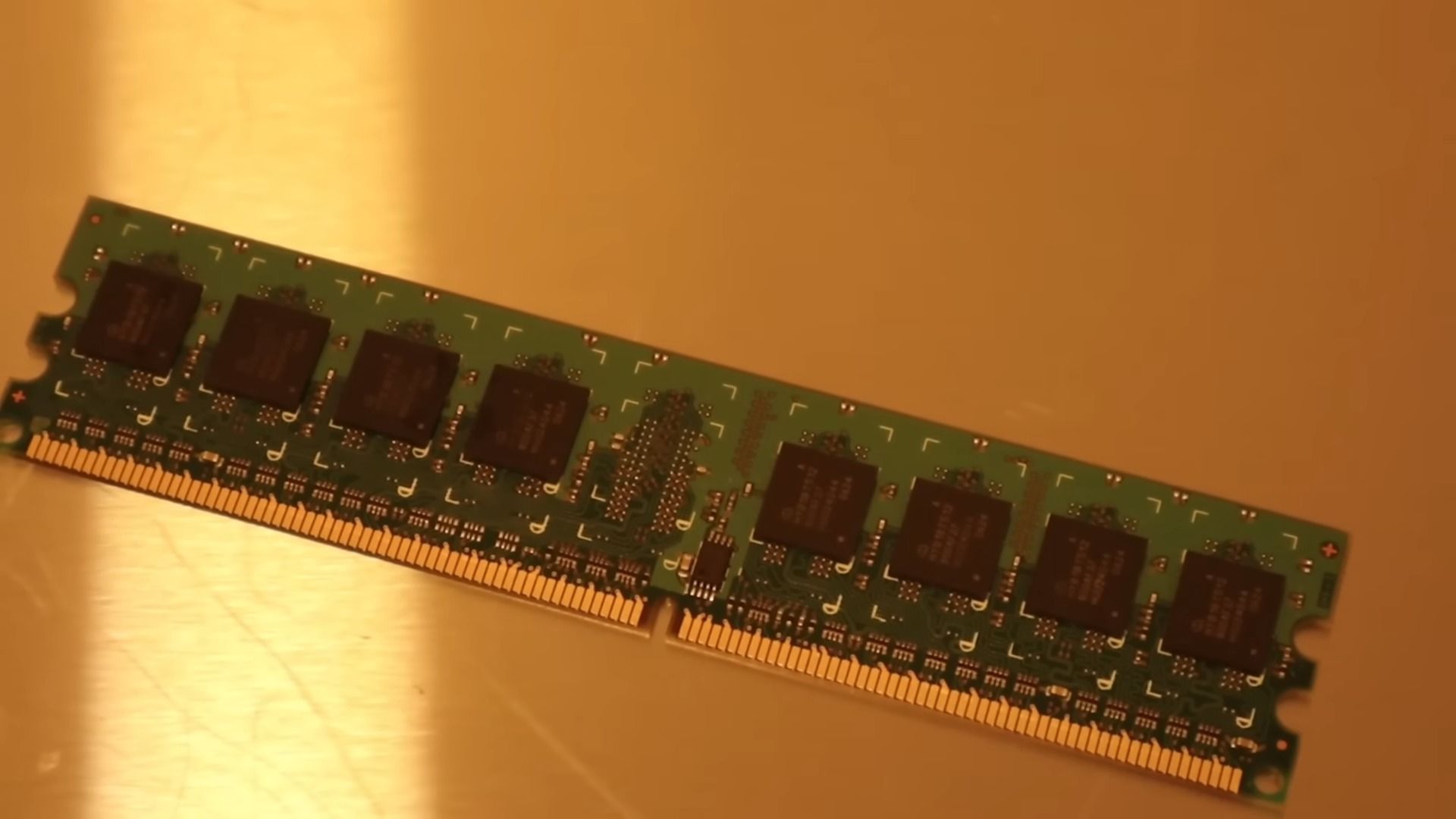
A YouTuber known as Dr. Semiconductor successfully created experimental DIY RAM in a shed, with the chips testing at 12pF capacitance. The broader context is a worsening RAM shortage and price spike tied to AI-driven demand, but the article is mostly about a proof-of-concept rather than a commercial product. He plans to scale the experiment into larger PC-compatible arrays, which could eventually ease supply constraints if replicated.
The economically relevant signal here is not “DIY RAM works,” but that memory manufacturing has become sufficiently capital- and process-intensive that scarcity invites hobbyist experimentation and, eventually, lower-end decentralization. That matters less for near-term component pricing than for the narrative around how tight the memory stack really is: if even low-yield artisanal fabrication is attracting attention, downstream buyers are already stretching procurement cycles and accepting substitution risk. In the near term, that supports the idea that memory remains the most reflexive lever in AI hardware spending, with any incremental supply relief likely to show up first in spot pricing before it reaches enterprise contracts.
The second-order winner is not the DIY effort itself, but the ecosystem around memory design, testing, and packaging. If this kind of experimentation proliferates, it reinforces demand for metrology, lithography-adjacent tools, specialty chemicals, and process-control equipment rather than commodity silicon. The losers are the most exposed memory vendors if investors start to believe supply elasticity is higher than feared; that can compress multiple expansion even before unit pricing rolls over, especially in names where the bull case already depends on sustained scarcity.
The contrarian read is that the market may be overestimating how quickly “more supply” can be created. Even if small-scale fabrication improves, the binding constraint is yield, reliability, and integration into systems that can ship at scale; that is a multi-quarter to multi-year problem, not a meme-cycle fix. For AI-related demand, the bigger risk remains that hyperscalers and OEMs keep soaking up capacity faster than incremental entrants can matter, so any relief trade should be tactical rather than structural.
RDDT is a sentiment beneficiary only at the margin: the article is proof that hardware scarcity stories generate engagement, but the monetization impact is indirect and likely small. The more meaningful implication is that retail attention is rotating toward supply-chain bottlenecks in AI hardware, which can keep the market focused on component winners even when software names stall.
AI-powered research, real-time alerts, and portfolio analytics for institutional investors.
Request DemoOverall Sentiment
mildly positive
Sentiment Score
0.15
Ticker Sentiment
