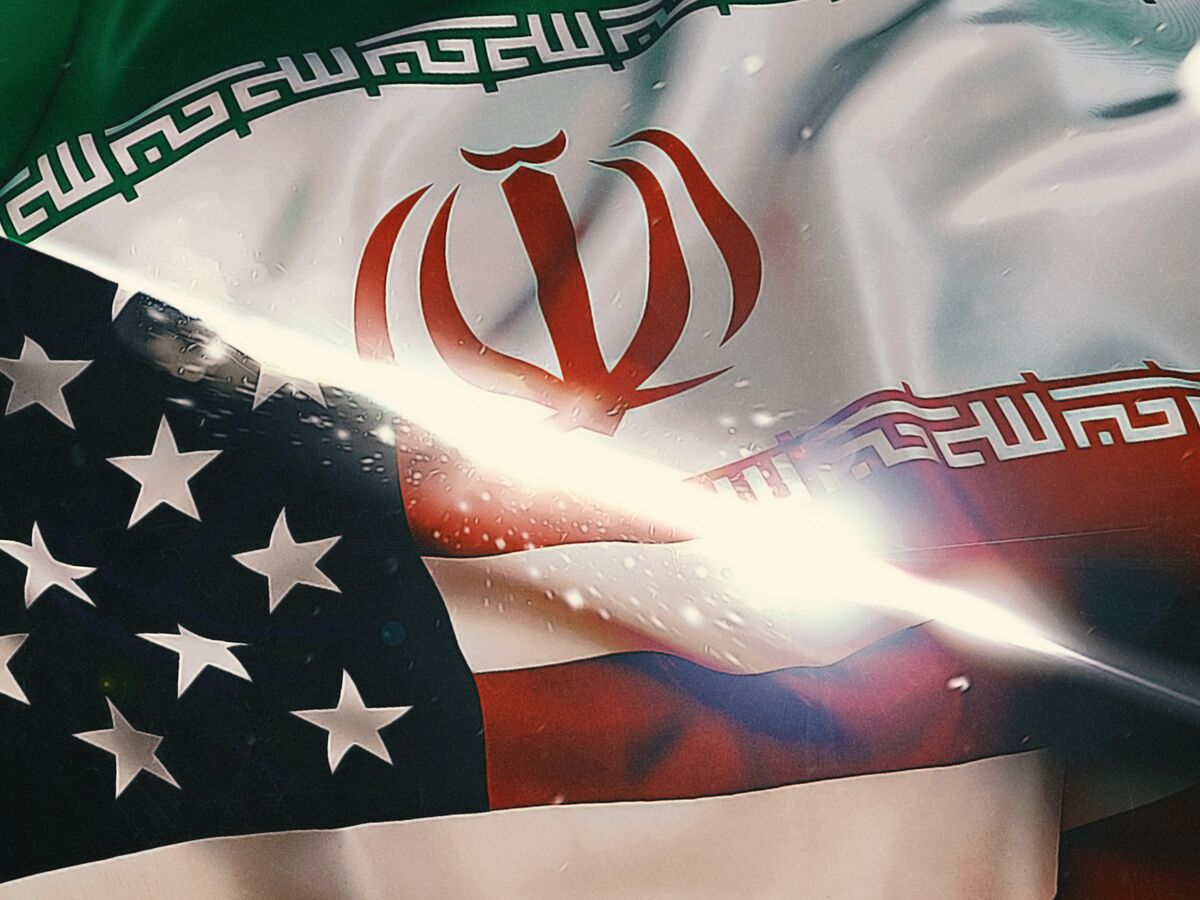
The US launched fresh strikes against Iran after a US Army helicopter was shot down, escalating geopolitical risk and raising the prospect of further retaliation. A Tehran official warned that foreign forces near Iran are at risk, underscoring elevated regional security tensions. Separately, Taiwan is considering tighter curbs on AI chip exports to China, which could tighten controls on advanced semiconductor shipments and draw pushback from Beijing.
The immediate market read-through is not “war risk” in the abstract; it is a tighter global control regime around advanced semiconductors. If Taiwan adds legal teeth to export curbs, the most important second-order effect is not lost unit sales to China but a rising compliance and provenance burden across the entire AI server stack, which can slow shipments, raise warranty/insurance costs, and widen the spread between officially shipped and actually deployed systems. That favors firms with cleaner end-demand visibility and hurts any business model reliant on indirect China exposure or gray-market channel fill.
For NVDA, the direct revenue hit is likely modest near term, but the multiple risk is larger than the earnings risk. Markets tend to re-rate semiconductor leaders when policy headlines increase the probability of fragmented supply chains, delayed deployments, and retaliatory Chinese action against downstream buyers; that pressure can persist for weeks even if shipment volumes barely change. The bigger vulnerability is that every incremental export-control layer makes customers optimize around non-China demand first, which can create lumpy order timing and temporary inventory digestion.
The contrarian angle is that tighter curbs may be mildly positive for the most advanced AI compute vendors over 6-18 months because they reduce leakage, support pricing discipline, and push hyperscalers to secure supply earlier. In other words, the headline is bearish for sentiment but not necessarily for secular unit growth; the risk is a derating before the benefit shows up in backlog. The catalyst to watch is whether Beijing answers with pressure on Taiwan-linked supply chains or on U.S. hyperscaler procurement in China, which would turn a policy story into a broader demand shock.
AI-powered research, real-time alerts, and portfolio analytics for institutional investors.
Request DemoOverall Sentiment
moderately negative
Sentiment Score
-0.35
Ticker Sentiment
