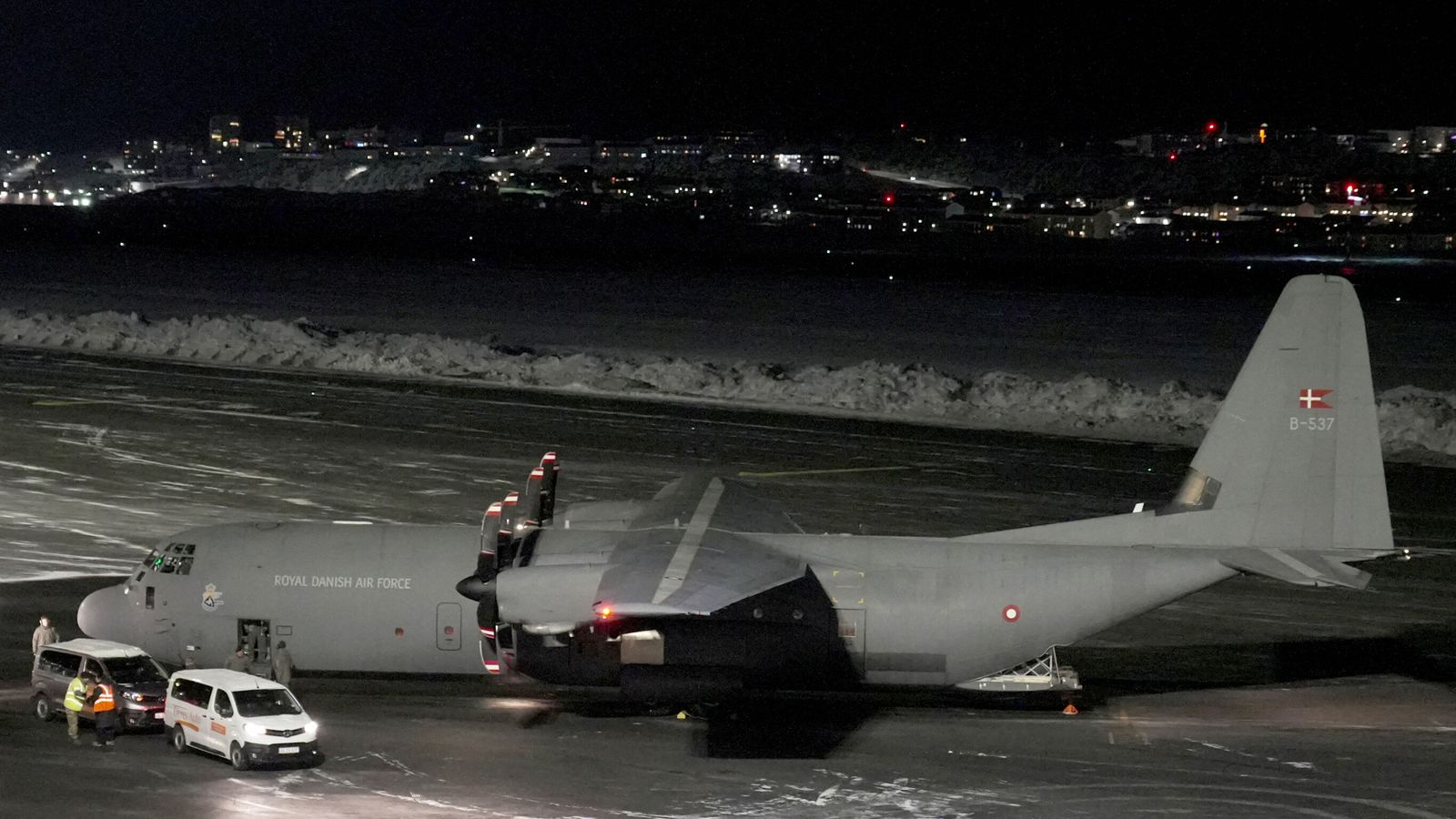
Denmark deployed soldiers, explosives, fighter jets and allied advance forces to Greenland in January to prepare to destroy runways and deny US access amid reported threats by President Trump — a report based on 12 senior Danish sources. The operation involved multinational troops (Danish, French, German, Norwegian, Swedish), a French naval vessel, and logistical moves (military air transport of blood); Danish troops were reportedly given live ammunition and permission to engage. The public diplomacy and joint exercises appeared to deter an immediate US invasion, and Denmark’s handling has given PM Mette Frederiksen a polling boost ahead of snap elections on 24 March. Expect elevated NATO/geopolitical risk premia and risk-off positioning across markets while political uncertainty and alliance tensions persist.
This episode crystallizes a durable repricing of NATO risk-allocation and Arctic strategic value that will play out on three horizons. In the next days-to-weeks window expect risk-off flows: northern European equities and tourism/airline names tied to Arctic routes should underperform while FX volatility lifts NOK/SEK crosses and benefits safe-havens (USD, CHF, gold). Over 3–12 months, governments will lean toward accelerating Arctic and homeland defence procurement and insurance/reinsurance repricing, creating a multi-quarter revenue runway for defence primes and specialist suppliers; market reaction should be front-loaded as procurement noise converts into order announcements. Over multiple years, Greenland’s critical-mineral optionality becomes investible only after permitting and port/airfield upgrades — that implies outsized returns for early equity stakes but long cash conversion cycles (2–7 years) and binary execution risk.
Second-order supply-chain winners include Nordic and French system integrators, Arctic-capable shipyards, and companies supplying runway/airfield denial and rapid-deployment logistics (airlift, medevac, field hospitals). Reinsurers and specialty insurers are set to reprice Arctic and geopolitical cover, improving underwriting economics for incumbents if no large loss event materializes; conversely, commercial Arctic shipping and tourism carriers face materially higher operating costs and route insurance premiums. The primary reversal path is simple: a credible, high-profile diplomatic de-escalation or formal NATO-US reaffirmation — either would quickly remove the political premium and compress spreads; absent that, defence- and minerals-linked equities should continue to outperform cyclicals. Watch event triggers tightly: Danish election outcome (days), NATO ministerial communiqués (weeks), and any US public policy statements on Greenland/minerals (months).
AI-powered research, real-time alerts, and portfolio analytics for institutional investors.
Request DemoOverall Sentiment
strongly negative
Sentiment Score
-0.65
