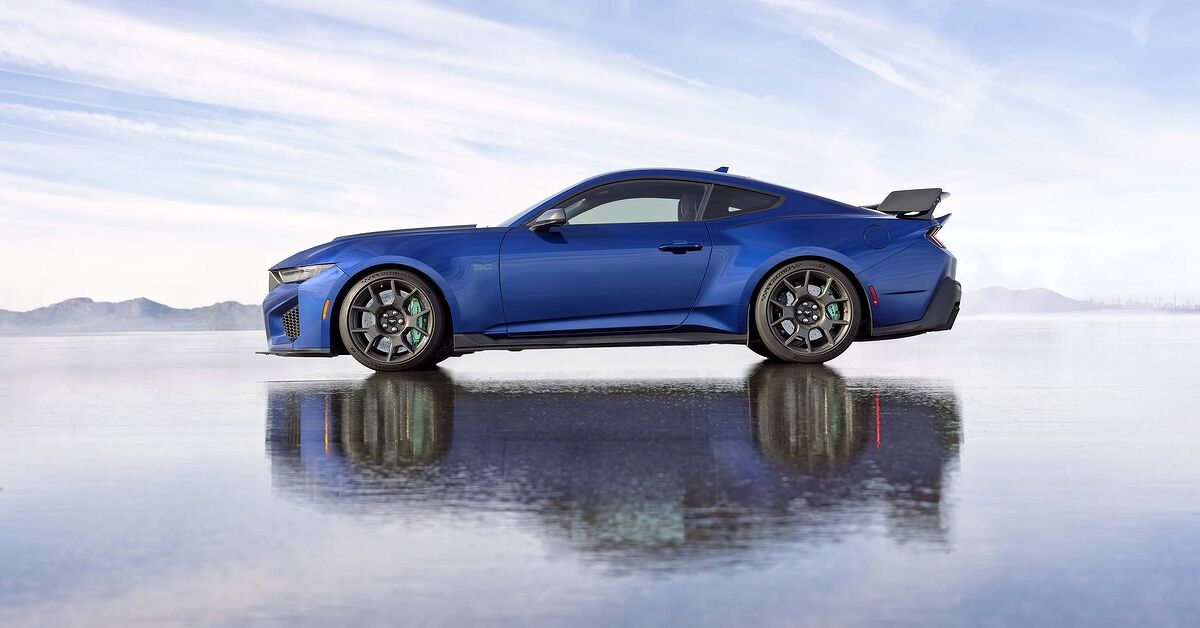
Ford confirmed the 2026 Mustang Dark Horse SC will produce 795 horsepower and 660 lb-ft of torque, positioning it above the 500-hp Dark Horse and below the 815-hp Mustang GTD. Pricing starts at $108,485, with the Track Pack raising the price to $144,985, and first customer deliveries are expected this summer. The model extends Ford's high-performance Mustang lineup and leverages supercharged 5.2-liter V8 technology derived from the GT500/GTD program.
This is less a volume story for Ford than a pricing and brand-architecture test. A $108k+ Mustang with a clear performance ladder above the GT but below the GTD lets Ford probe how much willingness to pay exists for a halo product that still feels semi-attainable; if take rates hold, the real upside is mix shift and margin, not unit growth. The second-order benefit is dealer traffic and residual value support across the broader Mustang line, which can lift the economics of the entire nameplate even if Dark Horse SC volumes stay niche.
The competitive signal is more important than the car itself: Ford is trying to own the “factory-built track weapon” tier that Dodge vacated and GM still only partially addresses. That matters because it helps preserve enthusiast relevance at a time when muscle-car demand is structurally shrinking; a successful launch can slow conquest leakage to used GT500s, Corvette variants, and aftermarket supercharger builds. The engineering narrative also reinforces Ford Racing as a monetizable sub-brand, which could create licensing, parts, and future special-edition opportunities with higher gross margin than mainstream vehicles.
The main risk is that this is a halo product in a high-rate environment, so the order book may look strong initially but fade quickly once affluent buyers compare it with GTD waitlists or alternatives from Porsche, Corvette, and Tesla’s performance offering. Over the next 1-2 quarters, watch whether Ford uses incentives or constrained allocation; if the car needs support, that would undercut the premiumization thesis. The contrarian view is that the market may be underestimating how much even a tiny number of $140k transactions can influence brand equity and the rest of Mustang pricing, but overestimating any direct earnings contribution.
AI-powered research, real-time alerts, and portfolio analytics for institutional investors.
Request DemoOverall Sentiment
mildly positive
Sentiment Score
0.34
Ticker Sentiment
