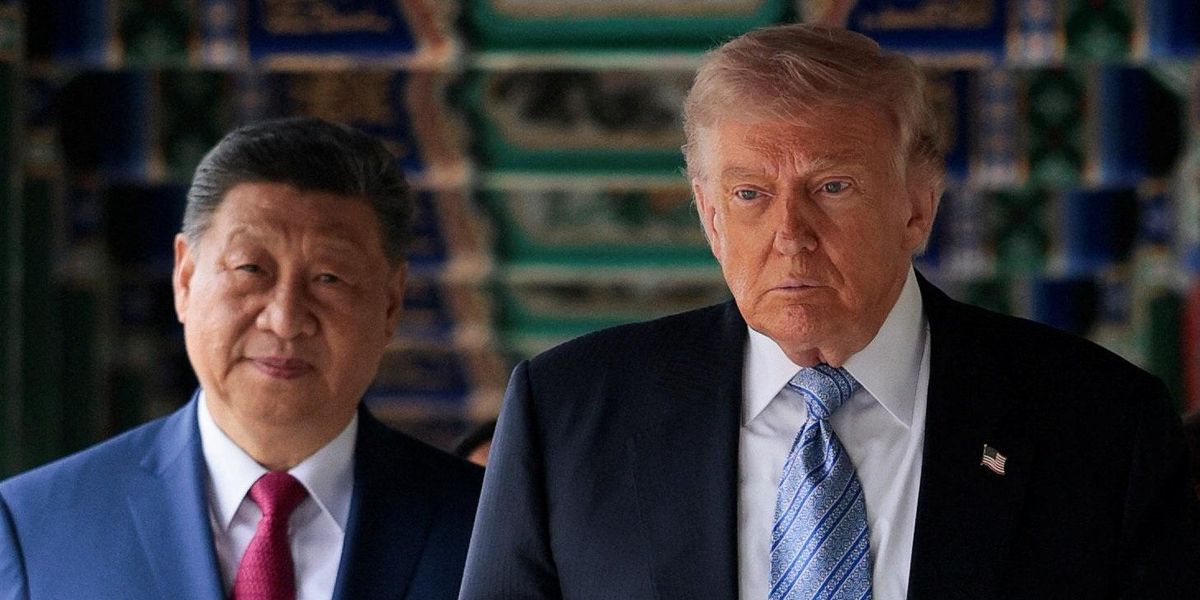
The article says China opposes the US-Bahraini UN resolution on the Strait of Hormuz because it could pave the way for a later Chapter VII measure authorizing force against Iran. It argues Beijing wants the Strait kept open for oil and goods flow, but without a fully U.S.-aligned or Iran-targeting framework that could threaten China’s future energy security. The implications are geopolitically significant for Gulf stability and oil transit risk, with potential spillovers for energy markets.
The market is likely underpricing how easily a “fee not a blockade” framework can become the de facto stabilizer for Gulf flows. If a tolling or environmental-management mechanism is politically acceptable, the real beneficiary is not Iran so much as any infrastructure, shipping, and insurance stack that can intermediate compliance—while the immediate loser is the tail-risk premium embedded in freight, crude optionality, and regional defense names. The second-order effect is that de-escalation lowers the odds of a sudden shipping shock, but it also legitimizes a new rent-extraction layer that should keep transit costs structurally above pre-crisis norms.
The larger issue is strategic asymmetry between China and the U.S. over long-dated energy security. Beijing’s opposition is less about this specific resolution than about preserving optionality against a future regime-change scenario that could convert Gulf supply into a coercive lever; that makes China more likely to quietly support any arrangement that keeps flows moving, even if it grinds down U.S. pressure tactics over time. For markets, that argues for fading the reflexive “crisis premium” in crude unless there is a clear escalation pathway—because the modal outcome is negotiated throughput, not kinetic interdiction.
The contrarian read is that the consensus is too focused on immediate Hormuz risk and not enough on the persistence of geopolitical tolls across the energy chain. Even if the strait remains open, a formalized transit mechanism, sanctions choreography, and escort/monitoring requirements can still add basis, insurance, and compliance costs for months. That supports relative winners in non-Gulf supply, LNG logistics, and defense-electronics exposed to maritime surveillance, while leaving pure tanker and integrated oil longs vulnerable if headline fear fades faster than physical disruption materializes.
AI-powered research, real-time alerts, and portfolio analytics for institutional investors.
Request DemoOverall Sentiment
mildly negative
Sentiment Score
-0.20
