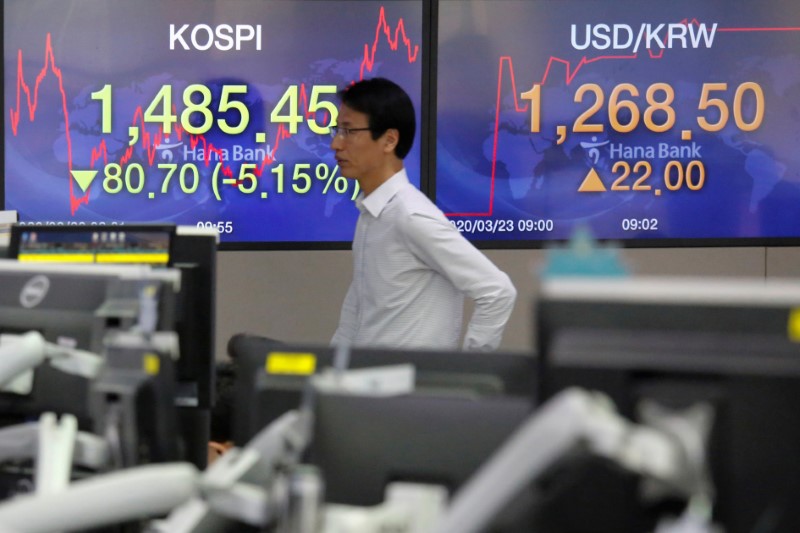
South Korea's KOSPI hit a record high, rising as much as 5% to 7,876.60, led by chipmakers on AI optimism and tightening memory supply. SK Hynix surged as much as 13% to a record high, while Samsung Electronics also rallied amid expectations for strong AI-related memory demand. Reuters said major tech customers are scrambling for advanced memory chips, including offers to help finance new production capacity and ASML lithography equipment.
This is less a one-day AI enthusiasm trade than a capacity-cycle inflection in the memory stack. When end customers begin subsidizing capex and even lithography tools, it signals pricing power has moved upstream to suppliers with scarce process nodes, and that tends to keep HBM margins elevated longer than consensus expects. The immediate beneficiaries are the bottleneck equipment and process-enabler names, especially ASML, because every incremental wafer line in advanced memory still requires its toolset and service intensity.
For hyperscalers like MSFT, META, and GOOGL, the near-term read is not just better access to chips but a potential reduction in AI infrastructure execution risk, which should support capex durability into 2025. The second-order effect is that better memory availability can actually accelerate model deployment and inferencing economics, improving the ROI on AI spend; that keeps the “AI capex bubble” bear case from gaining traction. The downside is that if capacity expands faster than end-demand, the current pricing premium in HBM can compress abruptly, and the cycle could flip from scarcity to oversupply within 12-18 months.
The move is probably underpriced in ASML relative to the end-user semis because the market often treats ASML as a steady compounder rather than a direct beneficiary of industrial customers financing new lines. The bigger contrarian risk is that investors extrapolate today’s supply shortage into a multi-year shortage, when in reality this setup usually attracts a wave of follow-on capacity investment once financing constraints disappear. That makes the next several quarters favorable for suppliers, but more mixed for chipmakers if lead times normalize and the narrative shifts from scarcity to competition.
The cleanest read-through is that this is bullish for AI infrastructure, but the trade should be expressed with a time horizon short enough to capture the earnings revision cycle and long enough to avoid getting caught by any near-term supply announcements. If memory supply loosens, the beneficiaries rotate from chip scarcity winners to the compute platform names that can monetize lower input costs and faster deployment.
AI-powered research, real-time alerts, and portfolio analytics for institutional investors.
Request DemoOverall Sentiment
moderately positive
Sentiment Score
0.62
Ticker Sentiment
