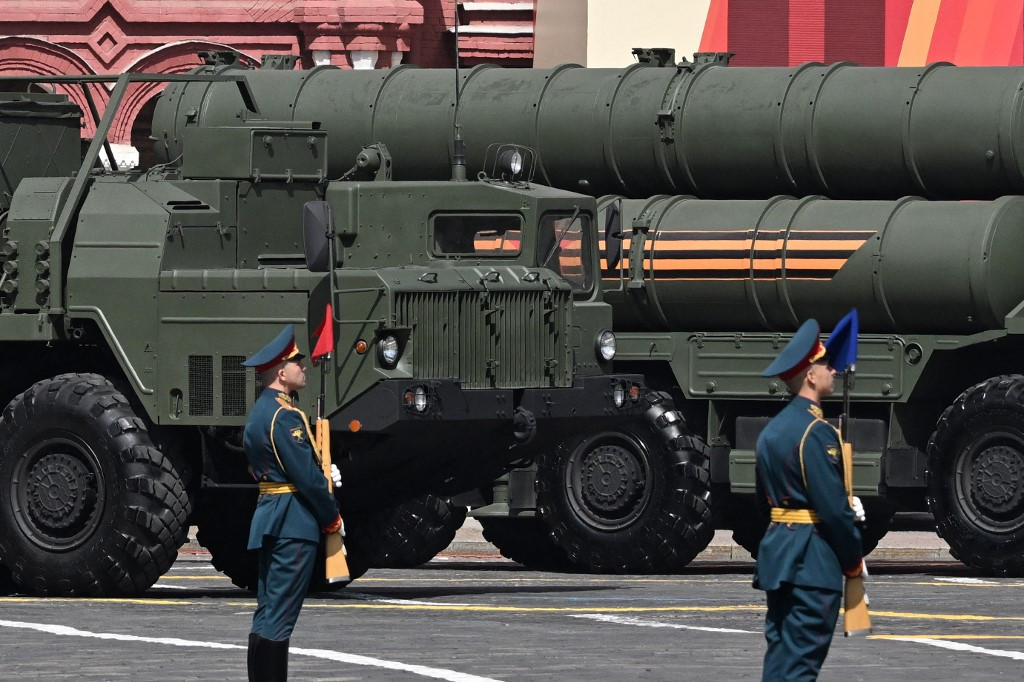
Russia’s war-related spending is expected to exceed this year’s budget by 2 trillion rubles ($28 billion), with the Finance Ministry warning the funding gap could widen to 4 trillion rubles ($56 billion) under a negative scenario. The government may need to freeze 2.9 trillion rubles ($40 billion) in planned spending this year, while defense and security already account for 16.84 trillion rubles ($238 billion), nearly 40% of total spending in 2026. The article also highlights mounting strain in Russia’s fiscal, banking, and corporate systems, including a 5.9 trillion ruble deficit in the first four months of the year and rising non-performing assets.
The market implication is not just a bigger deficit; it is a forced repricing of Russia’s fiscal regime from “manageable wartime stress” to “allocation failure.” When defense consumes an outsized share of spending, the marginal ruble comes out of civilian capex, regional transfers, and social stability — which raises medium-term recession risk even if headline growth looks supported by military output. That creates a self-reinforcing loop: weaker non-defense activity reduces tax intake, which widens the deficit, which then requires more monetization, quasi-fiscal banking support, or even deeper spending freezes.
The most important second-order effect is on the domestic financial system. If banks are already masking corporate distress, then a prolonged liquidity squeeze will likely show up first as rolling restructurings, delayed payments, and shadow NPL migration rather than a clean crisis event. That is bearish for Russian sovereign and quasi-sovereign credit because the state may have to choose between funding war outlays and backstopping the banking sector; doing both materially increases inflation and FX pressure, especially if energy revenue is disrupted by refinery outages or sanctions leakage closes.
The energy angle is more nuanced than a simple oil bullishness call. Higher crude helps the budget at the margin, but physical damage to refining capacity can actually hurt net fiscal receipts if Russia loses value-added export products and has to discount crude more aggressively. Over the next 1-3 months the key catalyst is whether Ukraine’s strike campaign continues to reduce export capacity faster than Moscow can reroute flows; over 6-12 months the real risk is a credibility break in the fiscal framework, forcing either deeper domestic repression of private demand or more explicit monetary financing.
Consensus is likely underpricing how much this is a balance-sheet problem, not just a budget problem. The fragile point is not the current deficit number; it is the interaction between rising military spend, banking-system opacity, and deteriorating corporate liquidity. That combination can stay latent for months, but when it resolves it tends to do so abruptly through FX stress, refinancing gaps, and a negative surprise in sovereign risk premia rather than a slow macro grind.
AI-powered research, real-time alerts, and portfolio analytics for institutional investors.
Request DemoOverall Sentiment
strongly negative
Sentiment Score
-0.70
Ticker Sentiment
