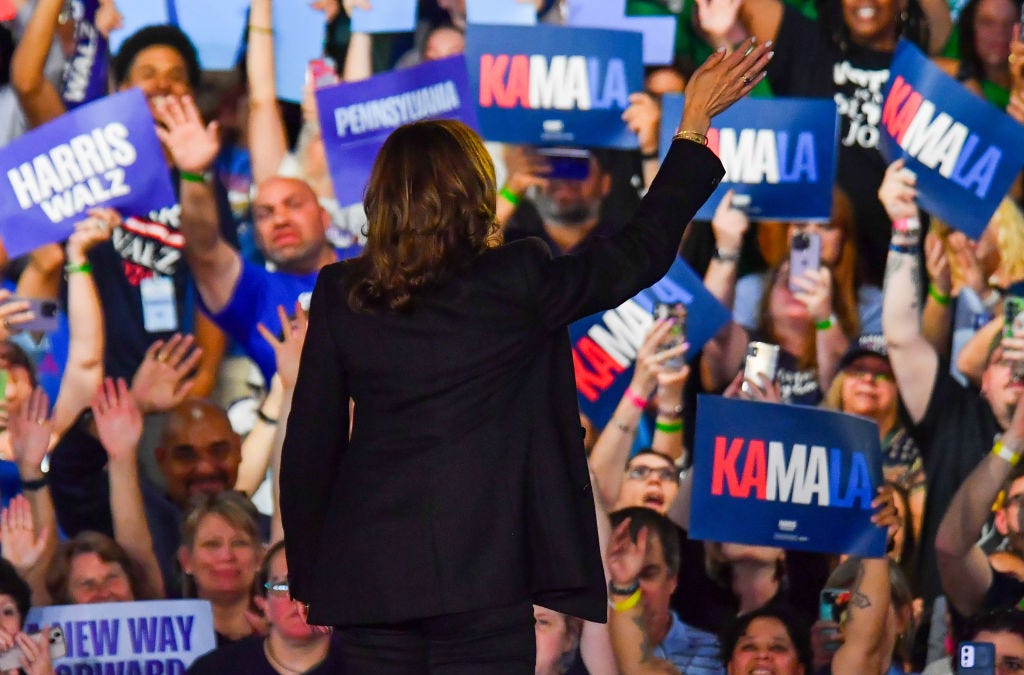
The article says the DNC's long-suppressed postmortem on the 2024 election loss revealed internal blame and unresolved strategic failures, including disagreement over Joe Biden's late exit and Kamala Harris's positioning. It highlights a broader reckoning within Democrats over policies that damaged the party brand. The content is politically focused and has minimal direct market impact.
This is less about a one-off political postmortem than about the Democratic brand losing pricing power with its coalition. When a party’s internal blame game centers on personalities rather than product, the more important market signal is that message discipline and policy coherence are still unresolved heading into the next cycle. That raises the odds of continued voter volatility, weaker fundraising conversion efficiency, and more open field for cross-pressured constituencies to swing on pocketbook issues rather than partisan identity.
The second-order effect is on institutional decision-making quality. Suppressed negative feedback usually means the organization is protecting existing power centers, which tends to delay strategic reset by 1-2 election cycles rather than one news cycle. For counterparties, that suggests Republicans retain a near-term structural advantage in persuasion among working-class and minority male voters, while Democrats risk overcorrecting toward activist preferences that further narrow their median-voter appeal.
The contrarian read is that the damage may be less about ideology than execution. If the party can rapidly re-anchor around competence, cost of living, and anti-incumbent credibility, the current pessimism may be overstated because opposition parties often recover faster than markets expect once leadership changes and the scapegoating phase ends. The key catalyst will be whether the postmortem turns into concrete candidate/message selection within the next 3-6 months; if it does not, the brand erosion likely compounds into the midterm cycle.
For investors, the direct tradable impact is muted, but the governance signal matters for policy-sensitive sectors: a more internally fractured Democratic apparatus lowers the probability of aggressive near-term regulatory initiatives and broad tax increases, while increasing the odds of reactive populism. That supports a tactical preference for industries exposed to federal overhang reduction over the next 6-12 months, rather than making any high-conviction directional macro call off the article alone.
AI-powered research, real-time alerts, and portfolio analytics for institutional investors.
Request DemoOverall Sentiment
mildly negative
Sentiment Score
-0.20
