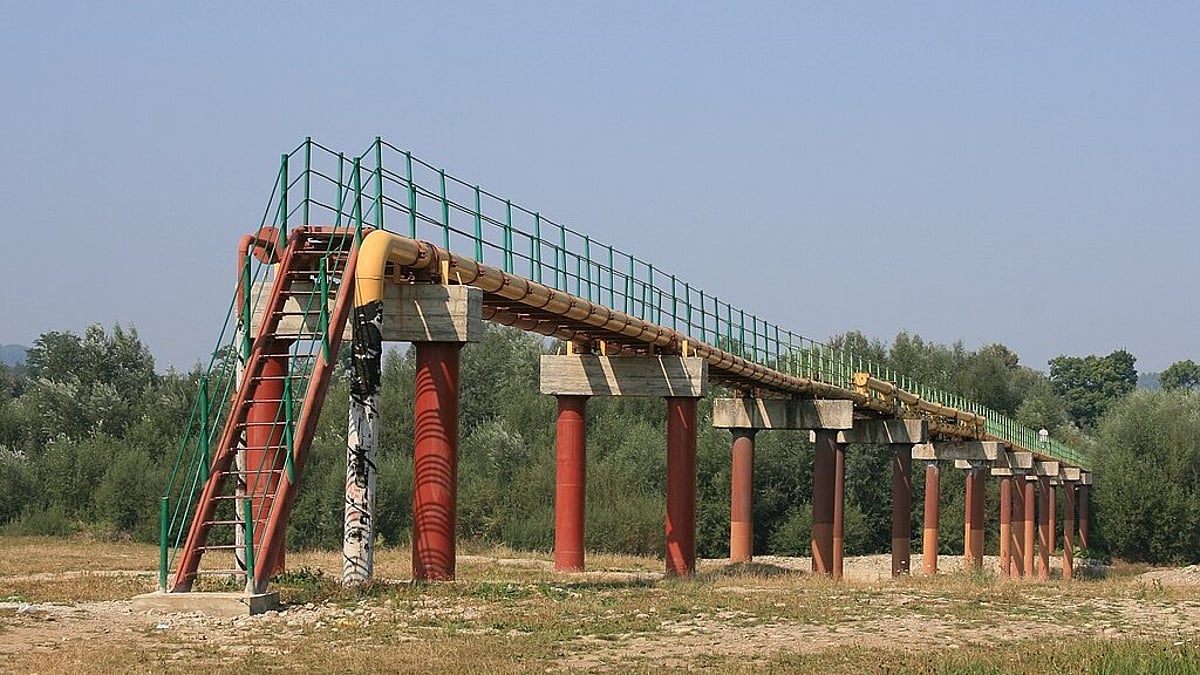
Kazakhstan said no oil is scheduled to flow to Germany via Russia's Druzhba pipeline in May, with the disruption likely tied to Ukrainian drone strikes on Russian infrastructure. The country exported about 2 million tonnes of oil to Germany in 2025, or more than 40,000 barrels a day, but officials said production will not be reduced and CPC shipments are operating normally. The halt is a supply-chain setback for Germany's PCK refinery, though the broader Kazakh export system remains intact.
The immediate market read is not “Kazakhstan supply risk,” but a temporary re-routing shock inside a constrained Eurasian logistics system. The true transmission channel is refinery utilization in Germany and incremental bargaining power for non-Russian medium sour grades into Northwest Europe; if this drag persists for several weeks, crack spreads can widen even without a headline crude shortage because product flows are tighter than crude balances suggest.
Second-order, this is bearish for any asset tied to uninterrupted transit through Russian infrastructure and mildly bullish for shipping arbitrage. If Russian infrastructure remains intermittently disrupted, alternative routes face higher marginal costs and longer working capital cycles, which tends to support coastal refiners and independent traders with storage optionality while compressing margins for inland refiners dependent on pipeline continuity.
The key risk is duration: a days-long outage is noise, a multi-month interruption forces Germany to replace roughly 40 kb/d of a relatively specific crude slate in a region where spare compatibility is limited. That substitution problem can lift Baltic/North Sea differentials and create localized diesel tightness, but it should not materially move global Brent unless the disruption spills into the broader CPC corridor or triggers retaliatory interference with other Central Asian flows.
The contrarian angle is that the market may be over-assuming permanent damage to Kazakh exports. Kazakhstan has little incentive to cut production if only one outlet is impaired, so the likely adjustment is inventory buildup and rerouting rather than a supply loss. That means the better trade is not a broad crude bullish position; it is a relative-value bet on European product complexity and logistics optionality versus outright oil beta.
AI-powered research, real-time alerts, and portfolio analytics for institutional investors.
Request TrialOverall Sentiment
mildly negative
Sentiment Score
-0.20
