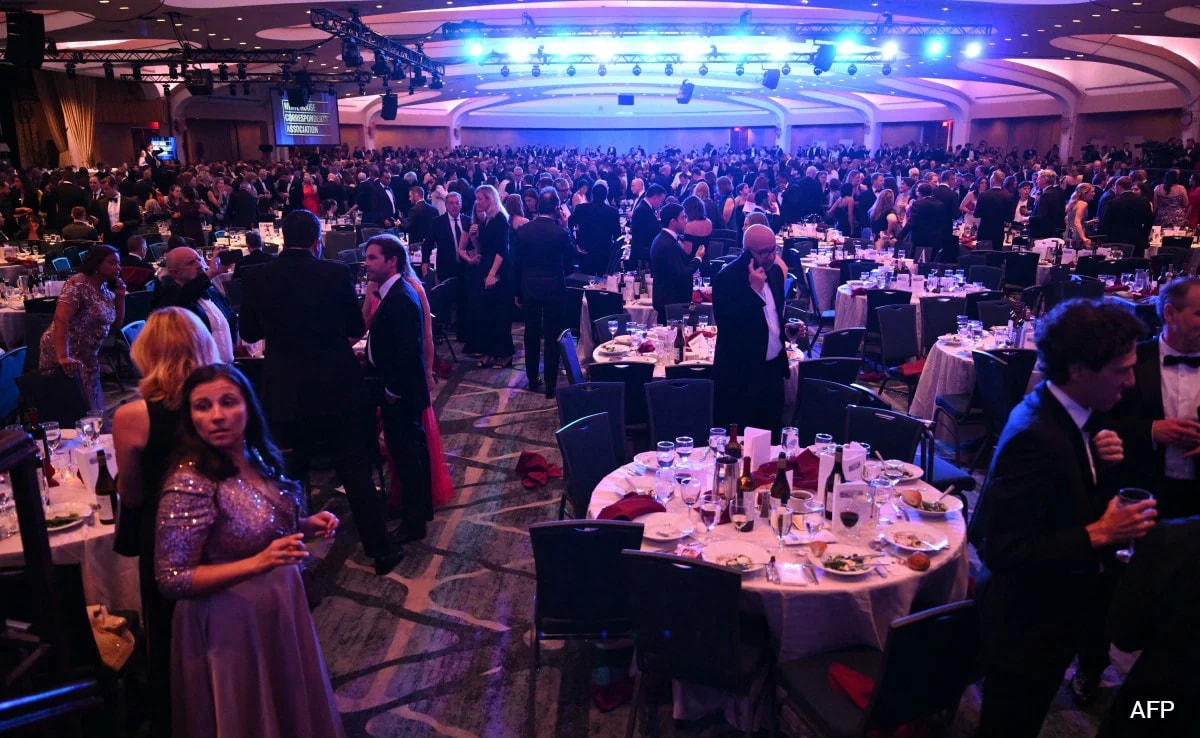
Trump, Melania Trump, and Vice President JD Vance were evacuated from the White House Correspondents' Association dinner after loud bangs and suspected gunshots were reported; Trump later said a shooter had been apprehended. No injuries were reported and law enforcement said all cabinet members were in "perfect condition." The event created a short-lived security scare with some 2,600 attendees taking cover, but the direct market impact appears limited.
The immediate market read is not about the incident itself, but about the regime change in event risk: any politically symbolic gathering now carries a higher security premium, which tends to benefit defense contractors, perimeter-security vendors, and crisis-response tech over a multi-month horizon. The first-order reaction is usually a burst of headline volatility, but the second-order effect is that federal, state, and venue operators tend to re-open procurement cycles for screening, surveillance, comms, and protective services faster than budget committees would otherwise allow.
The more interesting dynamic is the political amplification loop. Elevated security concerns often widen the gap between rhetoric and implementation: politicians may talk tough, but the practical response is higher spend on physical security, command-and-control systems, and event hardening. That favors names with recurring software/service revenue more than pure hardware, because agencies prefer deployable systems that can be justified as “modernization” rather than one-off capex.
From a risk standpoint, the catalyst window is short on sentiment but long on spending. Over the next 3-10 trading days, markets may briefly penalize live-event media, hospitality, and DC-exposed service providers if investors extrapolate disruption; that tends to reverse once operations normalize. Over 3-12 months, the more durable trade is around incremental federal and municipal security budgets, especially if there is follow-on legislation, hearings, or a visible procurement push.
Contrarian angle: the consensus may overestimate macro impact and underestimate budget inertia. A single contained incident rarely changes aggregate consumer or election spending trends, so any broad risk-off move is likely fadeable; the alpha is in selectively owning the beneficiaries of tighter security protocols rather than shorting the whole political/event complex.
AI-powered research, real-time alerts, and portfolio analytics for institutional investors.
Request DemoOverall Sentiment
mildly negative
Sentiment Score
-0.20
