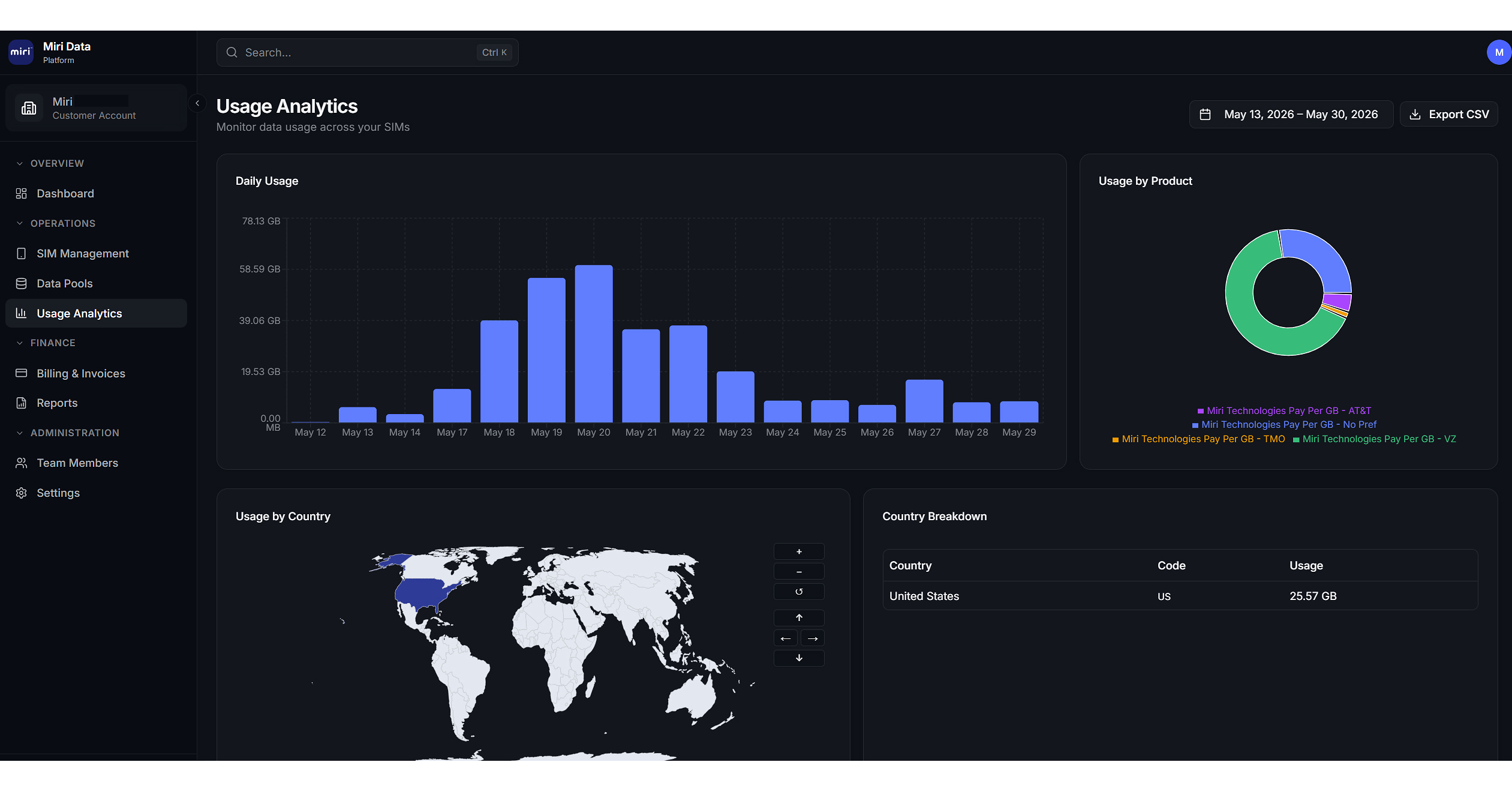
Miri Technologies is rolling out a new self-serve “Miri Data Platform” for its NetConnect+ global mobile data plans, adding SIM lifecycle provisioning, 24/7 usage analytics, and self-activation plus billing and usage limit controls. The portal also enables authorized resellers to manage customers’ SIMs and plans. Rollout begins on a phased basis over the coming month, with early-access invitations available on request, which should modestly improve customer experience and retention rather than drive immediate financial impact.
This is a classic product-layer improvement that matters more for unit economics than for near-term top-line. Self-service provisioning and usage controls typically reduce customer-acquisition friction, lower support burden, and improve retention on multi-SIM accounts; the second-order benefit is better data visibility for resellers, which can expand the effective sales force without adding headcount. The most important mechanism is not incremental demand, but lower churn and higher share-of-wallet from enterprise users who hate billing surprises.
The flip side is that once usage analytics become transparent, the offering becomes easier to compare against other managed connectivity platforms and carrier-direct plans. That can pressure pricing over time, especially if competitors match the same dashboard features while owning larger network relationships or lower-cost support stacks. In other words, this is mildly positive for operating leverage, but it also accelerates feature commoditization unless Miri can prove materially lower churn or higher ARPU in the next 1-3 quarters.
Contrarian view: the market may over-read this as a growth catalyst when it is probably just table stakes. The real tell will be whether the portal changes behavior — fewer support tickets, faster onboarding, higher reseller activation, and lower plan abandonment — versus simply adding a nicer interface. For now the signal is more relevant to private-company diligence than to public-market positioning; the tradeable implication is limited unless Miri later quantifies retention or margin lift, or a public peer in IoT connectivity reports a similar monetization unlock.
AI-powered research, real-time alerts, and portfolio analytics for institutional investors.
Request DemoOverall Sentiment
mildly positive
Sentiment Score
0.12
