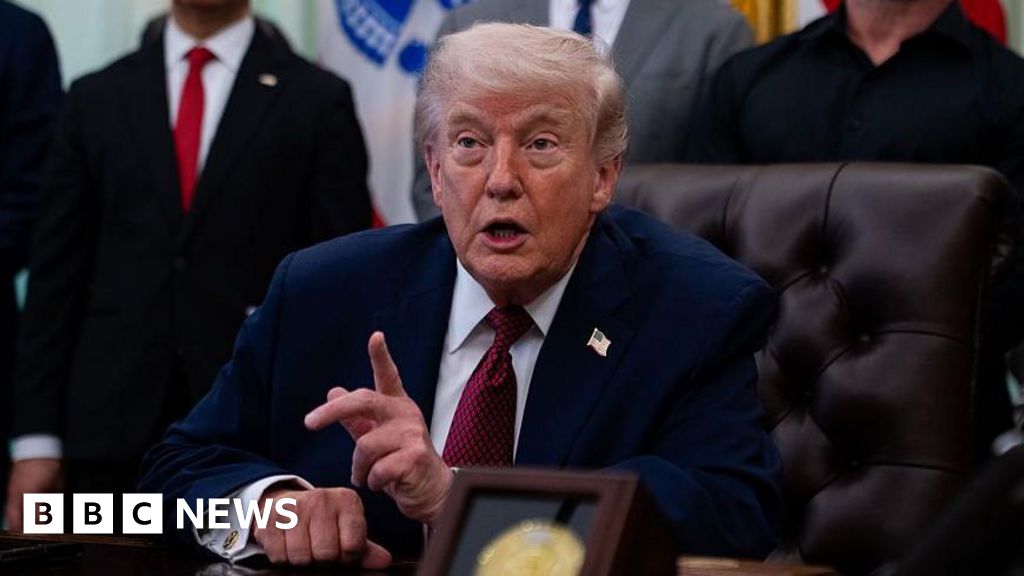
Virginia's redistricting referendum could help Democrats win four additional House seats, but a state judge has paused certification after ruling the referendum and triggering bill unconstitutional. Trump separately attacked the vote as 'rigged' without evidence and continues pressing Congress on the SAVE America Act, which would require proof of U.S. citizenship to vote. The article is primarily political and legal in nature, with limited direct market impact beyond the broader implications for House control.
The market-relevant issue is not the rhetoric itself but the institutional friction it creates around the House map battle. A prolonged certification fight introduces a short-term legal overhang that increases the odds of election-related uncertainty spilling into financing conditions for state-level political actors, outside groups, and any election-adjacent media/platform names. More importantly, the broader redistricting race raises the expected seat volatility in November, which matters because even a 2-4 seat swing can materially change the probability distribution for control of the House and therefore the odds of oversight hearings, spending leverage, and regulatory bottlenecks in 2026.
The second-order effect is on legislative throughput, not just headlines. If House control remains close, the market should price in a higher probability of a continuing confrontation over budgets, debt-limit sequencing, and targeted investigations, which tends to support volatility in long-duration policy-sensitive sectors rather than creating a clean sector rotation. The near-term catalyst path is legal: court rulings on map validity and certification can compress the timeline from a political story into a constitutional one, making the issue more binary over the next 2-6 weeks than the market typically expects.
The contrarian takeaway is that investors may be overestimating how much these map shifts change the aggregate midterm outcome. Redistricting can reallocate marginal seats, but it does not eliminate the structural historical disadvantage of the incumbent president's party in midterms, so the bigger edge may still sit in owning volatility rather than directional political beta. The market is likely underpricing tail risk that a narrow House majority in either direction leads to post-election procedural fights and delayed committee staffing, which can drag on policy clarity into Q1 next year.
AI-powered research, real-time alerts, and portfolio analytics for institutional investors.
Request DemoOverall Sentiment
neutral
Sentiment Score
-0.05
