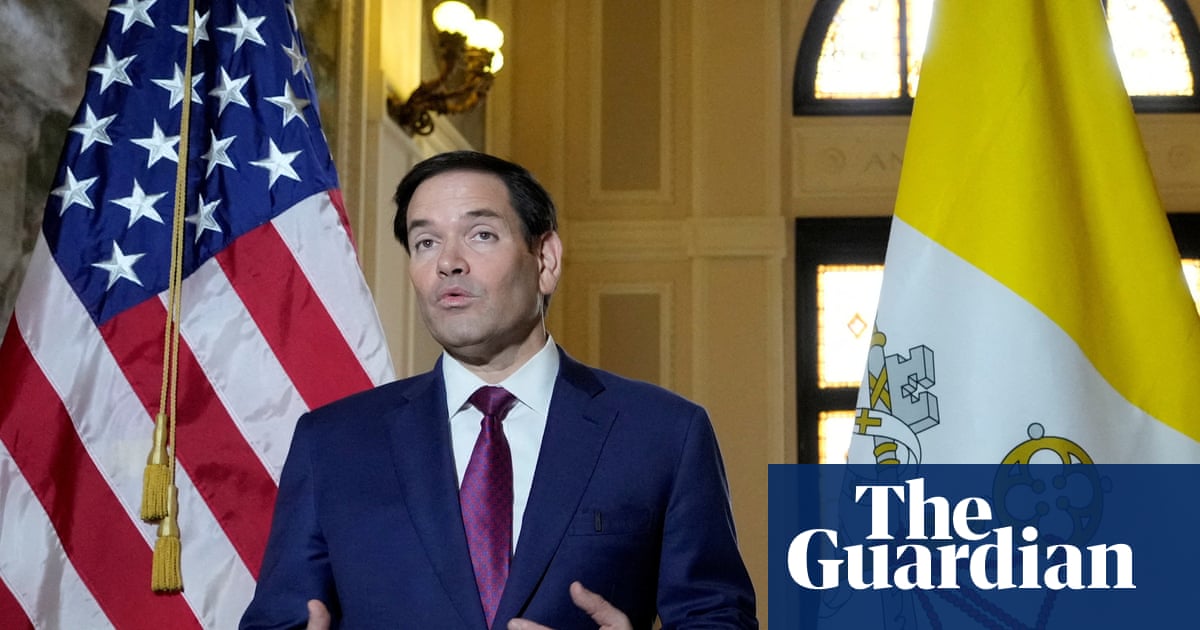
Marco Rubio is set to visit Rome to meet Vatican and Italian officials in an effort to ease tensions after disputes involving Donald Trump, Pope Leo, and the Italian government. The article highlights escalating diplomatic friction over the US-Israeli war on Iran and Trump's threats to withdraw US troops from Italy, Germany, and Spain. The news is primarily geopolitical and diplomatic, with limited direct market impact unless it affects defense posture or transatlantic relations.
The market is likely underpricing how quickly a diplomatic spat can become a force-posture issue for Europe. Even if the rhetoric cools, the second-order effect is a higher probability of European governments accelerating contingency planning around US basing risk, which supports incremental defense procurement, logistics hardening, and domestic command-and-control spending over the next 6-18 months. The immediate beneficiary is not “defense” in the abstract, but contractors and platforms tied to European sovereign redundancy and air-defense resilience rather than transatlantic troop permanence.
The more interesting read-through is for Italy-specific assets and funding priorities. If Rome wants to reduce exposure to unpredictable US signaling, it has an incentive to front-load spending on naval security, base infrastructure, and interoperability that can be presented as burden-sharing while quietly diversifying strategic dependence; that is supportive for Italian defense primes and infrastructure contractors with state-linked revenue visibility. Conversely, prolonged tension would be a mild negative for Italian banks and cyclicals via higher sovereign-risk premiums, but the larger near-term channel is sentiment and FX rather than earnings.
The contrarian view is that the headline conflict may actually be a bargaining tool, not a durable policy shift. If so, the tactical pain is concentrated in the next 2-8 weeks and fades quickly once a de-escalation meeting is scheduled; that argues against chasing broad Europe shorts. The tail risk is a renewed public escalation that makes troop relocation or base-access reviews look operational, not rhetorical, which would force a repricing of European defense budgets and widen US-Europe political risk premia for months.
From a tradable standpoint, the cleanest expression is to own the policy beneficiaries and fade the political noise in broader Europe. Any move that de-risks Italy should be measured against the probability that Washington keeps using allied friction as leverage, which means the asymmetry still favors selective long defense and infrastructure exposure over directional macro bets.
AI-powered research, real-time alerts, and portfolio analytics for institutional investors.
Request DemoOverall Sentiment
mildly negative
Sentiment Score
-0.15
