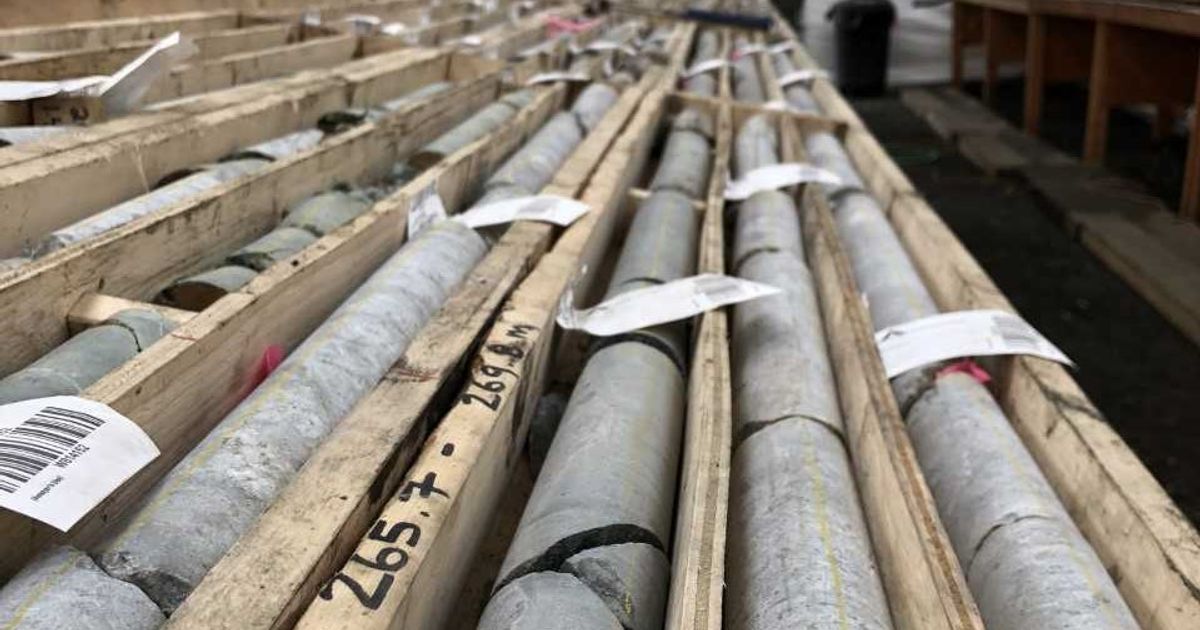
New Frontier Minerals (ASX:NFM) shares plunged 26% to 0.625p after inaugural drilling at its Harts Range project returned high-grade tungsten (1,237 ppm WO3 over 4m, including 4,860 ppm over 1m) and surface samples up to 14,501 ppm, but failed to deliver significant heavy rare earth or niobium results—the company’s primary target. Tungsten prices have surged over 430% in the past 13 months to roughly $1,750–$1,850/t due to China export restrictions, supporting the commodity upside, yet investor disappointment over weak rare earth results and only six of 46 priority targets tested to date drove the sell-off; NFM is also advancing the Pomme rare earth earn-in in Quebec (A$200k minimum spend over 24 months).
Market Structure: The 430%+ tungsten rally to ~$1,750–$1,850/mtu gives incumbent tungsten producers immediate pricing power and margin expansion while raising input costs for downstream defence and semiconductor users. Early-stage explorers (including ASX:NFM / OTCQB:NFMXF) are binary: a confirmed, mineable tungsten resource would rerate them aggressively, but the market penalised NFM because its stated primary target (HRE/nb) failed to deliver—hence the 26% collapse. Cross-asset: stronger commodity prices favor AUD and CAD marginally, pressure real yields and selective mining equities; expect elevated implied vol in small-cap junior miners and credit spreads for high-beta juniors to widen near-term.
Risk Assessment: Tail risks include a China policy shock (further export curbs or strategic release), metallurgical recovery failure for tungsten-bearing material, and rapid equity dilution if NFM needs to fund follow-up drilling; any of these could wipe out retail holders. Time horizons split: immediate (days) = elevated equity volatility and sentiment-driven gaps; short-term (weeks–months) = follow-up assays, drilling of the remaining 40 targets, and financing announcements; long-term (quarters–years) = potential M&A or mine development if continuity and metallurgy are proven. Hidden dependencies include off-take appetite from specialty tungsten buyers and processing permit timelines.
Trade Implications: Direct: asymmetric trade favours small, disciplined positions—short NFM against liquid strategic-metals exposure (see REMX) while selectively long established tungsten producers that can scale concentrate volumes. Options: buy put spreads on highly illiquid NFM equivalents only if execution costs are acceptable; for sector exposure, buy REMX 3–9 month call spreads to capture re-rating if policy-driven tightness persists. Sector rotation: reduce exposure to speculative rare-earth explorers lacking assay continuity and increase allocation to mid-tier miners with established offtakes and balance-sheet capacity over the next 3–12 months.
Contrarian Angles: The market may have overreacted to a missed rare-earth hit—only 6 of 46 targets tested—so NFM retains option value if management pivots to tungsten or farms out the tungsten rights; a sustained tungsten price >$1,700/mtu for 6+ months materially increases takeover likelihood. Historical parallel: junior lithium explorers where early high-grade hits led to buyouts despite initial drill-program misses elsewhere; downside is rapid dilution or metallurgy failure. Key unintended consequence: investors assuming immediate rare-earth value may be trapped if NFM spends A$200k earn-in cash on Pomme without clear non-dilutive funding—use upcoming 30–90 day announcements as binary catalysts.
AI-powered research, real-time alerts, and portfolio analytics for institutional investors.
Request DemoOverall Sentiment
moderately negative
Sentiment Score
-0.45
