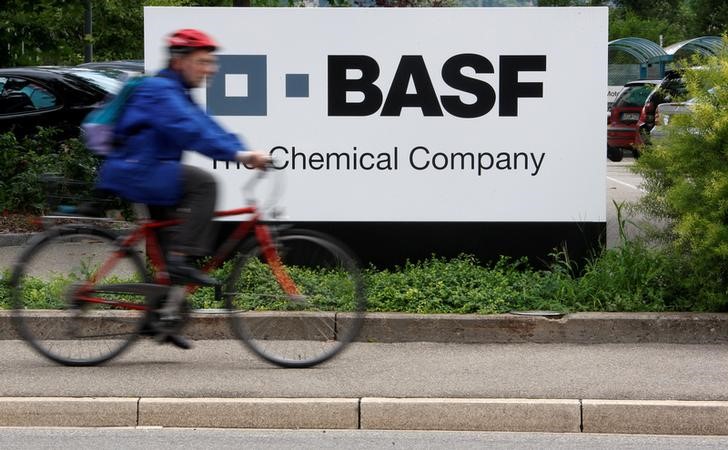
Citi removed its positive Catalyst Watch on BASF after Asian chemical spreads reversed in May, cutting its FY2026 net pricing estimate to about €1 billion from €1.5 billion and lowering the base case to €7.2 billion. The bank said BASF’s Europe market share gains have been more modest than expected, making its upside case of nearly €9 billion much less likely. Citi remains positive on BASF relative to European peers, but the update is a near-term headwind for the stock and the chemicals sector.
The key signal is not the headline on BASF alone but the inflection in Asian spreads, which typically leads the cycle for global chemical margins by one to two quarters. That means the near-term earnings revision risk is broader than one company: downstream converters, distributors, and even logistics demand can soften as restocking pauses when the margin curve rolls over. For European diversified chemicals, the market is likely still pricing a cleaner second-half reacceleration than the spread data supports, so estimate cuts may continue into the next reporting season.
For BASF, the real issue is optionality compression: if pricing power is only modestly positive, the equity de-rates from a recovery multiple toward a mid-cycle cash yield story. That is especially important because the upside case depended on Europe taking share while Asia remained firm; if Europe is only a partial offset, the stock becomes more correlated to energy and feedstock volatility than to self-help execution. In that setup, peers with cleaner cost pass-through or more domestically advantaged feedstocks should outperform on relative margins even if the sector as a whole stays rangebound.
The constructive read on US polyethylene is a reminder that the trade is increasingly a geographic spread story, not a pure oil beta trade. High oil-to-gas ratios widen the gap between US and European cash costs, which should support export pricing and preserve margin resilience for US ethylene chains longer than consensus expects. The second-order effect is that global buyers may shift incremental volumes toward the lowest-cost Gulf Coast supply, pressuring higher-cost producers elsewhere and reinforcing regional dispersion.
The contrarian risk is that this is less a structural downturn than a temporary inventory and sentiment reset tied to the Middle East shock fading. If crude stabilizes higher again or China stimulus improves industrial activity, Asian spreads could snap back quickly and re-open the recovery trade, making short-duration bearish positioning dangerous. The best signal to watch over the next 4-8 weeks is whether spread weakness persists despite stable energy prices; if it does, this is a real demand/margin reset rather than a headline-driven wobble.
AI-powered research, real-time alerts, and portfolio analytics for institutional investors.
Request DemoOverall Sentiment
mildly negative
Sentiment Score
-0.25
Ticker Sentiment
