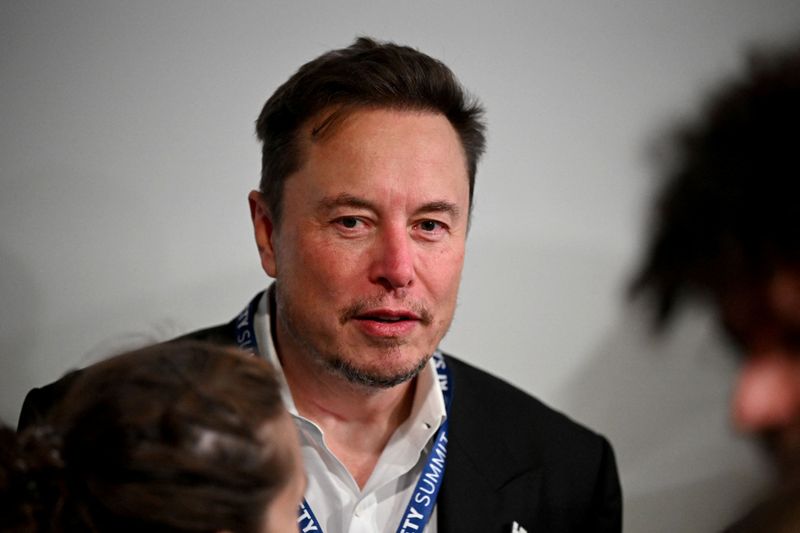
Elon Musk’s Terafab AI chip foundry venture has contacted Applied Materials, Tokyo Electron, and Lam Research for pricing and delivery timelines, signaling early-stage progress on the project. Intel said last week it will join the joint venture, which aims to build an integrated AI chip production facility for Tesla, SpaceX, and xAI. The initiative is framed as a self-sufficient, high-capacity manufacturing push and is supportive for Musk’s AI, robotics, and autonomous driving ambitions.
This is less a direct “AI demand” headline than an industrial-capex commitment signal for the semiconductor tool chain. If Musk actually moves from announcement to procurement, the first beneficiaries are the equipment vendors, but the second-order winners are the sub-suppliers with constrained lead times: vacuum, metrology, specialty gases, and advanced packaging inputs. The key edge is that a greenfield fab complex at this ambition level pulls forward multi-year spend before revenue exists, which can mechanically lift order visibility for a small set of capital equipment names even if broader handset/PC demand stays weak.
The market is probably underestimating how option-like this is for Intel. Even a minority role gives INTC a real narrative reset: not just foundry optionality, but proof of access to high-end customer intent and potential government/strategic support around domestic manufacturing. The risk is execution slippage—this kind of project is prone to timeline drift, scope reduction, or internal re-prioritization, and that would hit the equipment suppliers first because their stocks tend to re-rate on bookings, not revenue.
For AMAT and LRCX, this is a positive but not clean alpha event. A handful of quote requests does not equal incremental shipments; the near-term upside is mostly sentiment and backlog optics, while the real P&L impact arrives over quarters if the project turns into binding orders. The contrarian point is that investors may overpay for “foundry optionality” before any hard purchase orders exist, creating a better short-term trade in the tools names than a long-duration thesis in the ecosystem.
The broader second-order effect is competitive pressure on existing AI supply chains: if Terafab becomes credible, it increases the strategic value of domestic capacity for every hyperscaler and auto OEM thinking about chip autonomy. That could modestly pull forward spend across packaging and specialty capex, but it also raises the bar for current foundry incumbents by making customer self-sufficiency a more believable strategic goal over the next 3-5 years.
AI-powered research, real-time alerts, and portfolio analytics for institutional investors.
Request DemoOverall Sentiment
mildly positive
Sentiment Score
0.25
Ticker Sentiment
