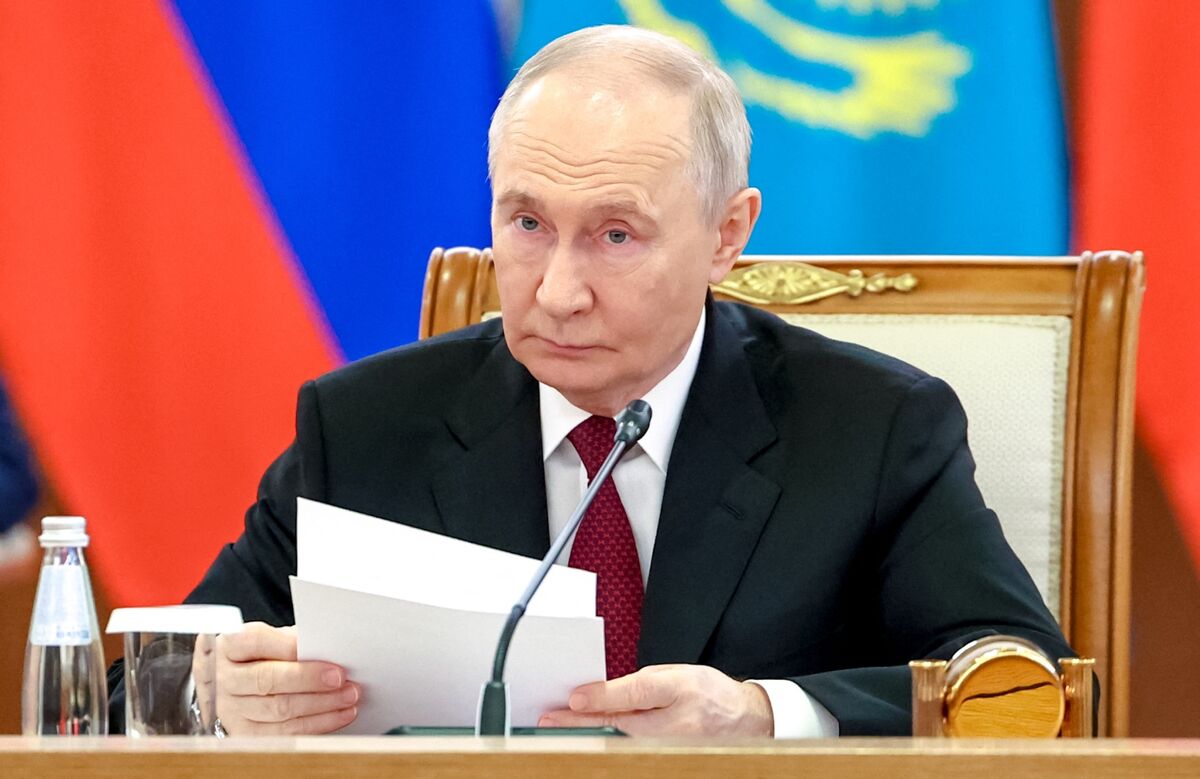
Russia and Armenia are headed for a diplomatic showdown as Yerevan pushes toward EU membership, a move the Kremlin has sharply criticized. Putin’s comparison to Ukraine underscores the geopolitical stakes and raises risk of further tension between Moscow and a key Eurasian Economic Union member. The story is negative for regional stability and could keep investors cautious on broader emerging market risk.
This is less about Armenia itself and more about the signaling value of a small-state pivot in a region Moscow still treats as its near-abroad. The second-order effect is incremental risk premium on any asset tied to Eurasian transit, Russian sanctions leakage, and post-Soviet political alignment: even without direct market exposure to Armenia, the message is that the Kremlin is willing to lean harder on perimeter states when it perceives drift toward Western institutions. That tends to support a higher tail-risk bid in energy and defense, while pressuring any “stability premium” embedded in Caucasus transport corridors over the next 1-6 months.
The biggest market implication is not a direct trade in Armenia, but a broader read-through to Russia’s coercive posture when domestic or geopolitical incentives rise. If Moscow escalates economic pressure, Armenia may be pushed to diversify trade routes and security partners faster, which marginally benefits Turkey, Georgia-linked logistics, and EU-aligned infrastructure financing over a multi-quarter horizon. The near-term downside is that uncertainty around border security and regional trade can widen spreads for frontier-risk sovereigns and reduce investor willingness to fund local banks, construction, and consumer names in adjacent markets.
Consensus likely underestimates how often these flare-ups remain rhetorical until they suddenly become operational. The overhang is not immediate invasion risk; it is a slow-burn deterioration in bargaining power for Armenia, making policy optionality more valuable than headline sensitivity suggests. For markets, the key is whether this becomes a template for additional pressure on other ex-Soviet states—if yes, the risk premium is broader and longer-lived; if not, the move may fade after the summit with little follow-through beyond tactical volatility.
AI-powered research, real-time alerts, and portfolio analytics for institutional investors.
Request DemoOverall Sentiment
mildly negative
Sentiment Score
-0.35
