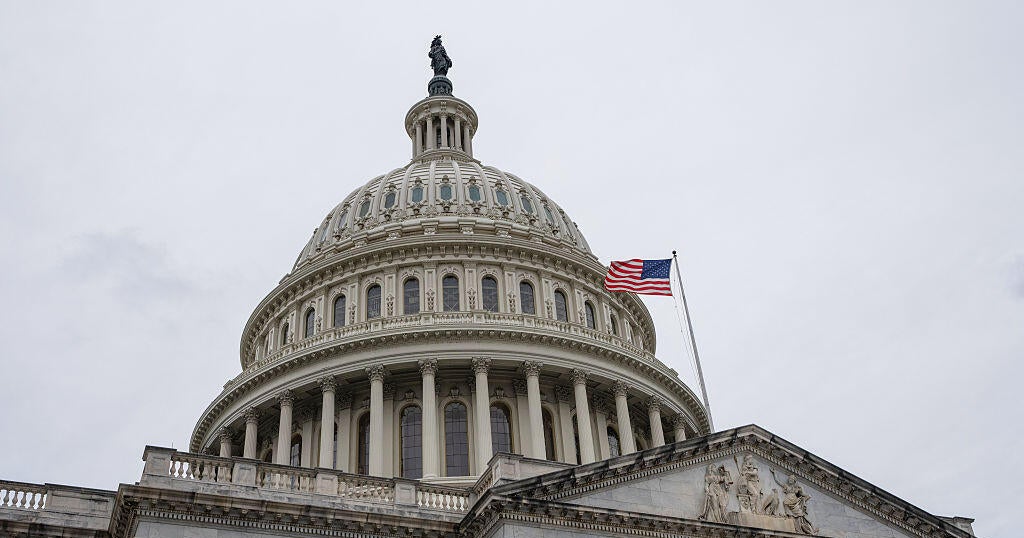
A $1.776 billion DOJ 'anti-weaponization' fund has derailed Republican plans to advance a $72 billion immigration enforcement package, forcing Congress to revisit the issue as it returns from recess. The fund has triggered intraparty GOP resistance, Democratic opposition, and a temporary federal court block, creating legislative uncertainty in both chambers. Separately, the House and Senate are expected to vote this week on war-powers measures related to Iran, adding to near-term political volatility.
The immediate market read is not about the named policy fights themselves but about legislative throughput risk: when intra-party conflict forces procedural resets, the odds of calendar slippage rise sharply for everything else in the package. That matters most for defense-adjacent and border-security beneficiaries that were expecting budget certainty; delayed appropriations typically compress procurement timing, push award decisions into later quarters, and can temporarily flatter cash flow for incumbents while hurting smaller vendors with tighter working capital.
The bigger second-order effect is that this dispute gives Democrats leverage to extract side-issues into must-pass votes, increasing headline volatility and raising the probability of a broader omnibus/continuing-resolution outcome. In that environment, contractors with heavy exposure to DHS staffing, detention, surveillance, and systems integration are less at risk from demand destruction than from payment-timing risk and margin noise, while legal-services and compliance-adjacent businesses can see a modest bid from elevated litigation and oversight activity.
The war-powers track introduces a separate, shorter-duration catalyst: a vote with only a handful of defections can quickly become a reputational constraint on the administration’s foreign-policy flexibility. For markets, the key issue is not direct spending but whether escalation/ de-escalation headlines move crude, defense names, and broader risk sentiment over days rather than months. If congressional opposition expands, the market may start pricing a lower probability of sustained kinetic escalation, which would be mildly negative for names levered to Middle East risk premiums and mildly positive for airline/input-cost baskets.
The contrarian angle is that the policy noise may be over-discounted relative to actual cash-flow impact for large-cap government contractors. Historically, the first-order reaction is headline beta, but the real P&L effect often shows up one or two quarters later through award timing rather than cancellations, making this more of a volatility event than a structural earnings downgrade unless the reconciliation process breaks entirely.
AI-powered research, real-time alerts, and portfolio analytics for institutional investors.
Request DemoOverall Sentiment
mildly negative
Sentiment Score
-0.15
