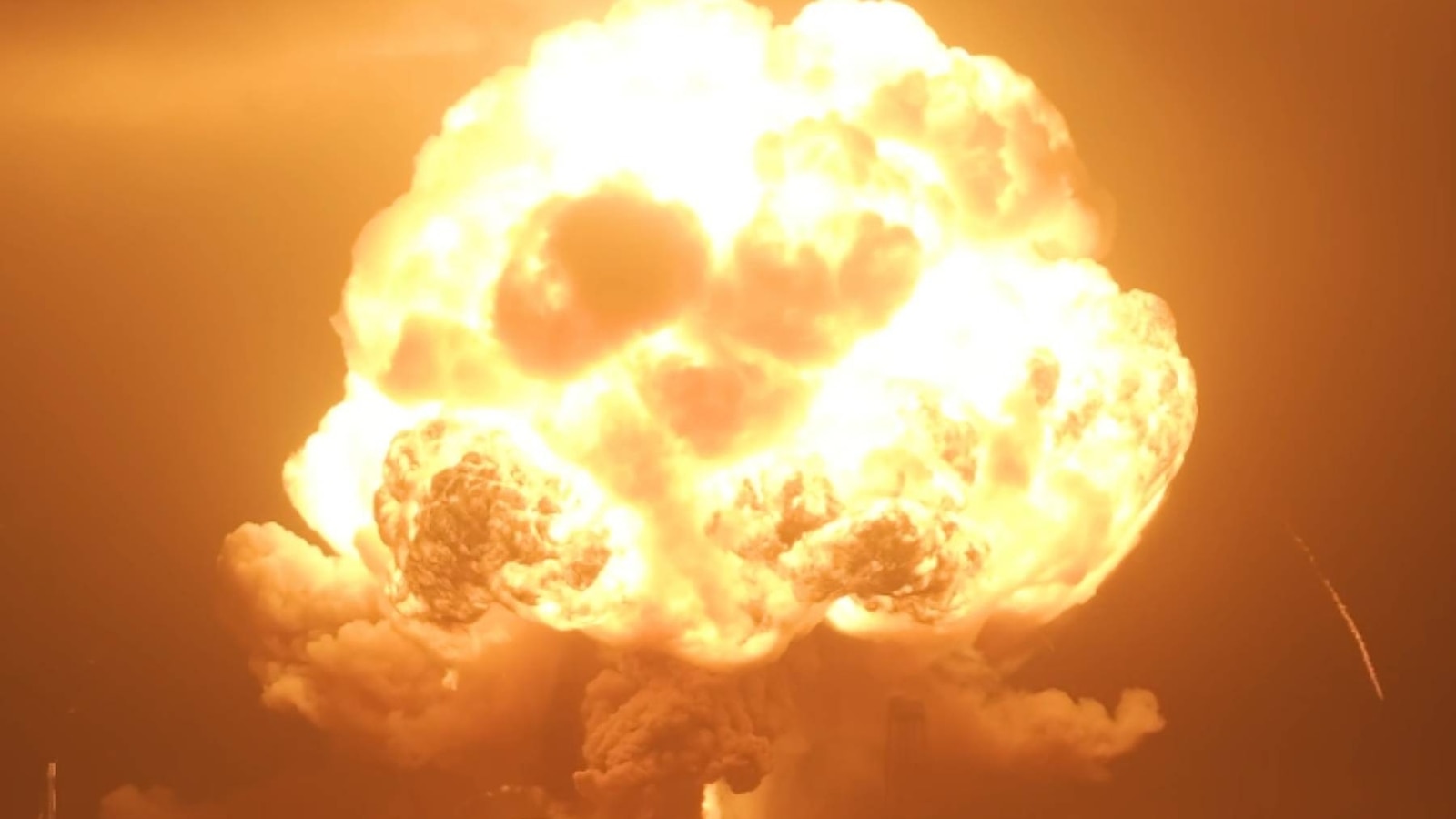
Blue Origin’s New Glenn rocket exploded during a static fire test at Cape Canaveral, although local authorities reported no injuries and all personnel are safe. The incident is a significant setback ahead of the company’s next launch and may delay a mission intended to carry 48 Amazon satellites into low-earth orbit. NASA said it will assess impacts to its Artemis and Moon Base programs as Blue Origin investigates the anomaly.
This is not just a launch-delay story; it is a schedule-risk event for the only near-term Western heavy-lift platform tied to a meaningful institutional payload backlog. The first-order hit is to confidence in execution, but the second-order effect is tighter launch cadence for a vehicle already battling scarcity economics: each reset pushes customer payloads rightward, which tends to reprice the entire manifest, not just the failed mission.
For AMZN, the market will likely treat this as a nuisance rather than a thesis breaker in the very near term, but the more important issue is option value timing. Any delay in orbital deployment extends the period where Amazon is spending into Kuiper without monetization, while also increasing dependence on alternate launch providers and potentially diluting the launch-cost advantage that underpins the economics of the constellation. That makes the stock more vulnerable to near-term multiple compression if management is forced to acknowledge a multi-quarter slip.
The bigger hidden beneficiary is the alternative launch ecosystem: any competitor with credible lift capacity and available slots can pick up incremental demand, but the real economic winner is whoever can demonstrate reliability while Blue Origin is in investigation mode. On the defense/NASA side, this increases the odds of program managers diversifying procurement, which is a slow-moving but durable negative for Blue Origin's share of future missions and a positive for incumbents with proven cadence.
Contrarian view: the selloff risk in AMZN may be overdone if investors extrapolate a hardware failure into a structural Kuiper setback. The base case is still that the constellation gets deployed over time; the difference is whether Blue Origin retains enough launcher credibility to capture that value internally. The key catalyst is the investigation timeline: a fast, contained root-cause fix would likely make this a one-to-two quarter delay rather than a multi-year reset, while any evidence of systemic propulsion or integration issues would force a more material de-rating.
AI-powered research, real-time alerts, and portfolio analytics for institutional investors.
Request DemoOverall Sentiment
strongly negative
Sentiment Score
-0.65
Ticker Sentiment
