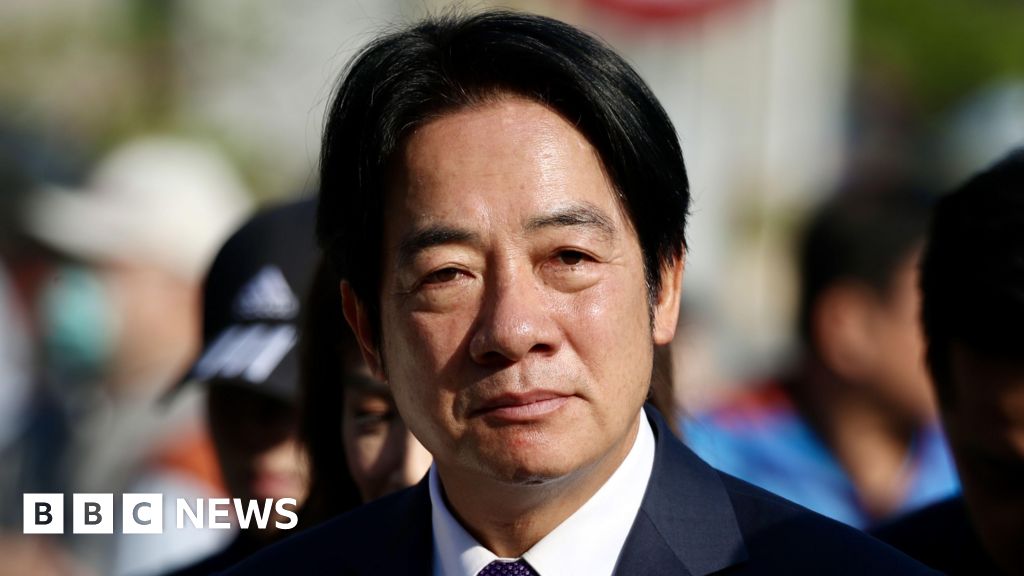
Taiwan President Lai Ching-te cancelled a planned trip to Eswatini after Seychelles, Mauritius and Madagascar revoked overflight permits reportedly under Chinese pressure. The incident underscores Beijing’s growing coercive influence and heightened cross-strait geopolitical risk, while marking the first publicly known case of a Taiwanese leader cancelling a foreign trip due to denied flight access. The direct market impact is limited, but the news is negative for regional diplomatic stability and investor sentiment toward geopolitical risk in Asia and Africa.
This is less about Taiwan itself than about China demonstrating it can impose incremental costs on third countries without firing a shot. The meaningful second-order effect is a tightening of “compliance drift” among small EM states: if overflight permissions can be weaponized, governments with weak fiscal buffers will increasingly price geopolitical alignment into aviation, port access, telecom procurement, and even UN voting patterns. That increases China’s bargaining power across the Indian Ocean and southern Africa, particularly where debt dependence or tourism sensitivity creates easy leverage.
For markets, the immediate read-through is to logistics and aviation risk premiums, not direct revenue loss. The bigger issue is itinerary fragility for high-level diplomacy, humanitarian routing, and defense signaling across the region; repeated incidents would force airlines and governments to reroute around contested airspaces, adding fuel burn and scheduling complexity over months, not days. That modestly favors carriers with flexible network planning and regional fuel hedging, while hurting any operator exposed to politically sensitive overflight corridors.
The contrarian view is that this may be more symbolic than economically material unless it spreads. Beijing already has strong influence; the incremental marginal impact is mainly reputational and reinforces a long-running trend rather than creating a new regime. The real tail risk is escalation into broader transport restrictions or port access disputes if Taiwan or the US responds with higher-profile diplomatic travel, because that would convert a one-off political embarrassment into a recurring operating constraint for Asian and African logistics lanes.
The highest-probability catalyst is not an immediate market move but a repeated pattern over the next 1-3 quarters: more permit denials, more quiet compliance by small states, and more pressure on neutral countries to pre-clear with Beijing. If that happens, the winners are Chinese-aligned infrastructure contractors and carriers with strong mainland exposure; the losers are firms depending on politically neutral routing and any EM sovereigns seeking nonaligned financing.
AI-powered research, real-time alerts, and portfolio analytics for institutional investors.
Request TrialOverall Sentiment
moderately negative
Sentiment Score
-0.35
