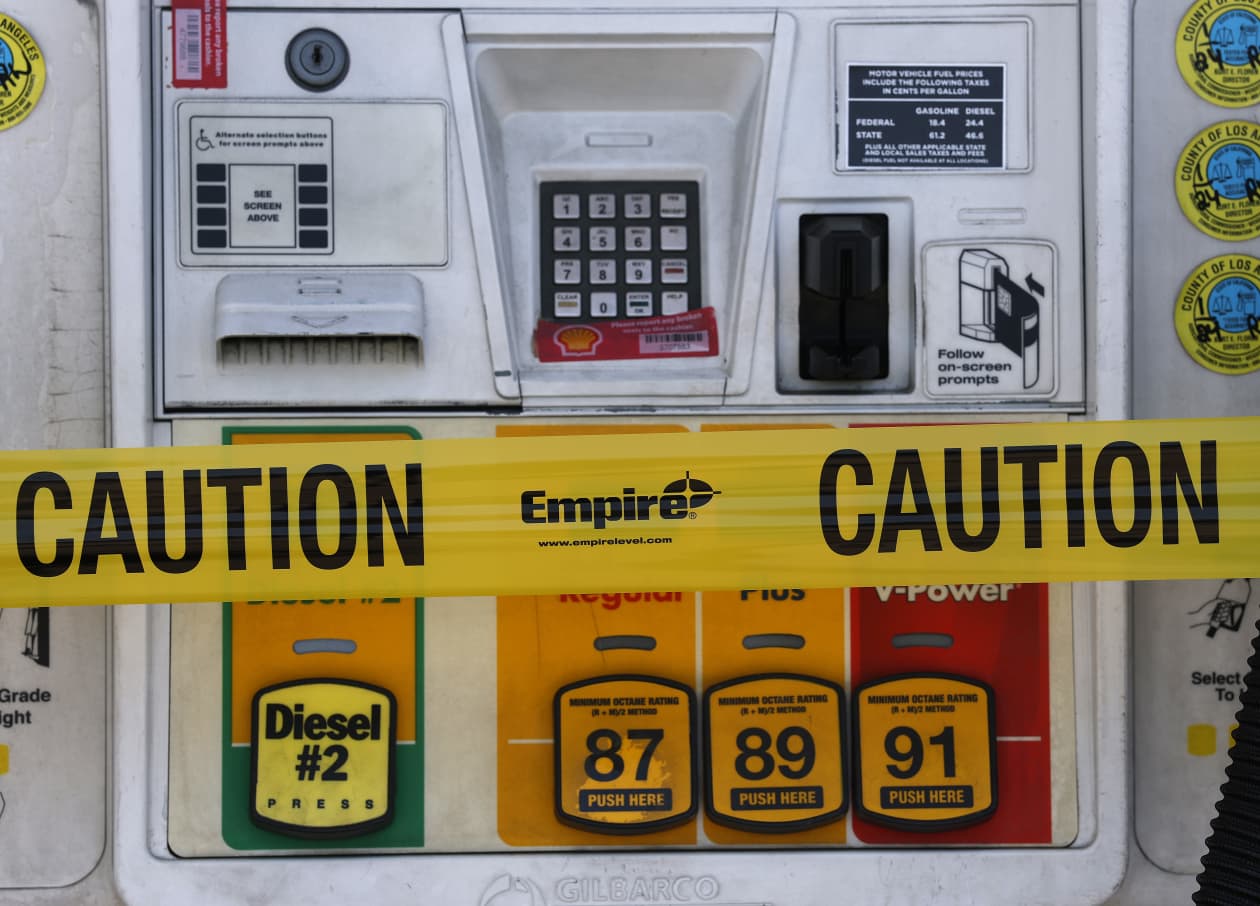
Wall Street fears Trump’s comments that the U.S.-Iran cease-fire is effectively over could spill beyond the near-term hit from higher oil prices. While the main consumer effect may be rising gas prices, renewed hostilities risk broader pressure on airlines and home builders more than on oil companies. Even after Trump later said he doubts a full-scale war will resume, the threat of military strikes keeps risk elevated.
The immediate trade is not “long oil” so much as “short margin air and housing beta.” A geopolitical spike in crude tends to hit airlines twice: jet fuel costs rise faster than fares can reprice, and booking curves soften as consumers see higher gasoline at the pump. Homebuilders are a slower burn but more interesting — if energy keeps inflation sticky, rate-cut expectations back up, and that compresses affordability even before any direct consumer confidence hit shows up in order books.
The second-order effect is that the market often overpays for energy exposure when the move is headline-driven rather than a physical-barrel disruption. Integrateds and E&Ps can see a short squeeze in the first 1-5 sessions, but if supply is not actually impaired, the move tends to fade while downstream users absorb the P&L hit. That argues for favoring shorts in JETS and XHB over outright longs in XLE; if you want energy exposure, upstream names with cleaner hedge books and low lifting costs should outperform refiners, but the asymmetry is not great unless Brent stays elevated for several weeks.
Contrarian view: consensus may be underestimating how fast this becomes a rates story rather than an oil story. A sustained risk premium in crude can keep breakevens and nominal yields firmer, which is more damaging to housing multiples than to oil cash flow if the market eventually decides this is just a transient geopolitical flare-up. DJT is only a sentiment proxy here — not a fundamental beneficiary — and should be treated as a volatility vehicle, not a thesis anchor, unless the rhetoric escalates into a broader political risk premium.
AI-powered research, real-time alerts, and portfolio analytics for institutional investors.
Request DemoOverall Sentiment
mildly negative
Sentiment Score
-0.25
Ticker Sentiment
