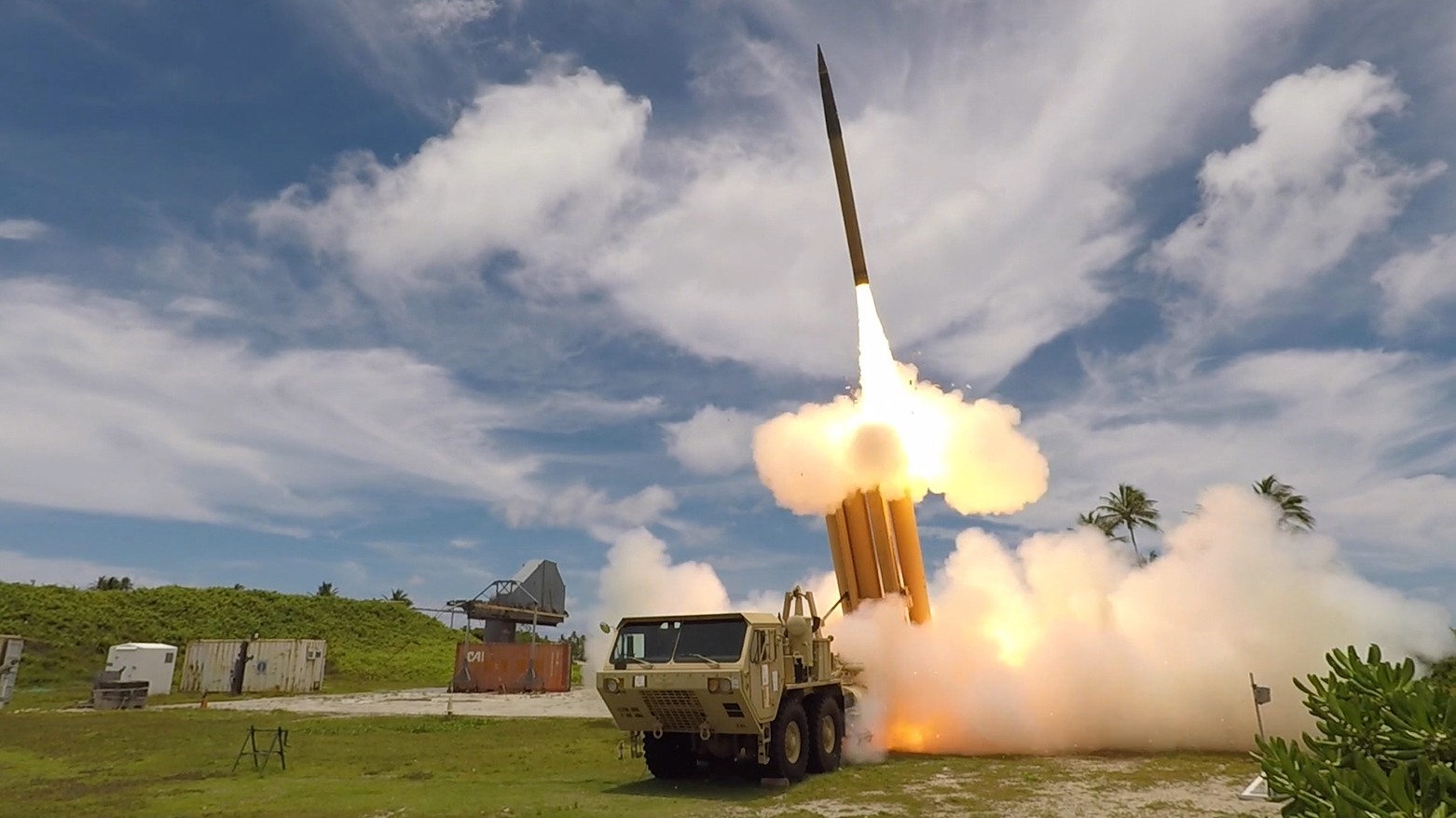
The article says China, Russia, and North Korea are using the Iran-related conflict to observe U.S. defense capabilities, including radar frequencies, interception protocols, and gaps in base security. WSJ reporting highlights alleged THAAD radar disruptions from Iranian drone attacks in Jordan and the UAE, while CNN says at least 16 U.S. military positions across eight Middle Eastern countries were damaged. The main implication is not an earnings or pricing event, but a meaningful geopolitical and defense-readiness risk that could influence military doctrine and regional security dynamics.
The market implication is not the headline damage to bases; it is the forced disclosure of U.S. defensive playbooks. That matters because it compresses adversaries’ learning curve on the cheapest path to neutralizing U.S. air defense: low-cost drones, saturation, and electronic warfare rather than exquisite missiles. The second-order effect is a broader repricing of confidence in U.S. forward-deployed deterrence, which should lift demand for counter-UAS, passive sensing, hardened infrastructure, and base resilience spending over the next 12-36 months.
This is structurally positive for the prime contractors best exposed to layered defense, but negative for legacy single-layer concepts that depend on clean radar performance and a permissive operating environment. The most obvious beneficiaries are vendors with C-UAS, EW, and integrated command-and-control exposure, because the lesson from the theater is not one platform failing, but the need for distributed, redundant kill chains. Expect allied procurement in the Indo-Pacific and Gulf to accelerate once ministries conclude that systems optimized for ballistic threats can be degraded by much cheaper drones.
The near-term catalyst is budget and procurement language, not battlefield headlines. If Washington and allies respond with rapid force-protection buys, the trade becomes a 6-18 month capex cycle rather than a geopolitical one-off; if political attention fades, the move could mean-revert. The contrarian view is that this may actually benefit the U.S. industrial base by validating spend priorities and increasing urgency for modernization, while China/Russia still face their own integration and training constraints that are harder to copy than the headline vulnerabilities suggest.
AI-powered research, real-time alerts, and portfolio analytics for institutional investors.
Request DemoOverall Sentiment
mildly negative
Sentiment Score
-0.35
