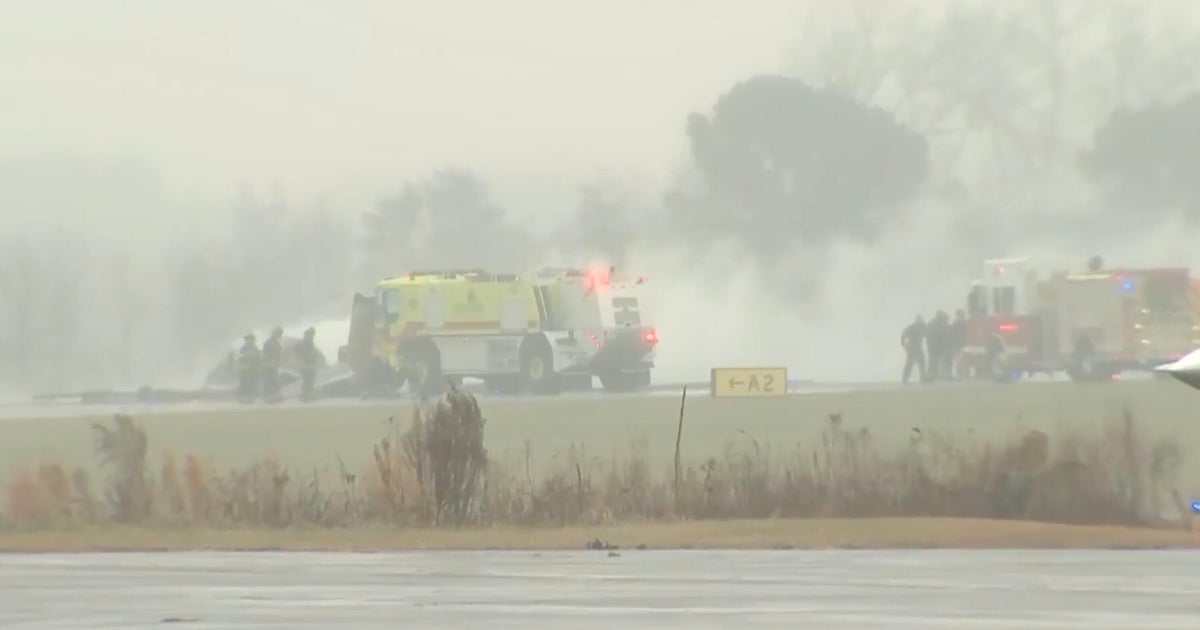
A Cessna C550 crashed while landing at Statesville Regional Airport in North Carolina around 10:20 a.m., engulfed in fire; the FAA and NTSB are investigating and the airport remains closed. Retired NASCAR driver Greg Biffle, 55, his wife Cristina and their two children were reported to have been on the business jet, with local officials confirming fatalities and FlightAware/flight records tying the aircraft to a private company affiliated with Biffle. Weather at the time included clouds and drizzle; authorities have not released a full passenger manifest and the story remains developing.
Market structure: This is a localized reputational shock to private/corporate aviation and the Statesville regional ecosystem — immediate losers are the airport/FBO tenants (daily revenue drop for the airport likely 100% while runway closed; local economic hit measurable in low six-figures over days), while MRO/parts suppliers (HEICO HEI, AAR AIR) and insurers could see order/price effects as inspections and underwriting repricing accelerate. Pricing power shifts short-term toward MROs and safety-equipment vendors (+5–15% incremental inspection spend over 1–3 months is plausible) and toward specialty aviation insurers raising premiums 3–10% over 6–12 months for certain tail-risk pools.
Risk assessment: Tail risks include a model-specific airworthiness directive or temporary grounding that could cause 3–12% revenue hits for OEMs tied to that airframe (Textron TXT owns Cessna). Time horizons: immediate (days) — airport closures, media cycle; short (weeks–months) — insurance repricing, inspection demand; long (quarters–years) — regulatory change that raises operating costs for fractional/private operators by low single digits to mid-single digits in margin impact. Hidden dependencies: NetJets exposure is concentrated by ownership (BRK.B) and could amplify sentiment-driven flows despite negligible fundamental demand impact.
Trade implications: Tactical opportunities favor long exposure to quality MRO/parts names (HEI/AIR) via defined-risk options to capture a 3–6 month inspection bump, and short near-term sentiment vehicles (JETS ETF) with tight time decay. Use event-triggered filters: enter MRO positions within 5–20 trading days; set stops at 10% adverse move. Monitor FAA/NTSB updates over 30–90 days as the primary catalyst to widen or unwind positions.
Contrarian angles: Consensus will overplay short-term publicity risk to private aviation demand; historically (past high-profile crashes) HNW private travel recovers in 1–3 quarters. That suggests any >2–3% drop in high-quality aerospace suppliers or BRK.B is likely a buying opportunity, while knee-jerk selling in OEMs (TXT) may be overdone unless an AD/grounding is issued. Unintended consequence: overaggressive regulation could transfer volume from smaller operators to large, accredited operators (benefit to scale players).
AI-powered research, real-time alerts, and portfolio analytics for institutional investors.
Request DemoOverall Sentiment
mildly negative
Sentiment Score
-0.30
