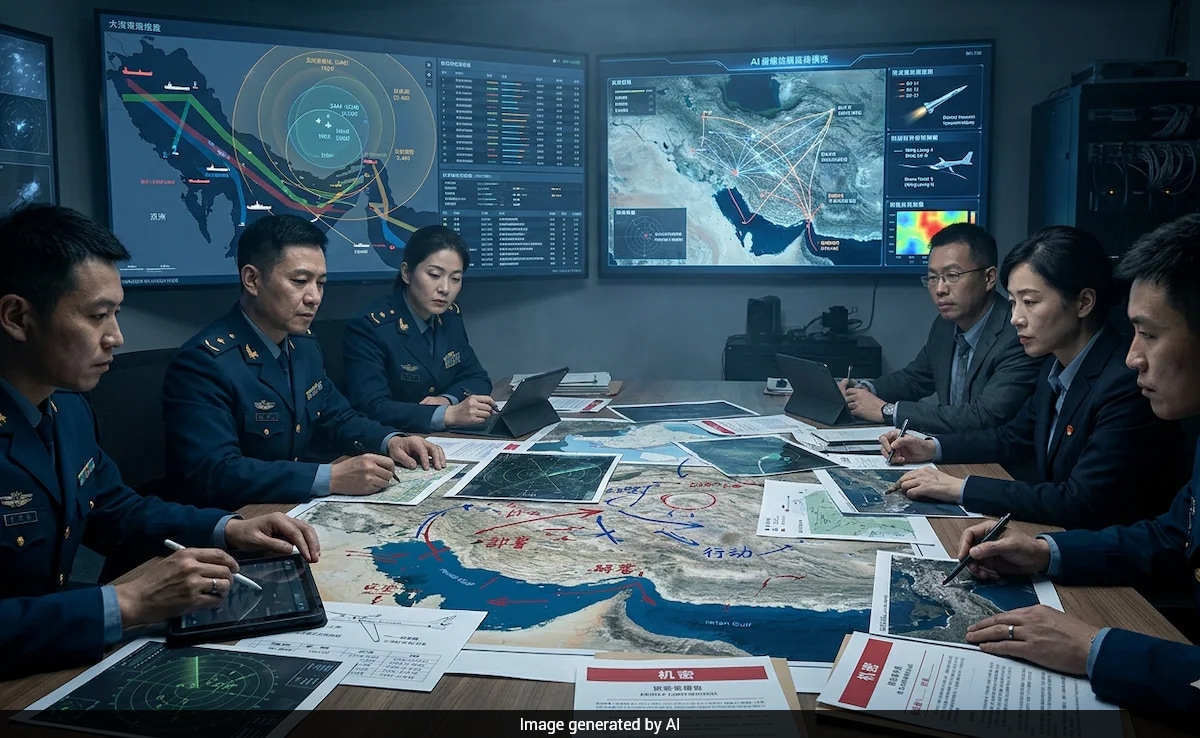
China is reportedly studying lessons from the Iran conflict and the India-Pakistan Operation Sindoor to refine air defense suppression, AI-enabled targeting, and strike doctrine, with Taiwan highlighted as a likely future scenario. The article emphasizes saturation attacks, missile-defense limitations, and the potential strain on US munitions and regional assets, including Patriot batteries. It also flags energy chokepoints such as the Strait of Hormuz, where 33%-37% of China’s oil shipments transit, underscoring broader geopolitical and market risks.
The market implication is not a direct escalation premium, but a gradual repricing of the defense stack most exposed to magazine depth, sensor fusion, and low-cost attritable systems. If Beijing is extracting lessons on how layered air defenses fail under saturation and how AI compresses kill chains, the second-order effect is higher procurement urgency for systems that can scale cheaply: sensors, EW, drone interceptors, and command-and-control software rather than only exquisite interceptors. That argues for a broader winners list than the usual prime contractors, with software-defined defense and counter-UAS names likely to outperform on every headline cycle.
The more interesting risk is that this thesis is self-reinforcing over 6-18 months. Any evidence that US or allied stockpiles were stressed will push Taiwan, Japan, South Korea, and Gulf buyers toward pre-buying ammunition, sensors, and Patriot-adjacent reloads, while also accelerating substitution into cheaper interceptors and directed-energy programs. That creates a demand tailwind for suppliers with capacity, but a negative margin dynamic for primes if governments shift mix toward lower-cost effects and demand faster delivery, penalizing companies with long production cycles or single-platform dependence.
The contrarian view is that the current narrative may overstate near-term war risk and understate deterrence benefits. China studying these conflicts does not equal operational readiness; the bottleneck is still joint command, satellite resiliency, and munitions sustainability under blockade conditions, which are harder to validate than weapon performance in isolated strikes. If markets move too quickly into a Taiwan-escalation premium, that should fade unless there is observable evidence of stockpile depletion, new deployments, or procurement acceleration in the next 1-2 quarters.
Energy is the cleaner crossover trade: even absent a direct Taiwan event, any perception that Gulf shipping lanes or Middle East basing is more vulnerable supports a higher structural risk premium for oil and LNG logistics. The best expression is not outright crude beta, but exposure to the infrastructure bottlenecks that benefit from redundancy spending and defense-led logistics hardening. That theme should persist as long as satellite targeting, drone saturation, and air-defense depletion remain front-page risks.
AI-powered research, real-time alerts, and portfolio analytics for institutional investors.
Request DemoOverall Sentiment
mildly negative
Sentiment Score
-0.10
