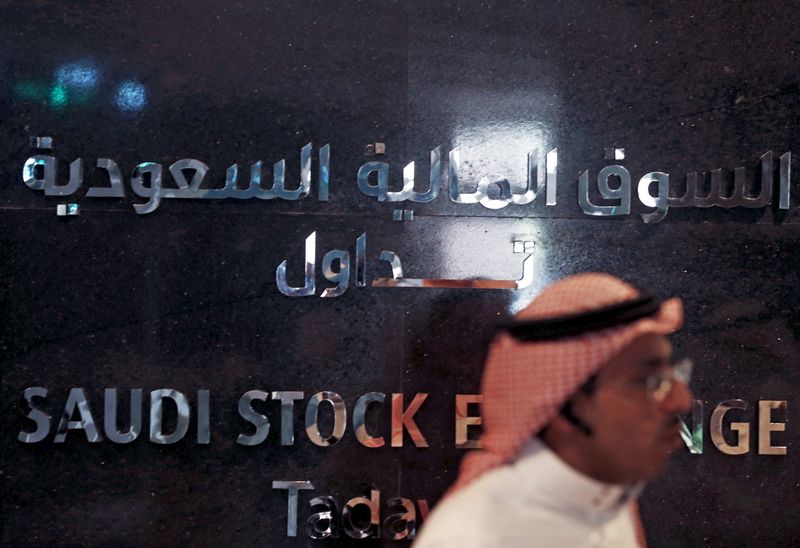
Saudi Arabia's Tadawul All Share rose 0.10% as insurance, petrochemicals and financials led gains, despite 222 decliners versus 117 advancers. Crude oil for June jumped 3.82% to $100.05/bbl and Brent gained 2.79% to $104.53/bbl, while gold fell 1.98% to $4,600.60/oz. FX was steady with USD/SAR unchanged at 3.75 and EUR/SAR down 0.21% to 4.39.
The market is telling you the oil shock is being treated as a headline, not yet as a cash-flow reset. Saudi equities can still grind higher even with elevated crude because the index’s leadership is biased toward domestically insulated financials and fee-bearing businesses, while the first-order losers from higher energy are often outside the benchmark. The more interesting second-order effect is that insurers and petrochemical names can benefit from delayed pass-through and inventory timing before input costs fully reset, creating a brief window where both cyclicals and defensives can outperform.
The real risk is not the immediate oil spike; it is the lagged earnings squeeze in energy-intensive sectors and the potential for breadth to deteriorate before index-level price follows. If Hormuz disruption persists for even 2-6 weeks, expect shipping insurance, working capital needs, and FX hedging costs to rise across import-dependent industries, which can pressure margins faster than revenues reprice. That makes the current tape vulnerable to a rotation out of high-energy users into banks, insurers, and names with domestic pricing power.
The contrarian view is that the market may be underpricing policy-response optionality. A sustained move above roughly $100 Brent historically pulls forward diplomatic pressure, inventory releases, and tactical hedging by consumers, which can cap the upside in crude while leaving the equity market to re-rate the “beneficiaries of volatility” rather than the commodity itself. In that setup, the better trade is not a blunt long-energy expression, but a relative-value basket that owns pricing-power and balance-sheet resilience against margin compression. On the U.S. single-name side, the article’s AI/tech promotion is noise; if the macro regime shifts toward higher rates and risk-off, high-duration growth names remain vulnerable even if the domestic Saudi tape is resilient.
AI-powered research, real-time alerts, and portfolio analytics for institutional investors.
Request DemoOverall Sentiment
neutral
Sentiment Score
0.10
Ticker Sentiment
