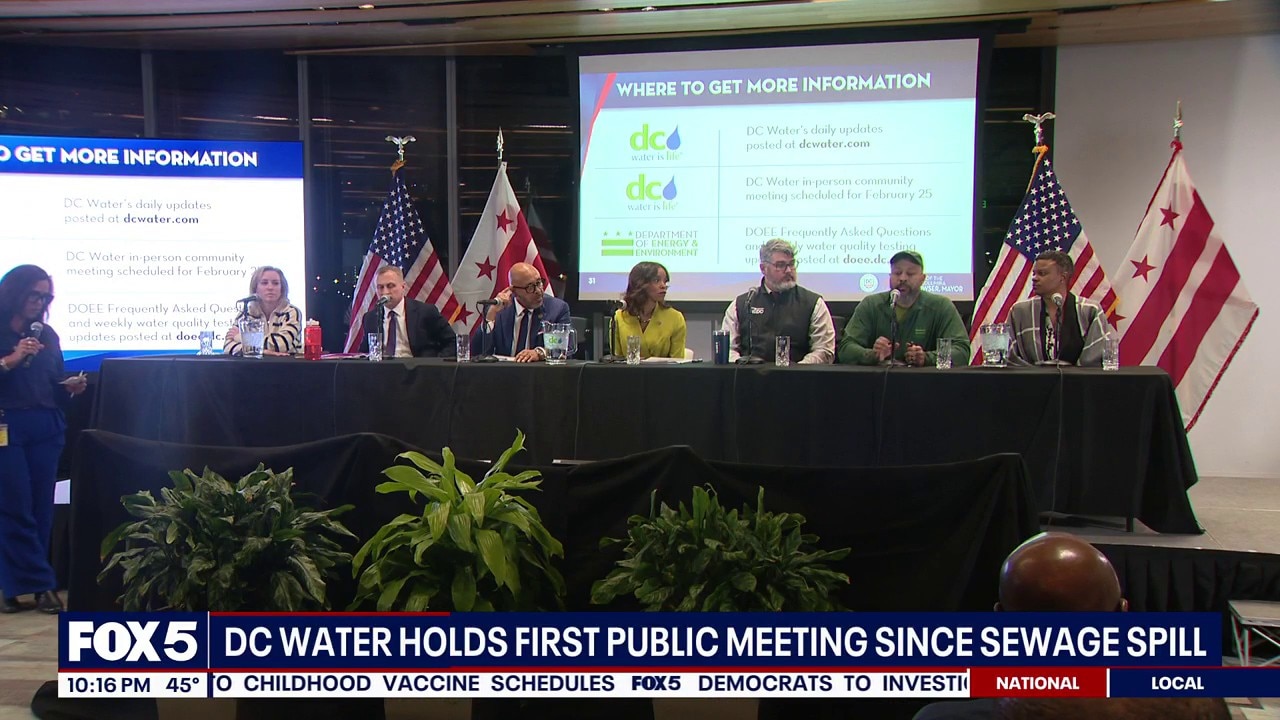
D.C. Water held its first public hearing more than five weeks after the Potomac interceptor collapse that released millions of gallons of raw sewage, with CEO David Gadis addressing community concerns and outlining repairs, testing and an environmental rehabilitation plan. Officials said D.C. will lift its advisories on March 2 — citing good water test results and three weeks without an overflow — while Maryland and Virginia advisories may remain in place; local fishing-charter businesses reported lost revenue. The incident raises reputational and regulatory risk for D.C. Water and underscores localized economic disruption for tourism and recreational operators, though broader market impact appears limited.
Market structure: The immediate winners are water infrastructure contractors and equipment suppliers who are positioned to capture repair and monitoring spend — think Xylem (XYL), Evoqua (AQUA) and large engineering firms Jacobs (J) / AECOM (ACM); expect incremental local capex in the tens-to-low‑hundreds of millions over 3–12 months, with a 6–18 month follow‑on for monitoring and remediation contracts. Losers are hyper‑local leisure/charter operators reliant on Potomac access (revenue hit potentially 30–70% while advisories persist) and DC Water’s near‑term operating credibility; DC/utility revenue bonds could see spread widening of ~25–75bp if legal/regulatory costs escalate.
Risk assessment: Tail risks include a multi‑month contamination event or a federal enforcement/penalty package >$100M that triggers a bond rating review and 100–200bp widening for municipal paper; litigation timelines could extend 12–36 months and produce unpredictable cashflow hits. Near term (days–weeks) watch state advisories (Maryland/Virginia) and bond issuer statements; short term (1–6 months) the key risks are supply‑chain delays for specialty pumps (4–12 week lead times) and contract sourcing; long term (12–24 months) regulatory tightening and mandated capex across U.S. utilities could materially reallocate spend to larger vendors.
Trade implications: Tactical longs: establish 2–3% positions in XYL and J for 3–12 month windows to capture repair/monitoring revenue and re‑rating if contracts are awarded; buy PHO (Invesco Water Resources ETF) as a 1–2% thematic overweight for 12–24 months. Hedging/shorts: reduce or hedge DC/municipal exposure by 0.5–1% of portfolio — sell specific DC water/GO bonds or buy 3–6 month put protection on MUB-sized muni exposure equivalent; implement 3–6 month call spreads (buying near‑the‑money calls, selling 20–30% OTM) on XYL/AQUA to limit capital outlay while capturing upside.
Contrarian angles: The consensus will treat this as a local PR event, but the market underprices the probability of broader federal/state enforcement that accelerates national water infrastructure spending — if even 10% of U.S. systems face similar remediation, addressable market for suppliers could expand by $5–15bn over 24 months. Historical parallel: post‑Flint procurement and compliance cycles lifted remediation and engineering peers by 15–40% over 12–18 months; downside is regulatory creep that favors large incumbents and compresses margins for smaller suppliers, reinforcing preference for large‑cap names.
AI-powered research, real-time alerts, and portfolio analytics for institutional investors.
Request TrialOverall Sentiment
neutral
Sentiment Score
0.05
