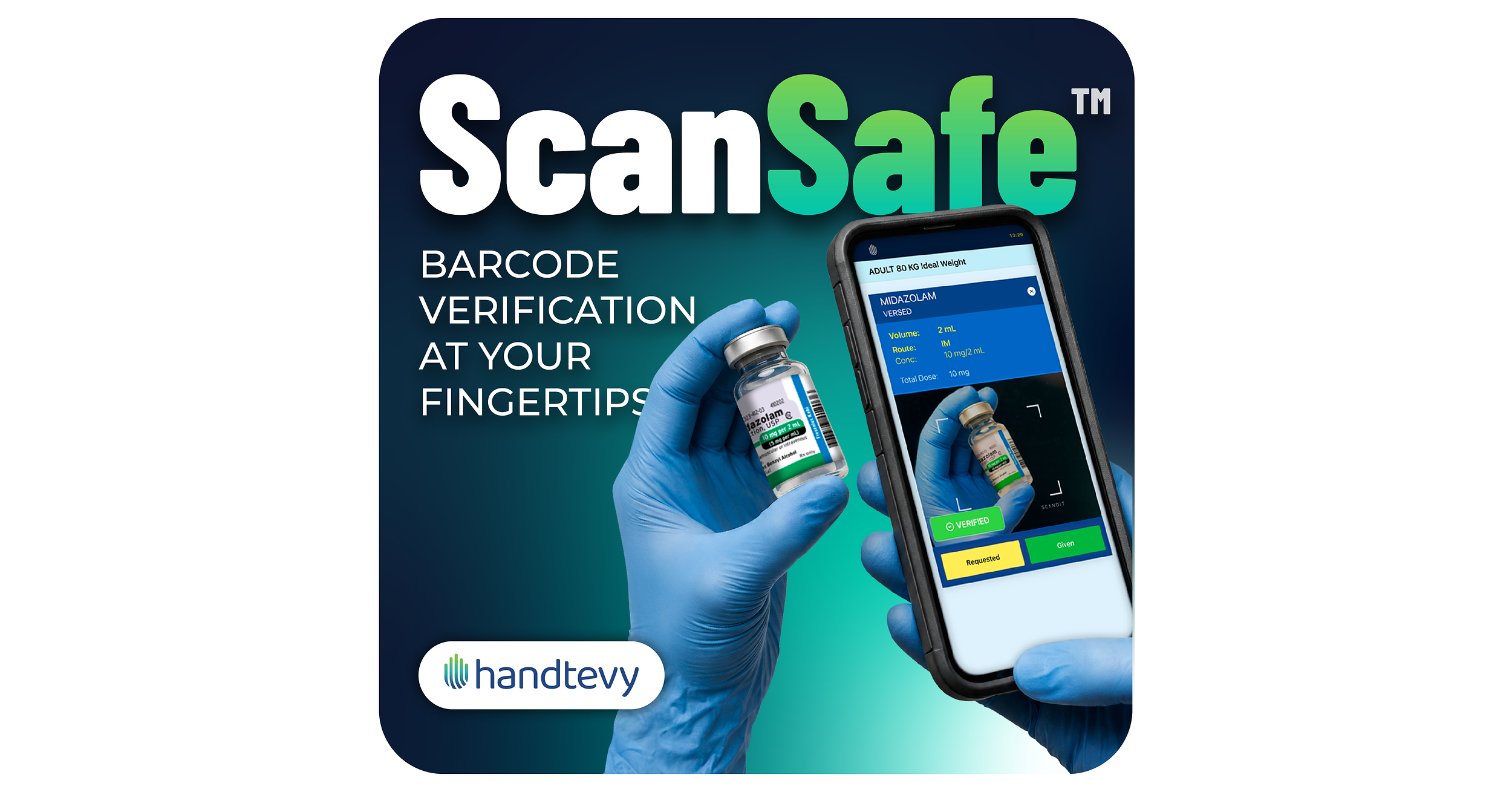
Handtevy launched ScanSafe™, a barcode medication safety feature embedded in Handtevy Mobile for EMS and hospital emergency departments, enabling automated medication cross-checking with a single scan and offline operation. In its first three months, clinicians verified 10,000+ medications, and peer-reviewed studies report correct pediatric medication dosing rates of 97% (Rochester) and 89.4% (Denver Health) versus 51.1% pre-implementation. The company says adoption can occur independently by EMS agencies or hospitals, and a combined workflow can extend across prehospital and emergency department care.
This is more interesting as a workflow wedge than as an immediate revenue story. The key mechanism is that the product attacks the highest-friction moment in med safety—unregistered, time-critical care—where incumbents’ scanner-heavy architectures are weakest. That makes it a plausible beachhead into broader emergency-department standardization, but procurement cycles and clinical governance mean the commercial payoff is measured in quarters, not days.
From a public-market lens, the nearest losers are hardware-anchored medication-management vendors and point solutions that depend on fixed scanning infrastructure and pharmacy-prepped workflows. Any competitive pressure on BDX/OMCL is likely subtle at first: not lost share tomorrow, but a slower attach rate in ED/resuscitation use cases if software-only offline verification becomes the preferred spec. The larger second-order effect is that emergency workflows may increasingly be bought as mobile software bundles, which compresses the moat of cabinet/scanner-led ecosystems.
The contrarian view is that investors may overread a product announcement as platform displacement. The hard part is not scanning a vial; it is getting pharmacy, medical directors, and hospital IT to bless the dose tables, liability workflow, and documentation trail. The real falsifier is conversion data: if the next 1-2 quarters do not show measurable expansion in contracted sites or repeat usage beyond trial scans, this remains a feature, not a category shift.
AI-powered research, real-time alerts, and portfolio analytics for institutional investors.
Overall Sentiment
mildly positive
Sentiment Score
0.18
