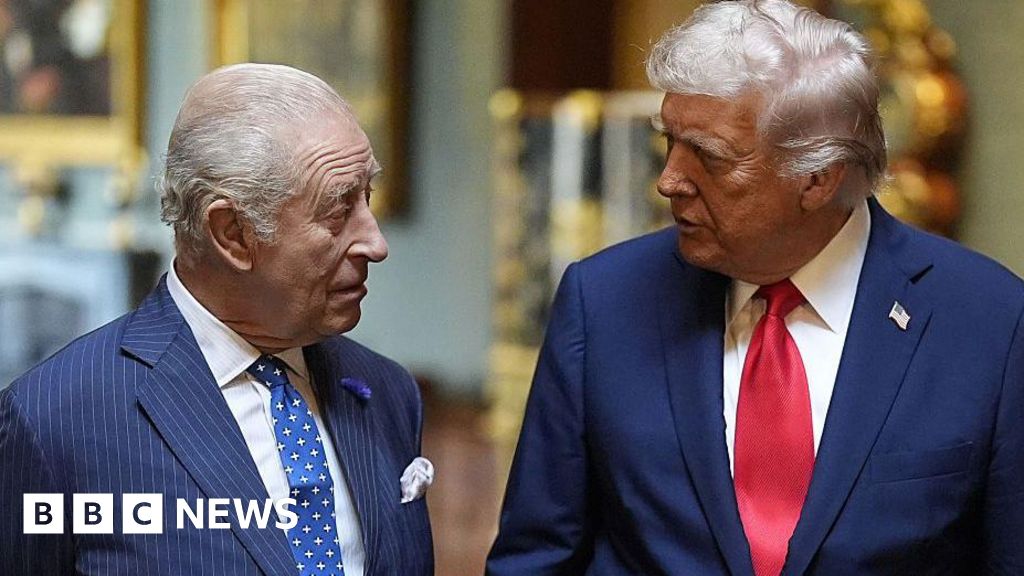
Buckingham Palace said it is holding talks with US counterparts after a shooting incident at the White House Correspondents' Dinner, but King Charles III's US state visit is still planned for Monday. The main issue is security planning rather than any direct financial development, with officials saying appropriate protection will be in place. The article also notes the visit could touch on sensitive diplomatic topics including the Falklands and broader UK-US relations.
The immediate market read is not about the state visit itself but about the premium the world assigns to visible institutional vulnerability. Events that force a rapid security reassessment tend to benefit defense, protective equipment, and private security contractors first, while leaving travel and hospitality mostly unaffected unless there is a meaningful downgrade in trip logistics. The bigger second-order effect is on policy optics: a high-profile security breach on the eve of a diplomatic trip increases the probability of expanded protection spending and procedural tightening on both sides of the Atlantic, which is incrementally bullish for firms tied to government security budgets over the next 1-3 quarters.
The geopolitical angle is more subtle. A successful visit would reinforce continuity in US-UK relations at a moment when markets are sensitive to alliance stability, but any postponement would be read as a sign that operational risk is rising faster than policymakers can manage. That would be mildly negative for UK soft-power signaling and could increase headline volatility around UK assets tied to diplomacy-heavy sectors, though the macro impact should remain limited unless the trip is materially altered. In practice, the market tends to overreact to short-lived protocol disruption and underreact to the longer-lived budget implications for security infrastructure, surveillance, and event protection.
The contrarian view is that this is not a broad risk-off catalyst. Unless there is further violence or a tangible change in the visit schedule, the news should fade quickly in equities, with only a small rotational bid to defense/security names. The more durable trade is not on the incident itself but on the institutional response: if policymakers use it to justify tighter perimeter screening, more screening technology, and additional protective staffing, the earnings impact for those vendors is more persistent than the headline suggests.
AI-powered research, real-time alerts, and portfolio analytics for institutional investors.
Request DemoOverall Sentiment
neutral
Sentiment Score
-0.08
For events like this, the key variable is duration. A one-day scare should be ignored for most portfolios; a multi-day security review that delays the visit, changes venues, or prompts new budget commitments creates a cleaner relative-value setup. The tail risk is another incident before the trip, which would sharply raise the probability of a visible security reset and a larger bid for protection-related equities.
